
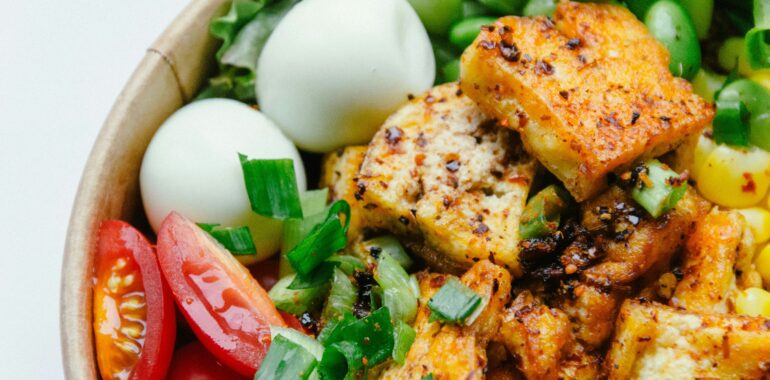
The Satiety Blueprint: Engineering 3 Filling Meals Under 500 Calories
The modern kitchen can often feel like a high-stakes laboratory where we are constantly trying to solve the blueprint for a meal that satisfies our primitive hunger signals without overshooting our metabolic daily requirements. I spent a significant portion of my journey viewing the “500-calorie limit” as a sentence of starvation, assuming that low-calorie meant small portions and a hollow, grumbling stomach by 9:00 PM. Everything changed when I looked into “Volumetrics” and the role of “Fiber-to-Protein Ratios” in gastric distension. I discovered that satiety isn’t just about the weight of the food, but the architectural density of the nutrients. I realized that by utilizing high-volume “Low-Density” vegetables and lean “Amino-Acid-Anchors,” I could create a plate that looks massive and tastes indulgent while staying firmly within a “High-Efficiency” caloric range.
The goal of this Satiety Blueprint strategy is to move away from “Caloric-Deprivation” and toward Volume-Optimization. By mastering the art of these three high-protein power meals, I’ve managed to stabilize my evening energy and eliminate the “Restriction-Binge” cycle that used to derail my progress. When I prioritize these high-volume solutions, I notice a direct improvement in my cognitive clarity and a total reduction in the systemic inflammation that comes from processed “Diet-Foods.”
Recipe 1: The “Volume-Max” Turkey & Cauliflower Power Bowl
Approx. 410 Calories | High Protein | Low Carb
This is my “Gold-Standard” for a meal that feels like a cheat day through sheer scale. It provides a “Decadent-Signal” to your brain through the massive portion size.
The Component List
- 1 lb Extra Lean Ground Turkey (99% lean)
- 2 bags (24 oz) Riced Cauliflower (the “Volume-King”)
- 2 cups Shredded Cabbage mix (for “Mechanical-Crunch”)
- 1 large Red Bell Pepper (diced)
- 2 Tbsp Coconut Aminos and 1 Tbsp Sriracha
- 1/2 Sliced Avocado (the “Lipid-Buffer”)
The Sequential Execution
- The Protein-Sear: In a massive skillet, brown the turkey with garlic and ginger until fully cooked.
- The Volume-Dump: Add the riced cauliflower and peppers. Sauté for 8 minutes until the moisture has “Evaporated”—this is key to avoiding a soggy base.
- The Texture-Integration: Toss in the cabbage and sauces, cooking for another 3 minutes until wilted but crunchy.
- The Final-Anchor: Divide into two bowls and top with the avocado.
Personal Tip: I’ve found that “Riced-Cauliflower” is the ultimate “Stealth-Ingredient.” However, the secret to making it taste like a “High-Integrity” grain is to cook it until it develops a “Nutty-Aroma.” If you leave it too wet, it feels like a “Diet-Substitute.”
Recipe 2: The “Zoodle-Shrimp” Scampi Architecture
Approx. 350 Calories | Low Glycemic | High Volume
When I want a “Neural-Reset” that feels like a high-end Italian dinner, I use this shrimp-based vessel. Shrimp is incredibly “Calorie-Efficient,” allowing for a massive protein load for very few calories.
The Component List
- 1 lb Large Shrimp (peeled and deveined)
- 4 large Zucchini (turned into “Zoodles”)
- 3 cloves Minced Garlic
- 1 Tbsp Grass-Fed Butter (the “Flavor-Carrier”)
- 1/4 cup Vegetable Broth and 1/2 Lemon (juiced)
- 1 tsp Red Pepper Flakes (the “Metabolic-Kick”)
- 1/4 cup Fresh Parsley
The Sequential Execution
- The Lipid-Base: Melt the butter in a pan and sauté the garlic and red pepper flakes until fragrant.
- The Protein-Flash: Add the shrimp and cook for 2 minutes per side until pink. Remove the shrimp from the pan and set aside to avoid “Rubber-Texture.”
- The Liquid-Reduction: Add the broth and lemon juice to the pan, simmering for 2 minutes.
- The Zoodle-Toss: Add the zucchini noodles. Cook for only 2 minutes; any longer and they lose their “Structural-Integrity.”
- The Re-Integration: Return the shrimp to the pan, toss with parsley, and serve immediately.
Personal Tip: I treat “Zoodle-Moisture” as a primary enemy. I always salt my zucchini noodles 10 minutes before cooking and squeeze them in a clean towel. This “Mechanical-Extraction” ensures your scampi sauce stays thick and “High-Fidelity” rather than turning into a soup.
Recipe 3: The “Black-Bean & Egg” Power Skillet
Approx. 460 Calories | High Fiber | Vegetarian
This is my go-to “Lazy-Blueprint” for when I need a deep satiety signal from plant-based fiber. The combination of beans and eggs creates a “Slow-Burning” energy baseline.
The Component List
- 1 can (15 oz) Black Beans (rinsed thoroughly)
- 4 large Pasture-Raised Eggs
- 1 cup Fresh Salsa (the “Flavor-Anchor”)
- 2 cups Fresh Spinach (the “Micronutrient-Load”)
- 1/4 cup Red Onion (diced)
- 1/4 cup Cotija Cheese or Feta
The Sequential Execution
- The Sauté-Start: Cook the red onion in a non-stick skillet until translucent.
- The Fiber-Base: Add the beans and salsa. Simmer for 5 minutes until the liquid reduces into a “Thick-Emulsion.”
- The Green-Wilt: Stir in the spinach until it collapses into the beans.
- The Egg-Drop: Use a spoon to make four “Craters” in the mixture. Crack an egg into each hole.
- The Steam-Seal: Cover the pan with a lid and cook for 3–5 minutes until the egg whites are set but the yolks are still “Liquid-Gold.”
- The Finish: Sprinkle with cheese and serve straight from the pan.
Personal Tip: I’ve made it a habit to use “Oversized-Dinnerware” or eat straight from the skillet. It sounds like a “Psychological-Hack,” but eating a 500-calorie meal that fills a whole pan creates a “Visual-Satiety” signal that stops “Grelin” in its tracks.
The “Satiety-Audit”: Tracking Your Internal Flow
I run a quick “Metabolic-Check” two hours after my 500-calorie meals to ensure my blueprint was structurally sound.
- The “Two-Hour-Check”: Success looks like “Zero-Hunger” at the 120-minute mark. If I am looking for a snack, I know my “Fiber-Matrix” was too low.
- The “Neural-Energy” Signal: I look for “Sustained-Clarity.” A high-integrity 500-calorie meal should not cause a “Post-Prandial-Lethargy.” If I feel sleepy, the “Carbohydrate-Load” was too high.
- The “Hydration-Baseline” Signal: I check my thirst. High-volume meals can be high-sodium. If I am “Excessively-Thirsty,” I know I need to adjust my “Electrolyte-Balance” in the next batch.
The Birth of a Caloric Baseline
Shifting my kitchen “Application” toward the Satiety Blueprint model has completely redefined how I navigate my weight-loss goals. By choosing “Volume-Dense Bases” over “Caloric-Chaos,” I’ve managed to escape the exhaustion of the “Small-Portion” cycle. I’ve found that when my routine is supported by these three “High-Integrity” anchors, my Decision-Fatigue clears and my system remains at a “Sustained-Peak” of metabolic peace. This week, I’m leaning heavily into the Turkey Power Bowl—it’s the most effective way I’ve found to signal to my system that I am fueled, full, and ready to thrive.
Final Tip: Don’t view a “Calorie-Cap” as a cage. View it as a “Precision-Boundary.” If you have a day where you eat 600 calories instead of 500, don’t stress—just “Course-Correct” by adding more “Non-Starchy” volume to your next meal. Your body is a resilient ecosystem!
I’m Brinley, and I believe in progress over perfection. My holistic journey started when I traded rigid fads for the 80/20 rule and nature-based remedies. I only share advice I’ve lived through—from botanical skincare that fixed my dry skin to easy kitchen hacks. I’m here to help you build a nourished life through small, intentional, and sustainable choices.