
High-Fiber, High-Protein Meals That Actually Help With Weight Loss
If there’s one combination that consistently shows up in successful weight loss approaches, it’s protein and fiber. Protein keeps you full longer, helps preserve lean muscle while you lose fat, and requires more energy to digest than carbs or fat. Fiber slows digestion, stabilizes blood sugar, and adds volume to meals without adding many calories, which means you can eat a genuinely satisfying portion without derailing a calorie deficit. Put the two together, and you get meals that keep hunger at bay far longer than a typical low-calorie meal built around refined carbs.
The good news is that high-fiber, high-protein eating doesn’t have to mean bland chicken and broccoli on repeat. Below are five satisfying meals that hit both marks, along with the reasoning behind why they work and tips for building your own combinations going forward.
Why This Combination Works So Well for Weight Loss
Protein has the highest thermic effect of any macronutrient, meaning your body burns more calories digesting it compared to carbs or fat. It also directly supports muscle retention during a calorie deficit, which matters because muscle is metabolically active tissue — losing it alongside fat can slow your metabolism over time. Fiber, meanwhile, adds bulk and slows gastric emptying, both of which contribute to feeling fuller on fewer calories. Together, they create meals that are naturally more filling per calorie than most standard meals, which makes sticking to a deficit far more sustainable.
1. Lentil and Chicken Power Bowl
This bowl pairs two protein sources — chicken and lentils — with fiber-rich vegetables for a meal that easily hits 35+ grams of protein and 12+ grams of fiber.
Ingredients (serves 2):
- 2 cooked chicken breasts, sliced
- 1 cup cooked lentils
- 2 cups baby spinach
- 1 cup cherry tomatoes, halved
- 1/2 cucumber, diced
- 1/4 cup crumbled feta
- 2 tablespoons olive oil and lemon juice, mixed
Instructions: Divide the spinach between two bowls as a base. Top with sliced chicken, lentils, tomatoes, cucumber, and feta. Drizzle with the olive oil and lemon mixture just before serving. This bowl also works well meal-prepped in advance, with the dressing added right before eating to keep the spinach from wilting.
2. Black Bean and Sweet Potato Skillet
A vegetarian option that still delivers a strong protein and fiber punch, thanks to the combination of black beans and eggs.
Ingredients (serves 2):
- 1 medium sweet potato, diced small
- 1 can black beans, drained and rinsed
- 1/2 onion, diced
- 1 bell pepper, diced
- 1 teaspoon cumin
- 1/2 teaspoon smoked paprika
- 2 large eggs
- Salt and pepper to taste
Instructions: Sauté the diced sweet potato in a skillet over medium heat with a little oil until it starts to soften, about 8 minutes. Add the onion and bell pepper, cooking another 5 minutes. Stir in the black beans, cumin, and paprika, and cook until everything is heated through and the sweet potato is fork-tender. Make two small wells in the skillet, crack in the eggs, cover, and cook until the whites are set, about 4–5 minutes. Season and serve directly from the skillet.
3. Turkey and Chickpea Chili
A hearty, meal-prep-friendly chili that combines lean ground turkey with chickpeas for a double dose of protein and fiber in one bowl.
Ingredients (serves 4):
- 1 lb lean ground turkey
- 1 can chickpeas, drained and rinsed
- 1 can diced tomatoes
- 1 can kidney beans, drained and rinsed
- 1 onion, diced
- 2 cloves garlic, minced
- 2 tablespoons chili powder
- 1 teaspoon cumin
- Salt and pepper to taste
Instructions: Brown the ground turkey in a large pot over medium heat, breaking it apart as it cooks. Add the onion and garlic, cooking until softened. Stir in the chickpeas, kidney beans, diced tomatoes, and spices, then bring to a simmer. Cook uncovered for 20–25 minutes, stirring occasionally, until thickened to your liking. This recipe freezes exceptionally well, making it ideal for batch cooking.
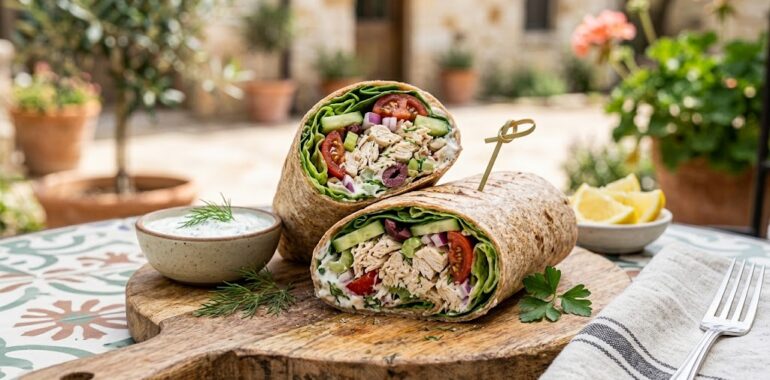
4. Greek Yogurt Chicken Salad Wrap
A lighter option built around Greek yogurt instead of mayonnaise, which boosts protein while cutting unnecessary fat.
Ingredients (serves 2):
- 2 cups shredded cooked chicken
- 1/2 cup plain Greek yogurt
- 1 celery stalk, diced
- 1/4 cup dried cranberries or grapes, halved
- 2 tablespoons chopped walnuts
- Salt and pepper to taste
- 2 high-fiber tortillas or whole wheat wraps
- Handful of mixed greens
Instructions: Combine the shredded chicken, Greek yogurt, celery, cranberries or grapes, and walnuts in a bowl, mixing until evenly coated. Season with salt and pepper. Lay out the wraps, add a handful of mixed greens, then top with the chicken salad mixture before rolling tightly. This filling also works well on its own over greens for a lower-carb version.
5. Salmon and Quinoa Veggie Bowl
Salmon brings healthy fats and high-quality protein, while quinoa adds both fiber and a more complete amino acid profile than most grains.
Ingredients (serves 2):
- 2 salmon fillets
- 1 cup cooked quinoa
- 1 cup steamed broccoli
- 1/2 cup shredded carrots
- 1 tablespoon soy sauce or tamari
- 1 teaspoon sesame oil
- Sesame seeds, for garnish
Instructions: Season the salmon fillets with salt and pepper and cook in a skillet over medium heat for 4–5 minutes per side, until the internal temperature reaches 145°F and the fish flakes easily. Divide the cooked quinoa between two bowls, then top with steamed broccoli, shredded carrots, and the cooked salmon. Drizzle with soy sauce and sesame oil, and finish with a sprinkle of sesame seeds.
Tips for Building Your Own High-Fiber, High-Protein Meals
Anchor each meal around a protein source first. Chicken, turkey, fish, eggs, Greek yogurt, and legumes are all strong choices. Aim for roughly 25–40 grams of protein per meal, depending on your overall daily target.
Add at least one fiber-rich component. Beans, lentils, whole grains, and vegetables like broccoli, Brussels sprouts, and leafy greens all add meaningful fiber without a large calorie cost.
Don’t fear healthy fats, but keep portions in check. A drizzle of olive oil, a few nuts, or avocado add satiety and flavor, but they’re calorie-dense, so measuring rather than eyeballing helps keep a deficit intact.
Batch cook proteins and grains at the start of the week. Having cooked chicken, quinoa, or lentils on hand makes it far easier to assemble a high-protein, high-fiber meal in minutes rather than starting from scratch each time.
Read labels on packaged staples. Tortillas, breads, and pastas vary widely in fiber content. Choosing whole grain or high-fiber versions of these staples is an easy way to boost fiber without changing your overall meal structure.
The Bottom Line
Weight loss doesn’t have to mean small, unsatisfying meals. By building each meal around a solid protein source and pairing it with fiber-rich vegetables, legumes, or whole grains, you can eat genuinely filling portions while still maintaining a calorie deficit. These five recipes are a starting point — once you understand the protein-plus-fiber formula, you can apply it to almost any ingredients you have on hand and keep your meals both satisfying and aligned with your goals.

I’m Brinley, and I believe in progress over perfection. My holistic journey started when I traded rigid fads for the 80/20 rule and nature-based remedies. I only share advice I’ve lived through—from botanical skincare that fixed my dry skin to easy kitchen hacks. I’m here to help you build a nourished life through small, intentional, and sustainable choices.