
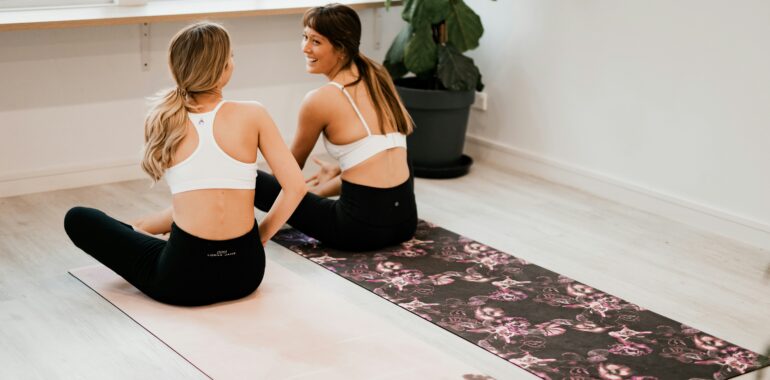
Yoga for the Seasons: Adapting Your Practice to Nature’s Rhythms
For a long time, I treated my yoga practice like a standard gym workout. I used to think that if I didn’t leave the mat dripping in sweat and feeling “pushed” to my limit, the session didn’t count. It wasn’t until I started noticing how much harder it felt to drag myself through a fiery power-vinyasa class in the dead of winter compared to the bright mornings of June that I realized I was fighting against the natural world. I discovered that our bodies have a biological “seasonality,” and when we align our movement with the rhythms outside our window, everything feels more effortless.
I’ve since learned that “seasonal yoga” isn’t just a trend; it’s a way to keep your nervous system in balance. Just as we instinctively change our wardrobes or our grocery lists when the temperature shifts, our joints, muscles, and energy levels benefit from a change in pace. I learned that being fiery when nature is blooming and being still when nature is resting is the ultimate act of self-kindness. It’s about moving away from the “all-out, all-the-time” mentality and returning to a practice that feels intuitive and sustainable.
This guide explores how to tweak your practice for each season. We’ll look at the best poses for different times of year and share four simple “seasonal flows” that help you stay connected to the earth’s natural cycles.
The Science of Seasonal Movement: Circadian Rhythms
Living holistically means acknowledging that we are part of nature, not separate from it. Our bodies respond to changes in light and temperature on a cellular level.
1. Light and Energy Levels
In the summer, the abundance of sunlight naturally boosts our serotonin and energy. In the winter, our bodies want to conserve energy to maintain core temperature and support immune function.
Personal Tip: Try to do your practice near a window if you can. Getting that direct sunlight in your eyes—especially in the darker months—is a huge help for regulating your sleep-wake cycle. You’ll feel a massive difference in your mood if you move with the natural light rather than under artificial bulbs.
2. Joint Lubrication and Temperature
Our joints can feel “stiffer” in colder months because synovial fluid—the lubricant in our joints—can become slightly thicker.
Personal Tip: Spend an extra five minutes on “joint circling” (wrists, ankles, and neck) during the fall and winter. Giving your knees and lower back a slow, warm “wake-up” before jumping into standing poses is the best way to prevent those nagging seasonal aches.
Spring: The “Renewal” Flow
Spring is all about upward energy and “shaking off” the stagnation of winter. We focus on twists to stimulate the digestive system and heart openers to welcome new growth.
- Focus: Twists, Core Strength, Heart Openers.
- Duration: 20 Minutes.
- Category: Energetic / Detoxifying.
The Key Poses
- Sun Salutations (Surya Namaskar): To build internal heat and circulation.
- Revolved Chair Pose: To stimulate the digestive organs.
- Dancer’s Pose: To embrace the “upward” energy of spring.
The Routine
- The Warm-up: Three rounds of Sun Salutations at a moderate pace to get the blood flowing.
- The Twist: Hold a Revolved Crescent Lunge for 5 breaths on each side.
- The Opening: Finish with a Bridge Pose to open the chest and lungs for deeper breathing.
Personal Tip: Use a “Zesty” essential oil like grapefruit or lemon in the room. The scent acts as a mental “reset” and helps clear out that lingering winter brain fog while you’re moving through your twists.
Summer: The “Cooling” Flow
When the external heat is high, our internal practice should be cooling and expansive. This is the time to avoid over-exertion and focus on grounding, calming movements.
- Focus: Forward Folds, Side Body Stretches, Gentle Inversions.
- Duration: 15 Minutes.
- Category: Cooling / Calming.
The Key Poses
- Wide-Legged Forward Fold: To release heat from the back of the legs.
- Gate Pose: To open the side ribs and encourage deep, cooling breaths.
- Legs-Up-The-Wall: The ultimate cooling pose for tired, hot feet.
The Routine
- The Stretch: Spend 2 minutes in a Wide-Legged Forward Fold, letting the head hang heavy to quiet the mind.
- The Breath: Practice “Sitali” breath (curling the tongue and inhaling through the mouth) between poses.
- The Rest: Finish with 5 minutes of Legs-Up-The-Wall near a cool breeze or fan.
Personal Tip: Move about 20% slower in the summer. Pushing too hard when it’s $90^\circ F$ outside just leads to irritability. If you start to feel “hot-headed,” it’s a signal from your body to drop into a child’s pose and just breathe.
Autumn: The “Stability” Flow
As the wind picks up and things get “airy,” our practice needs to be grounding. We focus on the lower body to find stability when the world feels chaotic.
- Focus: Standing Balances, Rooting, Hip Opening.
- Duration: 25 Minutes.
- Category: Grounding / Earthy.
The Key Poses
- Tree Pose: To find focus and mental clarity.
- Warrior II: To build strength and “root” the feet firmly into the earth.
- Pigeon Pose: To release the tension that often gathers in the hips during transitions.
The Routine
- The Foundation: Hold Warrior I and II for 10 breaths each, focusing on the weight in your heels.
- The Balance: Spend 1 minute in Tree Pose on each side, staring at a single unmoving point on the wall.
- The Release: End with a long-held Pigeon Pose (3 minutes per side) to settle the nervous system.
Personal Tip: Use a weighted blanket or extra thick socks for your Savasana. The extra weight provides “proprioceptive input” that tells your nervous system it is safe to settle down and ground.
Winter: The “Restorative” Flow
Winter is the time for deep rest and introspection. Your practice should feel like a warm hug for your nervous system—it’s about recovery, not effort.
- Focus: Floor Poses, Long Holds, Back Support.
- Duration: 30 Minutes.
- Category: Restorative / Nourishing.
The Key Poses
- Supported Fish Pose: Using a bolster or rolled towel to open the heart gently.
- Child’s Pose: For a sense of safety and internal focus.
- Supported Reclined Bound Angle: To nourish the reproductive and digestive systems.
The Routine
- The Heart: Lay over a bolster for 5 minutes in Supported Fish to counteract “huddling” from the cold.
- The Internal: Spend 5 minutes in a wide-kneed Child’s Pose with a pillow under your chest.
- The Stillness: A 10-minute Savasana wrapped in your favorite warm blanket.
Personal Tip: Don’t worry about “burning calories” in the winter. Treat your yoga mat as a place for healing. If all you do is lay on a bolster and breathe for twenty minutes, it’s a perfectly successful practice.
Dancing with the Seasons
Adapting your yoga practice to the seasons is one of the most powerful ways to stay connected to your natural self. It’s a reminder that we are not robots meant to perform at 100% capacity every single day of the year. By embracing the blooming of spring, the heat of summer, the grounding of autumn, and the stillness of winter, you are creating a sustainable, lifelong relationship with movement. Listen to the wind, watch the light, and let your body guide you toward the rhythm that feels like home.
Final Tip: Keep a small “seasonal altar” near your mat—maybe a bowl of stones in the winter or fresh flowers in the spring. It’s a simple visual cue that helps you shift your mental state into the right “gear” before you even start your first pose!
I’m Brinley, and I believe in progress over perfection. My holistic journey started when I traded rigid fads for the 80/20 rule and nature-based remedies. I only share advice I’ve lived through—from botanical skincare that fixed my dry skin to easy kitchen hacks. I’m here to help you build a nourished life through small, intentional, and sustainable choices.