
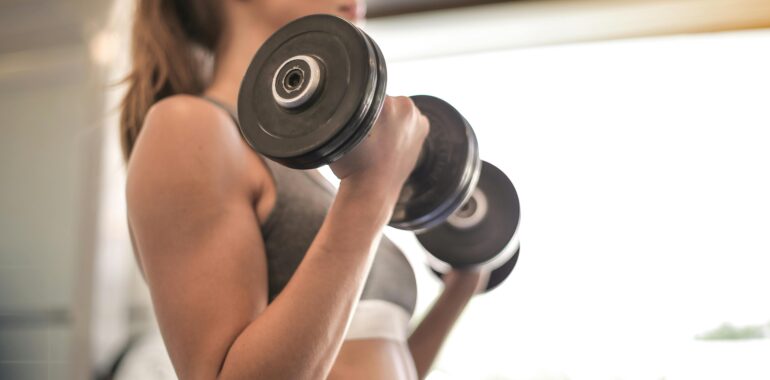
Dumbbell Workouts at Home: Simple Routines for Any Fitness Level
Joining a gym can feel like a major commitment of time and money. The commute, the crowded weight room, and the monthly fees can be significant hurdles. But I discovered that you can get a highly effective, full-body strength workout without ever leaving your house. All you need is a single piece of equipment: a pair of dumbbells.
Dumbbells are arguably the most versatile and cost-effective tools for building strength at home. I rely on them because they take up minimal space, can be adjusted for any fitness level, and allow for a huge range of exercises that target every major muscle group. Whether you are a complete beginner or an experienced lifter, dumbbell workouts offer a practical way to build muscle, burn fat, and improve your overall health.
This guide will show you how to unlock the power of dumbbell training. I will provide simple, effective routines for beginner, intermediate, and advanced levels, along with essential tips on form and safety. It’s time to discover how this humble equipment can transform your fitness from the comfort of your living room.
Why Dumbbells Are Perfect for Home Workouts
Before we dive into the routines, let’s look at what makes dumbbells such a fantastic investment for your home gym.
- Versatility: Unlike machines that lock you into a single movement, dumbbells allow for a natural range of motion. You can use them to target large muscle groups with compound exercises like squats and presses, or isolate smaller muscles with curls and raises.
- Improved Stability: Because you have to control two separate weights, your stabilizer muscles are forced to work harder to maintain balance. This leads to improved core strength and joint stability, which can help prevent injuries.
- Space-Saving: A full set of dumbbells takes up far less space than a barbell and weight rack or a large home gym machine. For those in apartments or with limited room, they are the perfect solution.
- Scalability: As you get stronger, you can simply increase the weight of your dumbbells. This principle, known as progressive overload, is the key to making continuous progress in your fitness journey.
Personal Tip: If you have limited space, I highly recommend investing in adjustable dumbbells. I found that they save the space of 10 different pairs and allow you to easily scale up the weight as you get stronger, without having to buy new equipment.
Safety and Form First
To get the most out of your workouts and avoid injury, always prioritize proper form.
- Start Light: Choose a weight that allows you to complete all repetitions with good form. If your form breaks down, the weight is too heavy. It’s better to lift a lighter weight correctly than a heavier weight poorly.
- Control the Movement: Avoid using momentum to swing the weights. Each exercise should be performed in a slow, controlled manner, focusing on squeezing the target muscle.
- Engage Your Core: Keep your core tight throughout every exercise. This will protect your lower back and improve your stability.
- Warm-Up and Cool-Down: Always start with a 5-minute warm-up of light cardio (like jogging in place or jumping jacks) and dynamic stretches. End your workout with a 5-minute cool-down of static stretches, holding each for 20-30 seconds.
Personal Tip: Before every major lift (squats, deadlifts, presses), I take a deep breath and “brace” my core as if someone is about to punch my stomach. I found that this conscious bracing protects my lower back and maximizes core engagement throughout the movement.
Dumbbell Routines for Every Fitness Level
Here are three full-body routines designed to be completed 2-3 times per week on non-consecutive days. This allows your muscles time to recover and grow.
Beginner Routine: Building a Strong Foundation
If you are new to strength training, the goal is to learn the fundamental movements and build a base level of strength. Focus on mastering the form before increasing the weight.
Instructions: Perform each exercise for 3 sets of 10-12 repetitions. Rest for 60 seconds between sets.
- Dumbbell Goblet Squats: Hold one dumbbell vertically against your chest with both hands. Stand with your feet shoulder-width apart. Keeping your chest up and back straight, lower your hips as if sitting in a chair. Go as low as you can comfortably, then press through your heels to return to the starting position.
- Dumbbell Bench Press: Lie on a flat bench or the floor with a dumbbell in each hand at chest level. Your palms should face forward. Press the dumbbells straight up until your arms are fully extended, but not locked. Slowly lower the weights back to the starting position.
- Dumbbell Rows: Place your left knee and left hand on a bench or sturdy chair. Hold a dumbbell in your right hand with your arm extended toward the floor. Keeping your back flat, pull the dumbbell up toward your chest, squeezing your back muscles. Lower the weight with control. Complete all reps on one side before switching.
- Dumbbell Shoulder Press: Sit or stand with a dumbbell in each hand at shoulder height, palms facing forward. Press the dumbbells overhead until your arms are fully extended. Slowly lower them back to the starting position.
- Plank: This is a bodyweight exercise to finish. Hold a plank position on your forearms or hands for 3 sets of 30-45 seconds.
Personal Tip: I record the weights and reps I use for each workout in a simple phone note. I found that seeing your past numbers (and aiming to beat them next time) is the simplest, most effective way to ensure progressive overload and keep making gains.
Intermediate Routine: Increasing the Intensity
Once you feel confident with the beginner movements and can complete them easily, you are ready to increase the challenge with more complex exercises and less rest.
Instructions: Perform each exercise for 3 sets of 8-12 repetitions. Rest for 45-60 seconds between sets.
- Dumbbell Lunges: Stand with a dumbbell in each hand at your sides. Step forward with your right leg and lower your hips until both knees are bent at a 90-degree angle. Your front knee should be directly above your ankle, and your back knee should hover just above the ground. Push off your right foot to return to the start. Alternate legs with each rep.
- Incline Dumbbell Press: Lie on a bench set to a 30-45 degree incline. Hold a dumbbell in each hand at chest level. Press the weights up and slightly back until your arms are fully extended. This variation places more emphasis on the upper chest.
- Romanian Deadlifts (RDLs): Stand with feet hip-width apart, holding a dumbbell in each hand in front of your thighs. With a slight bend in your knees, hinge at your hips and lower the dumbbells toward the floor, keeping your back straight. Lower as far as your hamstring flexibility allows, then squeeze your glutes to return to the starting position.
- Lateral Raises: Stand with a dumbbell in each hand at your sides, palms facing in. Keeping a slight bend in your elbows, raise your arms out to the sides until they are parallel to the floor. Lower the weights with control.
- Bicep Curls to Overhead Press: Combine two movements into one. Stand holding dumbbells at your sides. First, perform a bicep curl. At the top of the curl, rotate your hands and press the dumbbells directly overhead into a shoulder press. Reverse the movement with control. That’s one rep.
Advanced Routine: Maximizing Strength and Muscle
This routine uses compound sets (performing two exercises for the same muscle group back-to-back) to maximize intensity and muscle fatigue, leading to greater growth.
Instructions: Perform each pair of exercises (A and B) as a compound set. Complete 3-4 sets of 8-10 repetitions for each exercise with minimal rest between A and B. Rest for 60 seconds after completing both exercises.
- 1A. Dumbbell Thrusters: Hold two dumbbells at your shoulders. Perform a full squat. As you explode up from the bottom of the squat, use the momentum to press the dumbbells directly overhead. Lower the dumbbells back to your shoulders to complete one rep.
- 1B. Renegade Rows: Get into a push-up position with your hands gripping two dumbbells. Your feet should be wide for stability. Perform a push-up. At the top, row one dumbbell up to your chest, then the other. That entire sequence is one rep.
Personal Tip: For core stability in Renegade Rows, I widen my feet beyond hip-width. I found that creating a wider base of support prevents my hips from rotating, keeping the movement focused on my core and back.
- 2A. Bulgarian Split Squats: Stand a few feet in front of a bench. Place the top of your right foot on the bench behind you. Holding dumbbells, lower your hips until your front thigh is parallel to the floor. Press through your front foot to return to the start. Complete all reps on one side before switching.
- 2B. Glute Bridges: Lie on your back with your knees bent and feet flat on the floor. Place a dumbbell across your hips. Drive through your heels and squeeze your glutes to lift your hips toward the ceiling. Hold for a second at the top before lowering.
- 3A. Arnold Press: Sit on a bench holding dumbbells in front of you at shoulder height, palms facing your body. As you press the weights overhead, rotate your hands so that your palms face forward at the top. Reverse the motion as you lower the weights.
- 3B. Dumbbell Pullovers: Lie on a bench with your head supported. Hold one dumbbell with both hands over your chest. Keeping a slight bend in your elbows, lower the dumbbell in an arc behind your head. Feel the stretch in your lats and chest, then pull the weight back to the starting position.
Personal Tip: Before starting a set, I physically tap the muscle I’m about to work (e.g., tapping my bicep before curls). I found that this quick “mind-muscle connection” cue significantly improves the quality of the contraction and makes the workout more efficient.
Your Home, Your Gym, Your Strength
You don’t need a fancy membership or complicated machinery to build the body you want. With a simple pair of dumbbells and the right plan, your home becomes a powerhouse for building strength and transforming your health. Consistency is the key. Start with a routine that fits your level, focus on perfect form, and challenge yourself to get stronger over time. The journey to a fitter, more confident you is waiting right in your living room.
Final Tip: I always do a quick 30-second set of dumbbell curls while watching the news or waiting for water to boil. I found that capitalizing on these small bits of “found time” ensures I always get a little bit of strength training in, even on my rest days.
I’m Brinley, and I believe in progress over perfection. My holistic journey started when I traded rigid fads for the 80/20 rule and nature-based remedies. I only share advice I’ve lived through—from botanical skincare that fixed my dry skin to easy kitchen hacks. I’m here to help you build a nourished life through small, intentional, and sustainable choices.