
The Cold Edge: A Beginner’s Guide to Cold-Exposure Training
I viewed the winter months as a period of physical hibernation—a time to retreat indoors and avoid the “elements” at all costs. Previously, I assumed that being cold was simply a biological stressor that led to illness or, at the very least, a miserable workout. It was easy to believe that exercise was only effective in a climate-controlled gym or under the summer sun. Everything changed when I learned about “Brown Adipose Tissue” (BAT). I discovered that safe, intentional exposure to the cold isn’t just a test of mental toughness; it is a metabolic switch. By stepping out into the winter air or dipping into cold water, you can actually recruit “brown fat”—a type of fat that burns calories to generate heat—transforming your metabolism from the inside out.
The goal of cold-exposure training is to build metabolic flexibility and resilience. I love the “primal” clarity of this practice. It’s the realization that our bodies are designed to handle temperature fluctuations, and that by shielding ourselves in 70-degree rooms all year, we’ve let our internal furnaces go dormant. When you start incorporating outdoor winter walks or “wild swimming” into your routine, you move beyond just “burning calories.” You begin to improve your insulin sensitivity, deepen your sleep, and develop a level of mental grit that carries over into every other area of your life.
The Science of the “Brown Fat” Switch
Unlike white fat, which stores energy, Brown Adipose Tissue (BAT) is packed with mitochondria and burns energy to keep you warm.
- Thermogenesis: When you are exposed to cold, your body initiates non-shivering thermogenesis. This process can increase your metabolic rate by up to 300% as your brown fat works to maintain your core temperature.
- The “Cold Shock” Response: Brief exposure to cold water or air triggers a massive release of norepinephrine (a neurotransmitter), which improves focus and has a powerful anti-inflammatory effect on the joints.
Technique 1: The “Cold-Air” Winter Walk
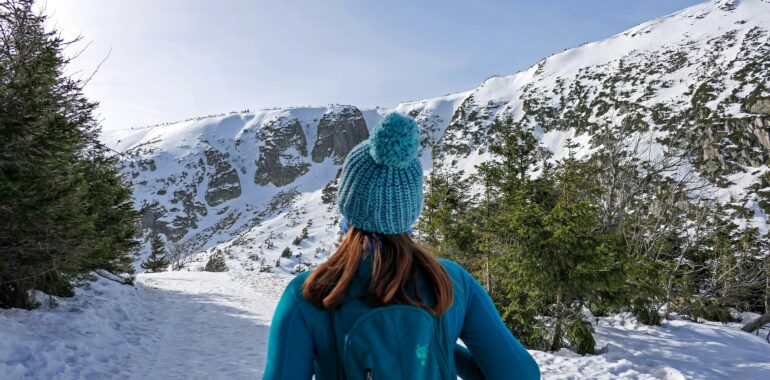
The easiest entry point for beginners involves a 20-minute walk in temperatures between -1°C and 7°C (30°F to 45°F). To make this effective, you should wear light layers rather than heavy parkas, maintain a brisk pace, and focus on nasal breathing. Walking in cold air requires more cardiovascular effort than walking in the heat, effectively turning a standard stroll into a metabolic workout.
How to Implement:
- Layer Judiciously: Wear enough to be “comfortably cold.” You should feel a slight chill for the first 5 minutes of the walk.
- Maintain Momentum: Keep a vigorous pace to encourage blood flow and keep your core temperature stable.
- Protect the Airways: Inhale through the nose to warm the air before it hits your lungs.
- Post-Walk Recovery: Once home, let your body warm itself back up naturally for 10 minutes before hopping in a shower to maximize the “afterburn.”
Personal Tip: I call this “The 5-Minute Rule.” If I’m still shivering after 5 minutes of walking, I’ve under-dressed too much and I’ll add a light layer next time. The goal is to feel the cold, not to suffer through it.
Technique 2: “Wild Swimming” (Cold Water Dipping)
This is the high-performance version of cold exposure. Because water conducts heat away from the body 25 times faster than air, even a 2-minute dip in 10°C (50°F) water can elevate your metabolic rate for hours afterward. This is best done in a natural body of water or an unheated outdoor pool with a partner present.
How to Implement:
- Acclimatize First: Start with 30-second cold showers at home for a week before heading to open water.
- Safe Entry: Walk in slowly. Do not dive in, as the “gasp reflex” can be dangerous in deep water.
- Breath Control: Focus on long, slow exhales. This signals to your nervous system that you are safe and prevents the panic response.
- Manage the “After-drop”: Limit your first sessions to 2–3 minutes. Get out before you think you “need” to, as your body continues to cool down even after you’re dry.
Personal Tip: Focus on your breath, not the temperature. The second you start “fighting” the water, your muscles tense up and it feels colder. If you can keep your breath slow and steady, you’ll be amazed at how quickly your body adapts.
Safety First: The Golden Rules of Cold
Cold training is a “hormetic stressor”—it’s beneficial in small doses but dangerous in excess.
- Listen to Your Skin: If your skin turns white or feels “waxy,” get inside immediately.
- Warm Up Slowly: Avoid “High-Heat” sources (like scalding showers) immediately after cold exposure. This can cause a rapid drop in blood pressure. Use blankets and warm drinks instead.
- Consistency over Intensity: 10 minutes of cold air every day is better for your metabolism than one 60-minute session once a week.
Embrace the Shiver
Cold-exposure training is one of the fastest ways to reconnect with your body’s natural capabilities. By stepping outside into the February air or dipping into a chilly lake, you are sending a signal to your cells to wake up, burn fuel, and get stronger. You don’t need an expensive “cold plunge” tub; you just need a little bit of winter and the willingness to be briefly uncomfortable.
Final Tip: Keep a “Post-Cold” journal. Note how you feel 30 minutes after your exposure. Most people report a “high” of mental clarity and energy that lasts for the entire afternoon. Once you experience that, you’ll actually start looking forward to the cold!

I’m Brinley, and I believe in progress over perfection. My holistic journey started when I traded rigid fads for the 80/20 rule and nature-based remedies. I only share advice I’ve lived through—from botanical skincare that fixed my dry skin to easy kitchen hacks. I’m here to help you build a nourished life through small, intentional, and sustainable choices.