
The Gluten-Free Glow: 5 Delicious Meals That Don’t Taste Like Compromise
For a long time, I viewed “Gluten-Free” as a synonym for “cardboard-adjacent”—a restrictive way of eating defined by what was missing rather than what was on the plate. Previously, my experience with GF meals involved crumbly bread that tasted like sand or pasta that turned into a gummy, starchy heap within seconds of hitting the water. It was easy to believe that a gluten-free life meant waving goodbye to comfort food forever. Everything changed when I stopped trying to “replace” wheat and started focusing on naturally gluten-free whole foods. I discovered that some of the most indulgent, flavorful cuisines in the world—from Thai curries to Mexican street tacos—never needed gluten in the first place.
The goal of a high-quality gluten-free meal is to prioritize texture and vibrant flavor so you never feel like you’re “missing out.” I love the culinary freedom this brings. It’s the realization that when you remove processed flours, you make room for more fiber, healthy fats, and high-quality proteins. When you master a few simple swaps—like using tamari instead of soy sauce or chickpea flour for a crispy coating—the “gluten-free” label becomes invisible. You aren’t eating “special” food; you’re just eating incredibly well.
The GF Texture Secret: Moisture and Crunch
The biggest hurdle in gluten-free cooking is avoiding the “dry” or “mushy” trap.
- The “Crunch” Factor: Since gluten provides elasticity, GF foods can feel one-note. Use seeds, nuts, or crispy aromatics (like fried shallots) to add the textural contrast your brain craves.
- The “Moisture” Bridge: GF grains like quinoa or brown rice absorb sauce differently. Always lean toward “saucy” preparations to keep the dish from feeling parched.
Recipe 1: The “Street Style” Shrimp Tacos
Mexican cuisine is a gluten-free goldmine. By using 100% corn tortillas, you get a naturally GF meal with zero effort.
- The Base: Corn Tortillas + Wild-Caught Shrimp.
- The “Fix”: Cabbage Slaw, Pickled Red Onions, and a Chipotle-Lime Crema.
- The Stats: Corn is a whole grain that provides more fiber and antioxidants than white flour, and it’s naturally free of the proteins that cause bloating in sensitive individuals.
The Instructions:
- The Seasoning: Toss shrimp in cumin, chili powder, and garlic.
- The Sear: Sauté in a hot pan for 2 minutes per side until pink and curled.
- The Shell: Char your corn tortillas directly over a gas flame for 10 seconds to make them pliable and smoky.
- Assemble: Layer the shrimp, top with crunchy cabbage, and drizzle with the crema.
Personal Tip: Always check your taco seasoning! Many store-bought packets use wheat flour as a thickening agent. I make my own in a small jar so I know exactly what’s inside.
Recipe 2: Red Curry “Zoodle” Laksa
A Thai-inspired, aromatic soup that replaces heavy noodles with zucchini ribbons for a light, anti-inflammatory finish.
- The Base: Coconut Milk + Red Curry Paste (ensure it’s GF).
- The “Fix”: Zucchini Ribbons (Zoodles), Bamboo Shoots, and Fresh Basil.
- The Stats: Coconut milk provides Medium-Chain Triglycerides (MCTs), which are healthy fats used by the brain for immediate energy.
The Instructions:
- The Base: Whisk 1 can of coconut milk with 2 Tbsp of red curry paste in a pot. Bring to a simmer.
- The Protein: Add cubed tofu or sliced chicken and cook until done.
- The Greens: Toss in the zucchini ribbons at the very last second. They only need 30 seconds of heat to soften without getting soggy.
- The Zing: Finish with a squeeze of lime and a handful of cilantro.
Recipe 3: The “Socca” Chickpea Pizza
Forget the gummy frozen GF crusts. This traditional French flatbread made from chickpea flour is naturally crispy, nutty, and high in protein.
- The Base: Chickpea Flour (Besan) + Water.
- The “Fix”: Pesto, Heirloom Tomatoes, and Fresh Arugula.
- The Stats: Chickpea flour is a “super-flour”—it’s high in protein and iron, making this a much more nutrient-dense base than standard dough.
The Instructions:
- The Batter: Whisk 1 cup chickpea flour with 1 cup water and 1 Tbsp olive oil. Let it sit for 30 minutes (this is the secret to a smooth texture!).
- The Bake: Pour into a hot, oiled oven-safe skillet. Bake at 450°F for 12–15 minutes until the edges are crispy and browned.
- The Toppings: Spread with pesto and tomatoes, then pop back in for 2 minutes to warm through.
Personal Tip: Don’t skip the “rest” time for the batter. It allows the flour to fully hydrate, which prevents the flatbread from tasting “beany” or dry.
Recipe 4: Mediterranean Quinoa “Paella”
A one-pot wonder that uses quinoa instead of rice for a higher-protein, lower-glycemic take on the Spanish classic.
- The Base: Quinoa + Vegetable Broth.
- The “Fix”: Saffron (or Turmeric), Frozen Peas, Artichoke Hearts, and Roasted Red Peppers.
- The Stats: Quinoa is one of the few plant-based Complete Proteins, containing all nine essential amino acids.
The Instructions:
- Sauté: Cook onions and garlic in a pan. Add the quinoa and toast it for 2 minutes.
- Simmer: Add broth and saffron. Cover and simmer for 15 minutes.
- The Fold: Stir in the peas, artichokes, and peppers. Let them sit in the hot quinoa for 5 minutes with the lid on to steam.
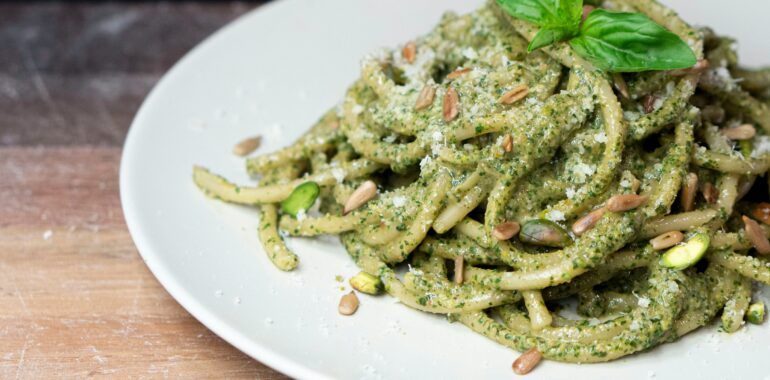
Recipe 5: Brown Rice Pasta with “Walnut Pesto”
When you need the comfort of pasta, brown rice noodles are the most reliable GF option that actually holds its shape.
- The Base: Brown Rice Penne.
- The “Fix”: Walnuts, Basil, Spinach, and Garlic.
- The Stats: Walnuts are a top source of Alpha-Linolenic Acid (ALA), an Omega-3 fatty acid that supports heart and brain health.
The Instructions:
- The Noodle: Boil the pasta in plenty of water.
- The Pesto: Pulse the walnuts, basil, spinach, and garlic in a food processor while drizzling in olive oil.
- Combine: Toss the pasta with the fresh pesto and a splash of the pasta cooking water to create a creamy sauce.
Personal Tip: Rinse GF pasta under cold water immediately after draining to stop the cooking process and remove the excess starch that makes it sticky.
Living Beyond the Label
Gluten-free cooking isn’t about restriction; it’s about exploration. When you stop looking at the “GF” aisle and start looking at the produce and bulk bins, you find a world of ingredients that are naturally designed to make you feel your best. Whether it’s the high-protein crunch of a chickpea socca or the vibrant zing of a street taco, these meals prove that the best food doesn’t need gluten to be extraordinary.
Final Tip: Keep a bottle of Tamari in your pantry. It’s a Japanese soy sauce made without wheat, and it has a richer, deeper “umami” flavor than regular soy sauce. It’s the easiest swap to make your entire kitchen GF-friendly!

I’m Brinley, and I believe in progress over perfection. My holistic journey started when I traded rigid fads for the 80/20 rule and nature-based remedies. I only share advice I’ve lived through—from botanical skincare that fixed my dry skin to easy kitchen hacks. I’m here to help you build a nourished life through small, intentional, and sustainable choices.