
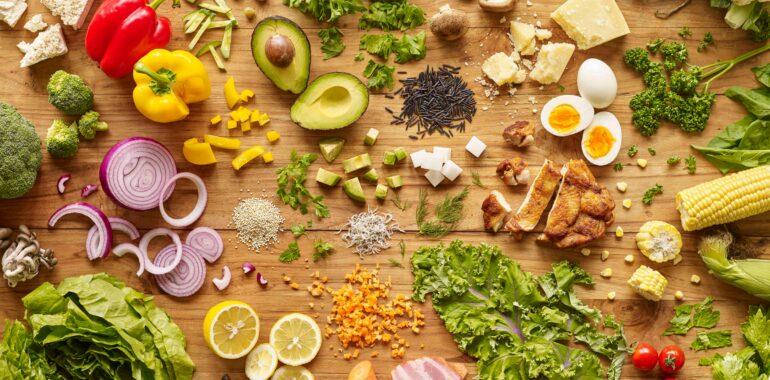
The Culinary Pharmacy: How Food Acts as Biological Software
For a long time, I viewed food through a purely “Caloric Lens”—a simple matter of fueling a biological engine with enough energy to get through the day. Previously, I assumed that medicine came in a bottle and food was just a side note to health. Everything changed when I looked into “Nutrigenomics” and the role of “Bioactive Compounds” in gene expression. I discovered that every bite we take isn’t just fuel; it’s a complex set of instructions that tells our cells how to behave. By shifting my focus toward “Functional Ingredients,” I realized that our kitchens are effectively the front line of our internal defense systems.
The goal of viewing Food as Medicine is to move away from reactive treatment and toward proactive maintenance. By understanding the science behind what we eat, I’ve been able to support my energy levels and long-term health with much more precision. When I prioritize ingredients that fight inflammation and support gut health, I feel a direct impact on my mental clarity and physical resilience.
The Science of Biological Information
Why does “Functional Food” affect us so deeply? It’s about how nutrients interact with our DNA:
- The Sulforaphane Signal: Found in cruciferous vegetables like broccoli, this compound triggers the Nrf2 pathway, which is the body’s strongest internal antioxidant defense. It’s not just a vegetable; it’s a “Master Switch” for cellular protection.
- The Anthocyanin Buffer: The deep pigments in berries do more than look good. These compounds cross the blood-brain barrier to reduce “Oxidative Stress,” effectively acting as a “Neural-Shield” for your cognitive function.
- The Microbiome-Axis: High-fiber foods aren’t just for digestion. They are fermented by gut bacteria into Short-Chain Fatty Acids (SCFAs), which communicate directly with the immune system to lower systemic inflammation.
Your Kitchen’s Top “Medicinal” Anchors
1. Turmeric & Black Pepper (The Anti-Inflammatory Duo)
Curcumin, the active part of turmeric, is a powerful anti-inflammatory. However, it’s hard for the body to absorb on its own. I always pair it with black pepper, which contains piperine—a compound that increases curcumin absorption by up to 2,000%.
2. Garlic (The Cardiovascular Guard)
Garlic contains allicin, which has been shown to support healthy blood pressure and cholesterol levels. I’ve learned that “Crush and Wait” is the key: crushing the garlic and letting it sit for 10 minutes before cooking activates the enzymes that create the allicin.
3. Leafy Greens (The Methylation Support)
Spinach and kale are packed with folate, a B-vitamin essential for DNA methylation. This process helps “silence” bad genes and activate good ones. I try to include a “Daily Green” to ensure my cellular repair cycles have the raw materials they need.
Habits for “Nutrient-Density”
- Eat the Rainbow: Different colors in plants represent different “Phyto-chemicals.” By eating a variety of colors, I ensure I’m getting a broad spectrum of “Biological Instructions” for my cells.
- Low-Heat Cooking: To protect delicate enzymes and vitamins, I try to steam or sauté at lower temperatures. High heat can damage the “Medicinal” properties of many vegetables.
- The “Fiber-First” Rule: I try to start my meals with a salad or fiber source. This slows down the absorption of sugars and protects my “Insulin-Sensitivity,” keeping my energy steady.
Personal Tip: I’ve found that adding a splash of extra virgin olive oil to my vegetables is a game-changer. Many of the most powerful nutrients, like Vitamins A, D, E, and K, are fat-soluble, meaning the oil acts as the “Delivery-Vehicle” to get them into my system!
My Take on the Daily Plate
Embracing the science of food as medicine has completely shifted how I shop and cook. By focusing on “Bioactive Density” rather than just calories, I’ve moved away from the “Quick-Fix” mentality. I’ve found that when I treat my meals as a form of cellular support, my Brain Fog clears and my overall vitality feels much more consistent. This week, I’m doubling down on Sulforaphane-rich sprouts—it’s the easiest way I’ve found to give my body’s internal defense system a major upgrade.
Final Tip: Think of your grocery list as a “Prescription for Vitality.” When you choose whole, unprocessed foods, you’re giving your body the high-quality data it needs to run at its absolute best!

I’m Brinley, and I believe in progress over perfection. My holistic journey started when I traded rigid fads for the 80/20 rule and nature-based remedies. I only share advice I’ve lived through—from botanical skincare that fixed my dry skin to easy kitchen hacks. I’m here to help you build a nourished life through small, intentional, and sustainable choices.