
High-Protein Snacks You Can Actually Grab and Go
The gap between “healthy snack” and “convenient snack” is where most good intentions fall apart. Protein bars can be expensive and packed with as much sugar as candy, and prepping something elaborate every day simply isn’t realistic for most schedules. The good news is that a rotation of a few simple, genuinely portable, protein-rich snacks can be prepped once and grabbed all week, without requiring daily effort or relying on processed bars.
Below are several high-protein snacks worth keeping stocked, along with the reasoning behind why protein matters so much in a snack specifically.
Why Protein Matters More in Snacks Than You’d Think
Snacks built around refined carbohydrates alone — crackers, chips, most granola bars — tend to spike blood sugar quickly and leave you hungry again within an hour or two. Protein slows digestion and has a more sustained effect on satiety, meaning a protein-forward snack keeps you satisfied for longer and helps avoid the cycle of grazing that often happens when a snack doesn’t actually hold you over.
1. Greek Yogurt with Berries and Nuts
Why it works: A single cup of plain Greek yogurt provides roughly 20 grams of protein on its own, and pairing it with berries and a small handful of nuts adds fiber and healthy fat for a more balanced, filling snack.
Prep tip: Portion individual servings into small containers at the start of the week, adding nuts just before eating to keep them from getting soggy.
2. Hard-Boiled Eggs
Why it works: One of the simplest, most portable protein sources available, hard-boiled eggs provide about 6 grams of protein each and require zero preparation beyond the initial boiling.
Prep tip: Boil a batch of 6–8 eggs at the start of the week; they keep well in the fridge, shell-on, for up to a week.
3. Cottage Cheese with Fruit
Why it works: Cottage cheese is one of the highest-protein dairy options available, often providing 12–14 grams of protein per half-cup serving, and pairs well with fresh or frozen fruit for natural sweetness.
Prep tip: Individual portion cups make this an easy grab-and-go option; adding fruit just before eating keeps the texture fresh.
4. Edamame
Why it works: A plant-based option providing roughly 17 grams of protein per cup, edamame also offers fiber and a satisfying, slightly salty flavor when lightly seasoned.
Prep tip: Steam or microwave a bag of frozen edamame in bulk, then portion into small containers for a quick grab from the fridge.
5. Turkey and Cheese Roll-Ups
Why it works: Rolling sliced turkey around a piece of cheese (with an optional pickle or cucumber spear inside) provides a substantial protein hit with minimal preparation and no carbs needed to make it feel complete.
Prep tip: Prepare a batch of roll-ups at the start of the week and store in a container lined with parchment to keep them from sticking together.
6. Protein-Packed Trail Mix
Why it works: A homemade mix of nuts, seeds, and a small amount of dried fruit provides a more balanced protein-to-sugar ratio than most store-bought trail mixes, which often lean heavily on candy or chocolate.
Recipe: Combine 1 cup almonds, 1 cup pumpkin seeds, 1/2 cup walnuts, and 1/4 cup dried cranberries. Portion into small bags or containers for grab-and-go servings of about 1/4 cup each.
7. Roasted Chickpeas
Why it works: Chickpeas provide a satisfying crunch along with fiber and a solid dose of plant-based protein, making them a good substitute for chips or crackers.
Recipe: Toss drained, rinsed, and thoroughly dried chickpeas with olive oil and your seasoning of choice (smoked paprika and garlic powder work well), then roast at 400°F for 25–30 minutes, shaking the pan halfway through, until crispy.
8. Peanut Butter and Apple Slices
Why it works: A classic combination that balances natural sweetness and fiber from the apple with protein and healthy fat from the peanut butter, making it more filling than fruit alone.
Prep tip: Pack individual portions of peanut butter in small containers to prevent apple slices from browning while stored together; a squeeze of lemon juice on the apple slices also helps slow browning.
9. Tuna or Salmon Packets with Crackers
Why it works: Single-serve tuna or salmon packets require zero refrigeration until opened, making them one of the most genuinely portable protein options available, and they provide roughly 20 grams of protein per serving.
Prep tip: Keep a few packets in a desk drawer, bag, or car for situations where refrigeration isn’t an option.
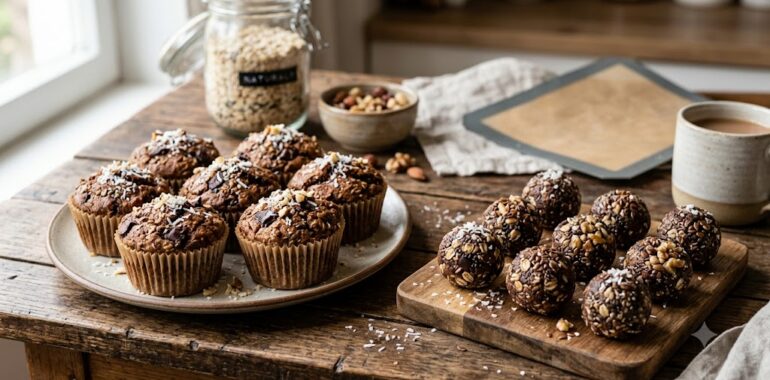
10. Protein Muffins or Energy Bites
Why it works: Homemade protein muffins or energy bites, made with oats, nut butter, and a scoop of protein powder, offer a more balanced macro profile than most store-bought bars, while still feeling like a genuine treat.
Recipe: Combine 1 cup rolled oats, 1/2 cup natural peanut butter, 1/3 cup protein powder, 1/4 cup honey, and a splash of milk to bind. Roll into balls or bake as muffins at 350°F for 15–18 minutes, then store in the fridge for up to a week.
Building a Grab-and-Go Snack Station
Rather than relying on daily decision-making, it helps to designate a specific shelf in the fridge or pantry for pre-portioned snacks, prepped once during a weekly routine (often alongside other meal prep). Having several ready-made options visible and accessible removes the friction that leads to reaching for whatever’s fastest, which is often the least nutritious option available.
Tips for Choosing (or Building) a Good Snack
Look for at least 10–15 grams of protein per snack. This threshold tends to provide meaningful satiety compared to snacks with only a few grams of protein.
Pair protein with fiber when possible. Fruit, vegetables, or whole grains alongside a protein source slow digestion further and extend how long the snack keeps you satisfied.
Watch for hidden sugar in “healthy” packaged snacks. Many protein bars and yogurt products marketed as healthy options contain as much added sugar as a candy bar. Checking the nutrition label rather than relying on front-of-package marketing claims helps avoid this trap.
Prep once, grab all week. Setting aside 20–30 minutes to portion several snacks in advance saves significant daily decision-making and makes it far more likely that the healthy option is also the most convenient one.
The Bottom Line
Healthy snacking doesn’t require expensive protein bars or elaborate daily prep. A rotation of simple, protein-forward options — Greek yogurt, hard-boiled eggs, roasted chickpeas, homemade trail mix — prepped in batches once a week, removes the friction that usually leads to less nutritious choices out of pure convenience. Once a few of these become a regular part of your routine, having a genuinely satisfying, protein-rich snack on hand stops requiring any extra thought at all.

I’m Brinley, and I believe in progress over perfection. My holistic journey started when I traded rigid fads for the 80/20 rule and nature-based remedies. I only share advice I’ve lived through—from botanical skincare that fixed my dry skin to easy kitchen hacks. I’m here to help you build a nourished life through small, intentional, and sustainable choices.