
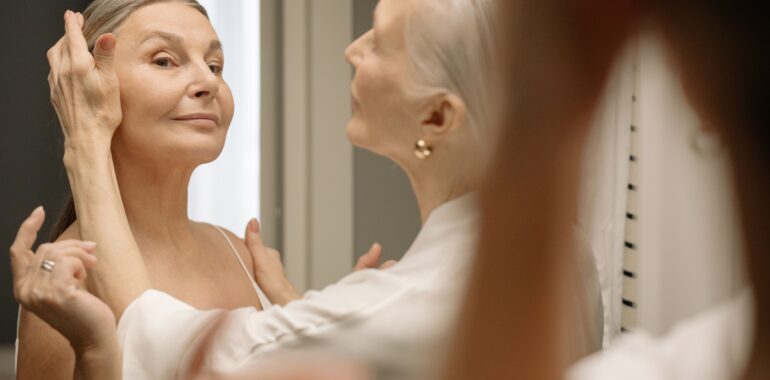
Makeup Mistakes That Are Aging You (And How to Fix Them)
Certain makeup habits that work perfectly well in your 20s can start to have the opposite of their intended effect as skin texture, tone, and elasticity naturally change over time. It’s not that these techniques are inherently wrong — it’s that skin’s changing needs mean some long-standing habits are worth revisiting. A few small adjustments to product choice and application technique can make a noticeable difference in how fresh and lifted a look appears, without changing your overall style.
1. Using Heavy, Full-Coverage Foundation Everywhere
Applying a thick layer of full-coverage foundation across the entire face can settle into fine lines and emphasize texture rather than smoothing it, particularly as skin’s natural elasticity changes. This is especially noticeable around the eyes, nasolabial folds, and forehead, where a heavy product tends to visibly crease over the course of a day.
The fix: Use a lighter-weight, hydrating foundation or tinted moisturizer as a base, then apply a slightly heavier concealer only where genuinely needed (under eyes, around the nose, any specific areas of redness) rather than a uniform heavy layer across the whole face.
2. Applying Powder All Over the Face
Setting powder is useful for controlling shine in specific areas, but applying it uniformly across the entire face, including naturally drier areas like the cheeks, can emphasize fine lines and create a flat, matte finish that reads as older rather than fresher.
The fix: Set only the areas that genuinely need it — typically the T-zone — and leave the rest of the face with its natural, slightly dewy finish, which tends to look more youthful than an entirely matte complexion.
3. Overlining Lips Without Blending
While lip liner can add definition, overlining significantly beyond the natural lip line without careful blending can look harsh rather than fuller, particularly as the skin around the lips naturally loses some volume over time.
The fix: Use a liner very close to your natural lip color, staying just at or barely beyond your natural lip line, and blend the edge with a small brush or your finger so there’s no harsh, visible line.
4. Using Overly Matte, Heavy Eyeshadow in the Crease
Heavily packed matte eyeshadow, especially in darker shades, pressed deeply into the crease can emphasize hooding or sagging in the eye area more than it adds definition, particularly with drier application techniques.
The fix: Use a soft, blendable transition shade rather than a heavily packed dark shade, and focus on subtle definition rather than a dramatic, heavily blended smoky effect, which can read as heavier and more aging on eyes with any degree of hooding.
5. Skipping Eyebrow Grooming
Sparse, poorly shaped, or ungroomed eyebrows can make the entire face look less structured, since eyebrows play a significant role in framing the eyes and overall facial definition. As brow hair can naturally thin with age for some people, this effect becomes more noticeable over time if brows aren’t addressed at all.
The fix: Filling in sparse areas with a brow pencil or pomade in a shade slightly lighter than your natural hair color, using short, hair-like strokes rather than solid lines, restores definition without looking overdone.
6. Applying Blush Too Low on the Cheeks
Placing blush low on the cheeks, closer to the jawline, can visually pull the face downward rather than lifting it, which becomes more noticeable as natural facial volume shifts over time.
The fix: Apply blush slightly higher, on the apples of the cheeks and blending up and out toward the temples, which creates a subtle lifting effect rather than a downward pull.
7. Using Overly Shimmery or Glittery Eyeshadow
Heavy shimmer or glitter, especially applied to the entire eyelid, can settle into fine lines and creases around the eyes far more noticeably than a matte or subtly satin finish.
The fix: Reserve shimmer for small, targeted areas like the inner corner or center of the lid, and use a primer specifically designed to help shimmer adhere smoothly rather than settling into texture.
8. Skipping Under-Eye Color Correction
Foundation and concealer alone sometimes aren’t enough to fully neutralize the blue or purple tones common in under-eye discoloration, leading to concealer that looks cakey rather than genuinely brightening.
The fix: A peach or salmon-toned color corrector applied before concealer neutralizes these tones more effectively, often requiring less overall concealer to achieve a brighter, more rested look.
9. Using a Foundation Shade That’s Too Light
Choosing a foundation shade lighter than your natural skin tone, sometimes done with the intention of looking brighter, can create an unnatural contrast with the neck and create a flat, mask-like appearance rather than a natural, healthy glow.
The fix: Matching foundation to your neck rather than your face, and testing shades along the jawline in natural light, produces a far more seamless, natural-looking result.
10. Neglecting Skincare Prep Before Makeup
Applying makeup directly onto dry, under-hydrated, or unprepped skin tends to emphasize texture and settle unevenly, regardless of how good the products themselves are.
The fix: A well-hydrated, properly primed base makes an enormous difference in how makeup sits throughout the day, often having a bigger impact on overall appearance than the specific products applied on top.
Building a Look That Reads Fresh, Not Heavy
Across all of these fixes, a consistent theme emerges: lighter, more targeted application tends to look more youthful and natural than heavy, uniform coverage. This isn’t about wearing less makeup necessarily — it’s about being more intentional with where product is concentrated, favoring targeted correction over blanket coverage, and prioritizing skin prep as much as the products applied afterward.
A Few General Principles to Keep in Mind
Hydration matters more than coverage. A well-hydrated base often does more to create a youthful appearance than heavier coverage products layered on top of dry or under-prepped skin.
Blend, blend, and blend again. Harsh lines, whether in lip liner, blush placement, or eyeshadow, tend to look more aging than soft, well-blended edges, regardless of the specific product or technique.
Less is often genuinely more in specific areas. Areas prone to fine lines or texture — under the eyes, around the mouth, the forehead — generally benefit from lighter, more targeted product application rather than heavy, uniform layering.
Reassess your routine periodically. Techniques and products that worked well years ago aren’t necessarily wrong now, but skin changes gradually enough that it’s worth periodically reassessing whether your current approach still serves your skin’s current needs.
The Bottom Line
None of these adjustments require abandoning a personal makeup style — they’re small, targeted tweaks in product choice and application technique that account for how skin’s needs shift over time. Favoring hydration and targeted coverage over heavy, uniform application, softening hard lines, and paying attention to placement (blush, eyeshadow, liner) can make a genuinely noticeable difference in how fresh and lifted a look appears, without changing the overall look you’re going for.

I’m Brinley, and I believe in progress over perfection. My holistic journey started when I traded rigid fads for the 80/20 rule and nature-based remedies. I only share advice I’ve lived through—from botanical skincare that fixed my dry skin to easy kitchen hacks. I’m here to help you build a nourished life through small, intentional, and sustainable choices.