
Stay-Full Favorites: Recipes That Truly Satisfy
I spent years thinking that being “healthy” meant being perpetually hungry. In the past, I would eat these tiny, “perfect” meals—a small scoop of quinoa, a piece of chicken, and a few florets of broccoli—only to find myself lightheaded and irritable an hour later. I used to think that if I wasn’t feeling a little bit empty, I wasn’t doing it right. It changed everything when I learned about the “Satiety Index.” I discovered that some foods occupy more space in the stomach and take longer to digest than others, regardless of their calorie count. I realized that I didn’t need to eat less; I needed to eat smarter by choosing ingredients that trigger my “fullness” hormones.
The goal of a “Stay-Full” meal is to achieve maximal satisfaction with high-quality fuel. I love the feeling of finishing a meal and not thinking about food again for four or five hours. It’s a rhythmic, peaceful way to live that protects your focus and prevents the “brain fog” of hunger. When you prioritize high-volume, high-protein, and high-fiber ingredients, you turn your metabolism into a slow-burning fire rather than a flickering candle.
This guide explores the specific recipes that keep me fueled through even the busiest days. We’ll look at the “Volume Hack” and share four meals that are scientifically designed to keep you satisfied.
The “Satiety Anchor”: Why Some Meals Last Longer
A meal that “sticks to your ribs” isn’t a mystery; it’s a result of three specific pillars working together.
1. The Power of “Volume”
Your stomach has stretch receptors. When they are physically expanded by the volume of food (like water-rich vegetables), they send a signal to your brain saying, “We are full.”
2. The Slow-Burn Fiber
Fiber doesn’t just help digestion; it slows down how quickly your stomach empties into your small intestine. This means the energy from your meal is dripped into your system rather than dumped all at once.
Personal Tip: I always “bulk up” my grains. If a recipe calls for a cup of rice, I use half a cup of rice and half a cup of cauliflower rice mixed in. It looks like a massive portion, it tastes the same, but it keeps me full for twice as long because of the extra fiber and volume.
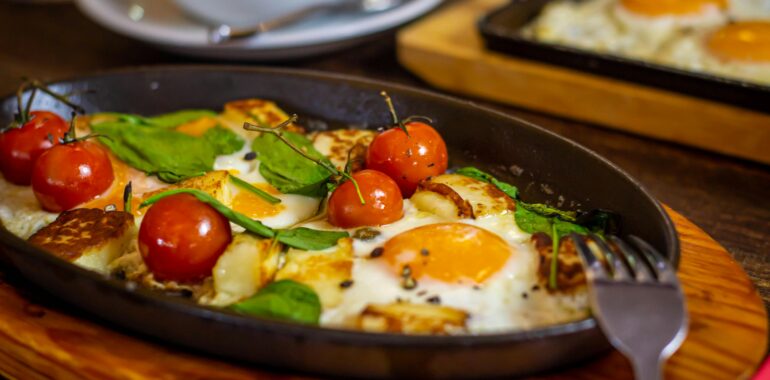
Recipe 1: The “Everything” Breakfast Skillet
By using potatoes (one of the highest-rated foods on the Satiety Index) and egg whites, you get a massive volume of food for a very stable energy release.
- Calories: ~340 kcal | Protein: ~30g
- Category: High-Satiety / Morning Fuel
The Ingredients
- 1 Medium Potato (cubed and boiled/steamed) (110 kcal)
- 1/2 cup Egg Whites + 1 Whole Egg (130 kcal)
- 1 cup Bell Peppers & Onions (40 kcal)
- 2 cups Fresh Spinach (15 kcal)
- 1/2 Avocado (60 kcal)
The Instructions
- The Crisp: Sauté the pre-cooked potato cubes in a non-stick pan until the edges are golden.
- The Volume: Add the peppers and onions, then wilt the spinach.
- The Anchor: Pour in the eggs and scramble until set. Top with the avocado for healthy fats that trigger the “I’m done” hormone (cholecystokinin).
Personal Tip: Potatoes get a bad rap, but boiled or roasted potatoes are actually the most satiating food tested in scientific studies. They are my secret weapon for days when I know I have a long gap between breakfast and lunch.
Recipe 2: The “Big Bowl” Mediterranean Tuna Salad
This isn’t a wimpy salad. It uses white beans as a “fiber anchor” and lean tuna for a massive protein hit.
- Calories: ~380 kcal | Protein: ~35g
- Category: High-Fiber / Lean Protein
The Ingredients
- 1 can Water-Packed Tuna (120 kcal)
- 1/2 cup Cannellini Beans (rinsed) (110 kcal)
- 4 cups Mixed Greens (20 kcal)
- 10 Cherry Tomatoes (30 kcal)
- 1 Tbsp Hemp Seeds (55 kcal)
- Dressing: Lemon juice and 1 tsp Extra Virgin Olive Oil (45 kcal)
The Instructions
- The Base: Start with a bowl that is larger than you think you need. Fill it with the greens.
- The Mix: Combine the tuna, beans, and tomatoes in a separate bowl with the dressing.
- The Scoop: Layer the tuna mixture over the greens and sprinkle with hemp seeds.
Personal Tip: The cannellini beans are the “secret” here. They add a creamy texture and a heavy dose of resistant starch, which is a type of fiber that keeps you full for hours and feeds your good gut bacteria.
Recipe 3: Slow-Cooker “Volume” Turkey Chili
Chili is a satiety powerhouse because it combines high protein (turkey) with high fiber (beans) and high water content (broth).
- Calories: ~310 kcal per bowl
- Category: High-Volume / Batch-Prep
The Ingredients
- 1 lb Lean Ground Turkey
- 2 cans Black Beans
- 3 Bell Peppers (diced)
- 1 can Diced Tomatoes
- 2 cups Veggie Broth
The Instructions
- The Prep: Brown the turkey in a pan first for better flavor.
- The Slow-Burn: Throw everything into a slow cooker for 4 hours on high or 8 hours on low.
- The Finish: The peppers will “melt” into the sauce, creating a thick, voluminous stew that feels incredibly heavy and satisfying.
Personal Tip: I always eat a large bowl of this with a side of raw cucumbers. The contrast between the hot, savory chili and the cold, crunchy cucumbers makes the meal last longer, giving my brain time to register that I’m full.
Recipe 4: Sheet Pan Roasted Salmon & “Roots”
The healthy fats in salmon are the ultimate signal to your brain to stop eating, while the roasted roots provide the complex carbs your brain needs to focus.
- Calories: ~420 kcal | Protein: ~32g
- Category: Healthy Fats / Brain-Health
The Ingredients
- 6 oz Salmon Fillet (280 kcal)
- 1 cup Butternut Squash (cubed) (60 kcal)
- 2 cups Broccoli Florets (60 kcal)
- 1 tsp Garlic Butter (20 kcal)
The Instructions
- The Roast: Toss the squash and broccoli in a little oil and roast at 400°F for 15 minutes.
- The Fish: Add the salmon to the pan and roast for another 10–12 minutes.
- The Melt: Place a tiny dot of garlic butter on the hot salmon right as it comes out of the oven.
Personal Tip: Butternut squash is a volume-eater’s dream. It’s sweet, comforting, and much lower in calories than sweet potatoes, meaning you can eat a much larger portion for the same energy.
Ending the Hunger Game
Satiety is the foundation of a healthy relationship with food. When you stop fearing “fullness” and start chasing it through high-quality, high-volume ingredients, you reclaim your energy and your mood. You don’t have to live in a state of restriction to see results—you just have to anchor your meals in the science of satisfaction. Start with the “Everything” Skillet tomorrow; it’s the best way to prove to your body that it is safe, nourished, and ready for the day.
Final Tip: Drink a full glass of water 10 minutes before these meals. It “pre-stretches” the stomach receptors, making these high-volume meals feel even more substantial and ensuring you don’t mistake thirst for hunger!

I’m Brinley, and I believe in progress over perfection. My holistic journey started when I traded rigid fads for the 80/20 rule and nature-based remedies. I only share advice I’ve lived through—from botanical skincare that fixed my dry skin to easy kitchen hacks. I’m here to help you build a nourished life through small, intentional, and sustainable choices.