
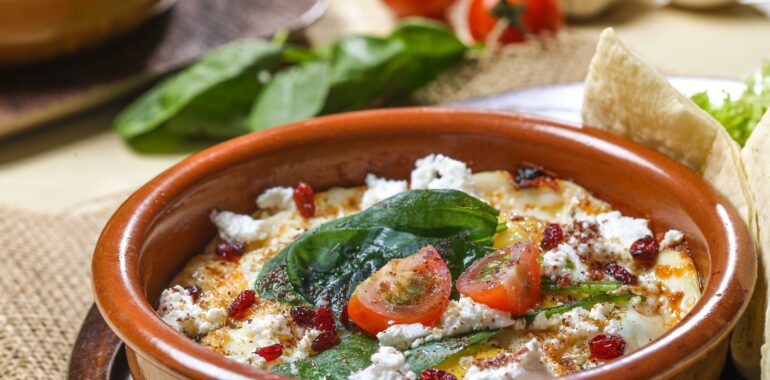
Baked Feta Eggs Recipe: The Viral Breakfast That’s Actually Easy
If you’ve spent any time on social media in the last few years, you’ve probably seen some version of the baked feta eggs recipe scroll past — a block of cheese swimming in tomatoes and olive oil, baked until it collapses into a creamy sauce, then finished with a few cracked eggs. It looks like restaurant food. It tastes like restaurant food. And the truth that doesn’t always make it into the thirty-second video is that it’s one of the easiest breakfasts you can make, start to finish, in about half an hour with ingredients you probably already have.
This dish is a spin on the Mediterranean and Middle Eastern tradition of baking eggs in a rich tomato or pepper sauce — shakshuka is the most famous relative — but swapping in feta gives it a tangy, salty creaminess that turns the whole thing into more of a sauce than a broth. It’s become a weekend staple in our house, and once you make it once, you’ll understand why it took over everyone’s feed.
Why This Recipe Works
The magic of baked feta eggs comes down to two things happening in the oven at once. First, the feta softens and partially melts, absorbing the juices released by the tomatoes and turning into something closer to a whipped, savory custard than a firm cheese. Second, the eggs bake gently in that same dish, picking up flavor from the tomato-feta mixture instead of just sitting on top of it. The result is a single pan of food where every bite has a little bit of everything: creamy cheese, jammy tomato, and a soft-set egg yolk that turns into sauce the moment you break it.
It’s also naturally high in protein and lower in refined carbohydrates than a typical breakfast of toast or cereal, which makes it a solid option if you’re trying to eat a more balanced first meal without giving up something that feels indulgent.
Ingredients You’ll Need
- 1 pint cherry or grape tomatoes
- 1 block (6–8 oz) feta cheese, left whole
- 3 tablespoons olive oil
- 2–3 cloves garlic, minced
- 1/2 teaspoon dried oregano
- 1/4 teaspoon red pepper flakes (optional)
- Salt and black pepper to taste
- 4 large eggs
- Fresh basil or parsley for garnish
- Crusty bread, for serving
Feta quality genuinely matters here more than in most recipes, since it’s the star ingredient rather than a background note. Block feta packed in brine bakes and melts far better than the pre-crumbled kind, which is often coated in anti-caking agents that keep it from softening properly.
How to Make Baked Feta Eggs
1. Preheat and prep. Set your oven to 400°F (200°C). In a baking dish or oven-safe skillet, toss the cherry tomatoes with olive oil, minced garlic, oregano, red pepper flakes, salt, and pepper.
2. Add the feta. Nestle the block of feta into the center of the tomatoes, pressing it down slightly so it’s partially surrounded. Drizzle a little extra olive oil over the top.
3. First bake. Roast for 20–25 minutes, until the tomatoes have blistered and started to burst and the feta has softened and taken on a light golden color at the edges.
4. Add the eggs. Remove the dish from the oven. Use a spoon to gently push the tomato mixture aside and create four small wells. Crack an egg into each well.
5. Second bake. Return the dish to the oven for another 8–10 minutes, or until the egg whites are just set but the yolks are still soft. Keep an eye on it during the last few minutes, since eggs can go from perfectly jammy to overdone quickly.
6. Finish and serve. Top with fresh basil or parsley, a crack of black pepper, and an extra drizzle of olive oil if you like. Serve immediately with warm, crusty bread for scooping up the sauce.
Tips for the Best Results
Use a shallow, wide dish. A wide oven-safe skillet or shallow baking dish lets the tomatoes spread out and blister properly instead of steaming in a deep pile.
Don’t skip the second bake timing check. Every oven runs slightly differently, and egg yolks go from soft to hard fast in the final few minutes. Start checking at the 6-minute mark if your oven tends to run hot.
Swap in what’s in season. Cherry tomatoes are classic, but this recipe is forgiving. Halved grape tomatoes, a mix of colors, or even canned crushed tomatoes in the off-season all work.
Add greens for more substance. Stirring a handful of baby spinach into the tomato mixture before the second bake adds volume and nutrition without changing the technique.
A batch of this using a full-fat, brine-packed feta from the deli counter and a mix of yellow and red cherry tomatoes came out noticeably creamier and less watery than a version made with pre-crumbled feta and out-of-season tomatoes — a small detail, but one that makes a real difference in how the sauce sets up.
What to Serve With Baked Feta Eggs
This dish is meant to be scooped, so bread is non-negotiable. Toasted sourdough, a warm baguette, or pita all work well. If you want to round it out into a fuller brunch spread, a simple arugula salad with lemon and olive oil cuts through the richness nicely, and a side of roasted potatoes turns it into more of a dinner-for-breakfast situation.
For a lighter version, skip the bread and serve it over a bed of sautéed greens instead, which soaks up the sauce just as well while keeping the meal lower in carbohydrates.
Storing and Reheating
Baked feta eggs are best fresh, since the yolks continue to firm up as they sit. If you do have leftovers, store them covered in the refrigerator for up to two days and reheat gently in a low oven or covered skillet — the microwave tends to make the eggs rubbery. If you know you’ll have leftovers, consider slightly undercooking the yolks the first time around so they hold up better to reheating.
Frequently Asked Questions
Can I make baked feta eggs ahead of time? You can prep the tomato-and-feta base ahead and refrigerate it, then bake it fresh and add the eggs when you’re ready to eat, since the eggs really do need to be cooked just before serving.
What can I use instead of feta? Goat cheese is the closest substitute and will melt in a similar way, though it has a slightly different tang. Cotija or a mild queso fresco can also work in a pinch, though the texture will be less creamy.
Is this recipe good for meal prep? It’s better suited to fresh cooking than reheated meal prep, since the eggs lose their soft texture. If you want a meal-prep-friendly version, bake the tomato-feta base in batches and add fresh eggs to individual portions as you go.
Once you’ve made baked feta eggs one time, it stops being a trend recipe and starts being the thing you make when you want breakfast to feel like an event without actually doing much work. One pan, minimal cleanup, and a result that looks far more impressive than the effort it takes.

I’m Brinley, and I believe in progress over perfection. My holistic journey started when I traded rigid fads for the 80/20 rule and nature-based remedies. I only share advice I’ve lived through—from botanical skincare that fixed my dry skin to easy kitchen hacks. I’m here to help you build a nourished life through small, intentional, and sustainable choices.