
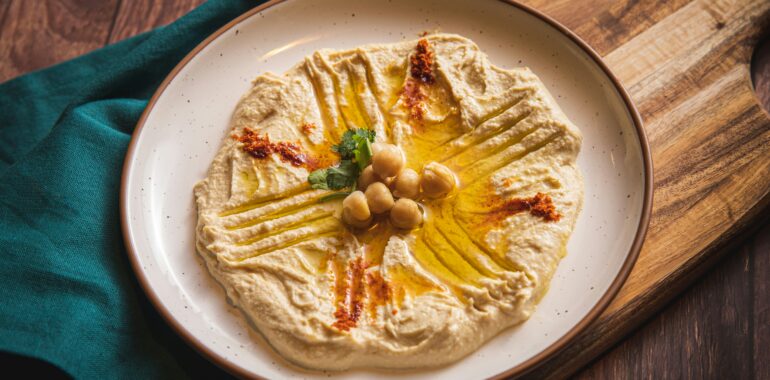
Beyond the Plastic Tub: Functional Hummus Prototypes for Micronutrient Loading
I treated hummus as a generic “health-food” filler—a bland, beige paste from a grocery store tub that I used primarily as a vehicle for pita chips. I used to think that as long as it was made of chickpeas, it was “good enough,” ignoring the fact that most commercial versions are stretched with inflammatory seed oils and excess sodium that can lead to that mid-afternoon “Internal Inflate.” My perspective shifted when I began looking at hummus not as a snack, but as a Bioavailable Carrier. Because of the healthy fats in tahini and the fiber in legumes, hummus is the perfect medium for “Nutrient-Injection.” By folding in high-antioxidant vegetables and potent spices, you can transform a simple dip into a “Metabolic Primer” that supports gut health and keeps your “Cognitive Clarity” sharp.
The goal here is to move away from the “standard beige” and toward a spectrum of functional color. Each of these variations utilizes a specific “Phytochemical Anchor” to target different areas of recovery—from lowering oxidative stress to boosting nitric oxide. When you stop “dipping” and start “loading,” you turn your snack window into a legitimate performance-focused ritual.
The Science of the “Hummus Synergy”
Hummus is a masterpiece of nutritional synergy, particularly when you make it from scratch:
- The Protein-Fiber Anchor: Chickpeas are a “Slow-Burn” carbohydrate. When paired with the fiber in the skins, they provide a flat glucose response, preventing the “Sugar Spikes” that lead to brain fog.
- Tahini as a Mineral Mine: Tahini (sesame paste) is an incredible source of Calcium, Magnesium, and Zinc. These minerals are essential for “Neural Firing” and muscle relaxation.
- The Satiety Signal: The combination of healthy fats from olive oil and plant-based protein triggers the release of GLP-1 (your natural satiety hormone), making this one of the most effective tools for appetite control.
The “Nitric Oxide” Beetroot Hummus
A vibrant, earth-forward dip designed to support blood flow and athletic recovery.
Ingredients:
- 1 can (15 oz) Chickpeas (Rinsed and drained)
- 1 medium Beet (Roasted until tender, peeled, and quartered)
- 1/4 cup Tahini
- 1 clove Garlic (Minced)
- 1 Tbsp Fresh Lemon Juice
- 1/2 tsp Sea Salt
- Calories: 145 kcal per 1/4 cup
Instructions:
- The Beet Prep: Place your roasted beet quarters into the food processor first. Pulse until they are broken down into a smooth, deep-red puree.
- The Base Build: Add the rinsed chickpeas, tahini, minced garlic, lemon juice, and salt.
- The Emulsification: Process for 2–3 minutes. While the motor is running, drizzle in a tablespoon of ice-cold water. This aerates the mixture and turns it from a thick paste into a light, whipped texture.
- The Science: Beets are high in nitrates, which your body converts to Nitric Oxide. This relaxes your blood vessels and improves oxygen delivery to your cells.
Personal Tip: I eat this about 90 minutes before a workout. The “Beet-Boost” gives me a noticeable edge in endurance without the need for a synthetic pre-workout stimulant.
The “Chlorophyll-Clean” Pesto Hummus
A bright, herb-dense version that supports internal detoxification.
Ingredients:
- 1 can (15 oz) Chickpeas (Rinsed and drained)
- 2 cups Packed Fresh Basil leaves
- 1/4 cup Tahini
- 1 Tbsp Extra Virgin Olive Oil
- 1 Tbsp Lemon Juice
- 1/2 tsp Sea Salt
- Calories: 160 kcal per 1/4 cup
Instructions:
- The Pesto Base: Start by adding the basil and olive oil to the food processor. Pulse until the leaves are completely pulverized and you have a vibrant green oil.
- The Integration: Add the chickpeas, tahini, lemon juice, and salt to the basil mixture.
- The Finishing Polish: Blend on high for 3 minutes until perfectly creamy. If it feels too stiff, add another teaspoon of olive oil.
- The Logic: Basil is rich in chlorophyll and essential oils that have antimicrobial properties, helping to maintain a balanced “Internal Environment.”
Personal Tip: If you want an even deeper “Green-Clean,” swap half the basil for fresh parsley. Parsley is a natural diuretic that helps flush out excess water retention.
The “Anti-Inflammatory” Golden Turmeric Hummus
A warming, spice-anchored dip for joint health and systemic calm.
Ingredients:
- 1 can (15 oz) Chickpeas (Rinsed and drained)
- 1/4 cup Tahini
- 1 tsp Ground Turmeric
- 1/2 tsp Ground Cumin
- 1/4 tsp Ground Black Pepper
- 1/2 tsp Sea Salt
- 1 Tbsp Lemon Juice
- Calories: 150 kcal per 1/4 cup
Instructions:
- The Spice Activation: In a small bowl, whisk the turmeric, cumin, and black pepper into the tahini. Letting the spices sit in the fats of the tahini helps unlock their fat-soluble compounds.
- The Blend: Transfer the spiced tahini to your food processor along with the chickpeas, lemon juice, and salt.
- The Texture: Blend until smooth. Add a splash of chickpea canning liquid (aquafaba) if you want a glossier finish.
- The Science: Black pepper contains piperine, which increases the absorption of the curcumin in turmeric by 2,000%.
Personal Tip: Turmeric can be slightly bitter. I add a tiny squeeze of raw honey to “anchor” the flavor and balance the spice. This is my go-to “Post-Inflammatory” snack after a high-stress day.
The “Brain-Fuel” Roasted Garlic & Black Bean Hummus
A darker, high-zinc version for cognitive support and gut integrity.
Ingredients:
- 1 can (15 oz) Black Beans (Rinsed and drained)
- 5 cloves Roasted Garlic (Squeeze the cloves out of their skins)
- 1/4 cup Tahini
- 1 tsp Smoked Paprika
- 1/2 tsp Sea Salt
- 1 Tbsp Lime Juice (Instead of lemon)
- Calories: 140 kcal per 1/4 cup
Instructions:
- The Garlic Squeeze: Place the soft, roasted garlic cloves into the food processor. Pulse until they form a paste.
- The Bean Transition: Add the black beans, tahini, paprika, salt, and lime juice.
- The Processing: Black beans are slightly denser than chickpeas, so you may need to blend for an extra minute to achieve a “silky” consistency.
- The Logic: Black beans are rich in anthocyanins (antioxidants) and zinc, which are crucial for immune function and neurotransmitter balance.
Personal Tip: Roasted garlic provides a mellow, sweet depth that makes this feel like a luxury dip. I call this my “Late-Night Anchor” because the magnesium in the beans helps prep the body for sleep.
The “Vitamin-C” Roasted Red Pepper Hummus
A zesty, high-volume dip for collagen support and skin glow.
Ingredients:
- 1 can (15 oz) Chickpeas (Rinsed and drained)
- 1 large Roasted Red Pepper (Patted dry to remove excess brine)
- 1/4 cup Tahini
- 1 clove Garlic
- 2 Tbsp Fresh Lemon Juice + 1/2 tsp Lemon Zest
- 1/2 tsp Sea Salt
- Calories: 135 kcal per 1/4 cup
Instructions:
- The Pepper Prep: Add the roasted red pepper and garlic to the processor. Pulse until the pepper is roughly chopped.
- The Synthesis: Add the chickpeas, tahini, lemon juice, zest, and salt.
- The Whip: Process until the hummus turns a bright orange. Because red peppers contain a lot of water, you likely won’t need to add any ice water to this batch.
- The Logic: Red peppers contain triple the Vitamin C of an orange. Vitamin C is the “Structural Essential” required to cross-link collagen fibers in your skin.
Personal Tip: Don’t skip the lemon zest! The citrus oils in the peel provide a “Neural-Wakeup” scent that makes the snacking experience much more sensory and satisfying.
The “Hummus Protocol” Guardrails
- The “Skin-Off” Secret: For the creamiest, “Resort-Level” texture, pinch the skins off your chickpeas. It takes five minutes, but it removes the “Lectins” that can cause bloating in sensitive individuals.
- The “Ice-Water” Hack: While blending, drizzle in 1–2 tablespoons of ice-cold water. This aerates the fats in the tahini, turning the hummus into a light, whipped mousse rather than a heavy paste.
- The “Oil-Anchor”: Never use “Vegetable” or “Canola” oil. Always use Extra Virgin Olive Oil or Avocado Oil. These healthy fats are the “Carrier System” your body needs to absorb the fat-soluble vitamins in the veggies.
The Functional Dip
Making your own hummus is the ultimate “Metabolic Power-Play.” By controlling the “Fat Anchor” and layering in “Phyto-Signals,” you move from consuming “Empty Fillers” to fueling with “Biological Information.” You’ll find that when your snacks are built on a foundation of fiber and healthy fats, your “Brain Fog” lifts and your hunger signals stay “Stable” for hours. This week, try the “Nitric Oxide” Beetroot Hummus—it’s the fastest way to realize that your “Dips” can be your most “Performance-Focused” tools.
Final Tip: Serve your hummus with “Structural” dippers like bell pepper strips, jicama, or cucumber rounds instead of crackers. You’ll double your fiber intake and keep your “Glycemic Baseline” perfectly flat!

I’m Brinley, and I believe in progress over perfection. My holistic journey started when I traded rigid fads for the 80/20 rule and nature-based remedies. I only share advice I’ve lived through—from botanical skincare that fixed my dry skin to easy kitchen hacks. I’m here to help you build a nourished life through small, intentional, and sustainable choices.