
Budget-Friendly Healthy Meals That Don’t Feel Like a Compromise
Healthy eating has a reputation for being expensive, largely built around images of exotic superfoods, specialty ingredients, and premium organic everything. In reality, some of the most nutritious, filling meals rely on inexpensive staples that have quietly been kitchen workhorses for generations: beans, eggs, rice, and seasonal vegetables. Building a rotation of genuinely healthy meals around these staples can meaningfully lower a grocery bill without sacrificing nutrition or flavor.
Below are five budget-friendly, healthy meals worth adding to your regular rotation, along with strategies for keeping healthy eating affordable more broadly.
1. Egg and Black Bean Breakfast Bowls
Ingredients (serves 4):
- 8 eggs
- 1 can black beans, drained and rinsed
- 1 cup rice, cooked
- 1 avocado, sliced
- Salsa, for serving
Instructions: Scramble or fry the eggs to your preference. Divide the rice, black beans, and eggs among four bowls, topping with avocado slices and salsa. This bowl provides a substantial amount of protein and fiber from inexpensive, shelf-stable staples, with avocado and salsa adding fresh flavor without significantly increasing the cost.
2. Lentil Soup
Ingredients (serves 6):
- 2 cups dried lentils, rinsed
- 2 carrots, diced
- 2 celery stalks, diced
- 1 onion, diced
- 1 can diced tomatoes
- 6 cups vegetable broth (or water with bouillon)
- 1 teaspoon cumin
Instructions: Combine all ingredients in a large pot and simmer for 30–35 minutes, until the lentils are fully tender. Lentils are among the least expensive protein and fiber sources available, and this soup can be made almost entirely from pantry staples, making it one of the most cost-effective meals in a healthy rotation.
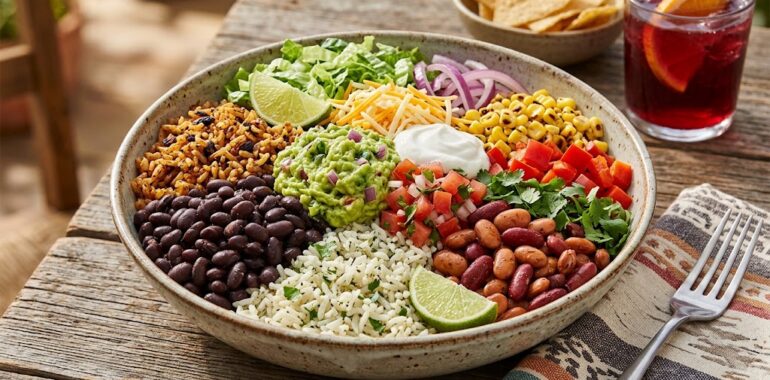
3. Rice and Bean Burrito Bowls
Ingredients (serves 4):
- 2 cups rice, cooked
- 1 can black or pinto beans, drained and rinsed
- 1 onion, diced
- 1 bell pepper, diced
- 1 teaspoon cumin
- 1 teaspoon chili powder
- Shredded cheese and salsa, for topping
Instructions: Sauté the onion and bell pepper, then stir in the beans and spices, warming through. Serve over rice, topped with cheese and salsa. Rice and beans together form a complete protein and are among the least expensive combinations available for a filling, nutritious meal.
4. Baked Chicken Thighs With Roasted Vegetables
Ingredients (serves 4):
- 8 bone-in chicken thighs (bone-in tends to be significantly cheaper per pound than boneless, skinless breasts)
- 4 cups mixed vegetables (whatever is in season and on sale — potatoes, carrots, and onions work well)
- 2 tablespoons olive oil
- 1 teaspoon paprika
- Salt and pepper to taste
Instructions: Preheat the oven to 400°F. Toss the vegetables with half the olive oil, salt, and pepper, and spread on a sheet pan. Season the chicken thighs with the remaining olive oil, paprika, salt, and pepper, and nestle among the vegetables. Roast for 35–40 minutes, until the chicken reaches 165°F internally and the vegetables are tender.
5. Vegetable Fried Rice
Ingredients (serves 4):
- 3 cups cooked rice (day-old rice works best)
- 2 eggs, beaten
- 2 cups frozen mixed vegetables
- 2 cloves garlic, minced
- 3 tablespoons soy sauce
- 2 tablespoons vegetable oil
Instructions: Heat oil in a large skillet or wok, scramble the eggs, then push to one side. Add the garlic and frozen vegetables, cooking for 3–4 minutes. Add the rice, breaking up any clumps, and stir everything together with the soy sauce, cooking for another 2–3 minutes until heated through. This dish is an excellent way to use up leftover rice and frozen vegetables that might otherwise go unused.
Why These Meals Are So Affordable
The common thread across all five recipes is reliance on shelf-stable or bulk-purchasable staples — dried beans and lentils, rice, eggs, and frozen vegetables — that cost significantly less per serving than fresh, out-of-season produce or premium cuts of meat. These staples also tend to have a long shelf life, reducing food waste and the associated cost of throwing away spoiled ingredients that didn’t get used in time.
General Strategies for Affordable Healthy Eating
Buy dried beans and lentils instead of canned when possible. Dried versions cost a fraction of their canned counterparts per serving, and while they require more prep time (soaking and cooking), batch cooking a large pot and freezing portions addresses the time trade-off effectively.
Choose bone-in, skin-on cuts of meat over boneless, skinless. Bone-in chicken thighs, for instance, are typically significantly cheaper per pound than boneless, skinless chicken breast, while offering comparable or even better flavor for many preparations.
Buy vegetables in season, or rely on frozen. Out-of-season fresh produce tends to be considerably more expensive and often lower in quality than what’s actually in season. Frozen vegetables, flash-frozen at peak ripeness, are typically less expensive and nutritionally comparable to fresh, making them a smart, budget-conscious staple.
Batch cook and freeze to reduce waste. Cooking larger quantities of affordable staples like rice, beans, and soups, then freezing individual portions, stretches a single grocery trip further and reduces the likelihood of ingredients going unused and wasted.
Plan meals around what’s on sale. Building a week’s meals around whatever proteins and vegetables happen to be discounted that week, rather than following a rigid predetermined menu, can meaningfully reduce overall grocery costs over time.
Buy staples in bulk when possible. Rice, dried beans, oats, and other pantry staples are often significantly cheaper per unit when purchased in bulk quantities, provided there’s adequate storage space and the ingredients will actually get used before spoiling.
Common Misconceptions About Budget Eating
Myth: Healthy eating requires expensive superfoods. In reality, foundational nutrition comes primarily from affordable staples like beans, eggs, rice, and seasonal vegetables, not from expensive specialty ingredients marketed as superfoods.
Myth: Frozen vegetables are less nutritious than fresh. Frozen vegetables are typically flash-frozen shortly after harvest at peak ripeness, which often preserves nutrients more effectively than fresh produce that’s traveled long distances and sat on a shelf for days before purchase.
Myth: Cooking from scratch is always more expensive than convenience foods. While convenience foods can seem cheaper upfront, cost per serving for homemade meals built around staples like rice, beans, and bulk proteins is often considerably lower than pre-packaged meals or takeout, even accounting for the added time investment.
The Bottom Line
Eating well on a budget isn’t about eliminating flavor or nutrition in the name of saving money — it’s about building meals around genuinely affordable staples like beans, rice, eggs, and seasonal or frozen vegetables, which happen to also be some of the most nutritionally solid options available. With a rotation of budget-friendly recipes and a few smart shopping strategies, healthy eating and an affordable grocery bill aren’t mutually exclusive goals.

I’m Brinley, and I believe in progress over perfection. My holistic journey started when I traded rigid fads for the 80/20 rule and nature-based remedies. I only share advice I’ve lived through—from botanical skincare that fixed my dry skin to easy kitchen hacks. I’m here to help you build a nourished life through small, intentional, and sustainable choices.