
Healthy Pizza Recipes That Still Feel Like Pizza Night
Pizza night has a reputation for being one of the harder meals to make genuinely healthy without losing what makes it appealing in the first place — the melty cheese, the satisfying crust, the ability to load it with whatever toppings sound good. The good news is that with a few smart swaps to the crust, sauce, and topping choices, pizza can become a well-balanced, protein-and-vegetable-forward meal that still delivers all the comfort-food satisfaction of the original.
Here are five healthier pizza variations worth adding to your rotation, along with crust and topping strategies that make the biggest nutritional difference.
1. Whole Wheat Veggie-Loaded Pizza
Ingredients (serves 4):
- 1 whole wheat pizza crust (store-bought or homemade)
- 1/2 cup marinara sauce
- 1.5 cups shredded part-skim mozzarella
- 1 cup baby spinach
- 1/2 cup sliced mushrooms
- 1/2 cup bell peppers, sliced
- 1/4 red onion, thinly sliced
Instructions: Preheat the oven according to your crust’s instructions (typically 425–450°F). Spread the marinara sauce evenly over the crust, then top with mozzarella. Scatter the spinach, mushrooms, peppers, and onion over the top. Bake for 12–15 minutes, until the crust is golden and the cheese is fully melted.
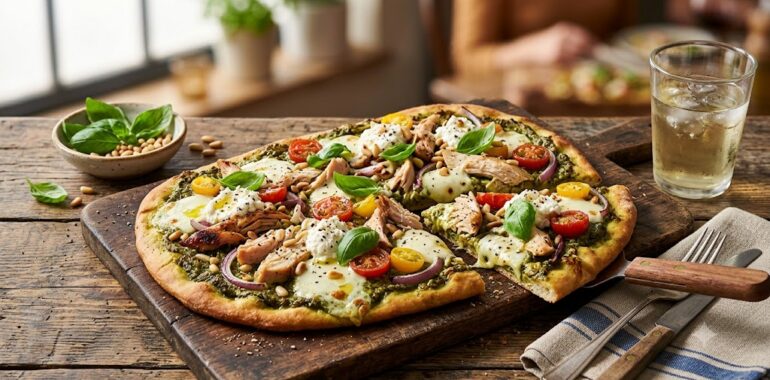
2. Chicken and Pesto Flatbread Pizza
Ingredients (serves 4):
- 2 whole wheat flatbreads or naan
- 1/3 cup basil pesto
- 1.5 cups cooked, shredded chicken
- 1 cup cherry tomatoes, halved
- 3/4 cup shredded mozzarella
- Fresh basil, for topping
Instructions: Preheat the oven to 425°F. Spread pesto evenly over each flatbread, then top with shredded chicken, cherry tomatoes, and mozzarella. Bake for 10–12 minutes, until the cheese is melted and the edges are crisp. Top with fresh basil before serving.
3. Cauliflower Crust Margherita Pizza
Ingredients (serves 4):
- 1 cauliflower pizza crust (store-bought or homemade)
- 1/2 cup marinara or crushed tomatoes
- 1 cup fresh mozzarella, sliced
- Fresh basil leaves
- 1 tablespoon olive oil
Instructions: Preheat the oven according to the crust instructions, typically 425°F. Spread the marinara evenly over the crust, then arrange the mozzarella slices on top. Bake for 12–15 minutes, until the cheese is melted and bubbling. Top with fresh basil and a light drizzle of olive oil before serving.
4. BBQ Chicken Pizza With a Lighter Touch
Ingredients (serves 4):
- 1 whole wheat pizza crust
- 1/3 cup BBQ sauce (look for a lower-sugar option)
- 1.5 cups cooked, shredded chicken
- 3/4 cup shredded mozzarella
- 1/4 red onion, thinly sliced
- 2 tablespoons chopped cilantro
Instructions: Preheat the oven to 425°F. Toss the shredded chicken with a couple tablespoons of the BBQ sauce, then spread the remaining sauce over the crust as a base. Top with the chicken, mozzarella, and red onion. Bake for 12–15 minutes, until the crust is golden and the cheese is melted, then top with fresh cilantro.
5. Greek-Style Pizza With Spinach and Feta
Ingredients (serves 4):
- 1 whole wheat pizza crust
- 1/3 cup olive oil and garlic base (in place of tomato sauce)
- 1.5 cups baby spinach
- 1/2 cup crumbled feta
- 1/4 cup kalamata olives, sliced
- 1/2 cup cherry tomatoes, halved
Instructions: Preheat the oven to 425°F. Brush the crust with the olive oil and garlic mixture. Scatter the spinach, feta, olives, and cherry tomatoes evenly over the top. Bake for 12–15 minutes, until the crust is golden and the spinach has wilted slightly.
Crust Strategies for a Healthier Base
Whole wheat crust offers significantly more fiber than traditional white flour crust, helping the meal feel more filling and providing a slower release of energy compared to refined dough.
Cauliflower crust works well for those looking to reduce overall carbohydrates, though it’s worth checking labels, since some store-bought versions add a fair amount of cheese or starch to help the crust hold together, which affects the final nutritional profile.
Flatbread or naan provides a thinner, lower-carb base than a traditional thick pizza crust while still offering a satisfying, bread-like texture.
Portioned English muffin or pita mini pizzas work particularly well for built-in portion control, making them a good option for kids or for anyone looking to naturally moderate serving size without much extra thought.
Sauce and Cheese Swaps Worth Knowing
Use a light hand with cheese, and choose a lower-fat option when possible. Part-skim mozzarella provides much of the same melt and flavor as whole-milk versions with meaningfully less saturated fat, and a moderate cheese layer (rather than a doubled or tripled portion) still provides plenty of flavor without excess calories.
Choose a lower-sugar sauce. Some jarred pizza and BBQ sauces contain a surprising amount of added sugar. Checking labels, or making a simple sauce from crushed tomatoes, garlic, and Italian herbs, offers more control.
Lean on vegetables for volume. Loading a pizza generously with vegetables adds fiber and nutrients while naturally displacing some of the space that might otherwise go to extra cheese or a heavier topping like pepperoni.
Topping Choices That Add Real Nutrition
Choose lean proteins over processed meats. Grilled chicken, shrimp, or even a plant-based protein crumble provide protein without the added sodium and saturated fat that come with traditional pepperoni or sausage.
Add a vegetable-forward topping mix. Spinach, mushrooms, bell peppers, onions, and tomatoes all roast well on pizza and contribute meaningfully to the meal’s overall nutrient density.
Finish with fresh herbs rather than relying entirely on cheese for flavor. Fresh basil, oregano, or a drizzle of good olive oil after baking adds significant flavor complexity without additional calories from cheese or heavier toppings.
Building a Balanced Pizza Night
A genuinely balanced approach to pizza night doesn’t require eliminating cheese or resorting to an unsatisfying substitute crust every time. It’s more about building the base habit of choosing a fiber-rich crust, a reasonable (not excessive) cheese portion, lean protein, and a generous vegetable topping layer, while pairing the meal with a simple side salad to round out the nutritional profile.
The Bottom Line
Pizza night doesn’t have to be sacrificed in the name of eating well. By choosing a fiber-rich or lower-carb crust, being intentional about cheese and sauce choices, and loading up on vegetables and lean protein rather than processed toppings, you can build a pizza that’s genuinely balanced while still delivering the comfort and satisfaction that makes pizza night a household favorite in the first place.

I’m Brinley, and I believe in progress over perfection. My holistic journey started when I traded rigid fads for the 80/20 rule and nature-based remedies. I only share advice I’ve lived through—from botanical skincare that fixed my dry skin to easy kitchen hacks. I’m here to help you build a nourished life through small, intentional, and sustainable choices.