
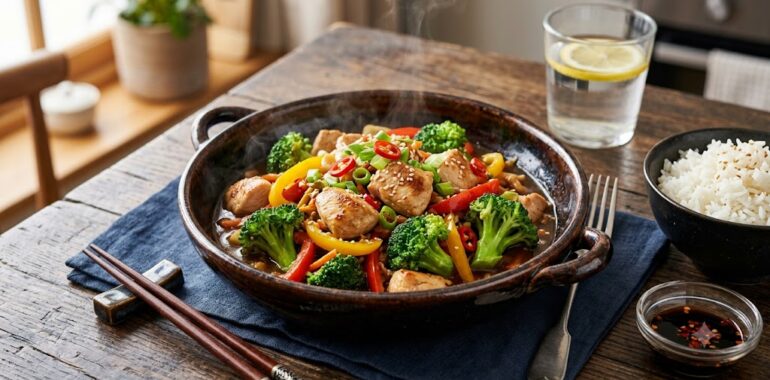
Healthy Stir-Fry Recipes That Beat Takeout Every Time
Stir-fry might be one of the most underrated weeknight dinner options available. It comes together in under 20 minutes, uses a single pan, and offers an easy way to pack in a genuinely large amount of vegetables alongside a lean protein, all without the excess oil and sodium that typically comes with restaurant or takeout versions. Once you understand the basic technique, stir-fry becomes one of the most flexible meals in a healthy cooking rotation, since it adapts to whatever protein and vegetables happen to be in the fridge.
Below are five stir-fry recipes worth adding to your rotation, along with the technique that makes the difference between a soggy, steamed stir-fry and one with real restaurant-quality texture.
Why Homemade Stir-Fry Beats Takeout
Restaurant stir-fry is often cooked with significant amounts of oil and a sauce loaded with sugar and sodium to achieve its signature flavor. Making stir-fry at home allows for the same fast, high-heat cooking technique while controlling exactly how much oil, sauce, and sodium goes into the dish, typically resulting in a lighter meal with comparable or better flavor, especially once you dial in the right sauce ratios.
1. Chicken and Broccoli Stir-Fry
A classic combination that remains popular for a reason — it’s simple, balanced, and endlessly satisfying.
Ingredients (serves 4):
- 1.5 lbs chicken breast, sliced thin
- 4 cups broccoli florets
- 3 cloves garlic, minced
- 1 tablespoon fresh ginger, minced
- 3 tablespoons soy sauce or tamari
- 1 tablespoon sesame oil
- 1 tablespoon cornstarch
- 2 tablespoons vegetable oil, divided
Instructions: Toss the sliced chicken with cornstarch and set aside. Heat 1 tablespoon vegetable oil in a large skillet or wok over high heat, and cook the chicken until browned and cooked through, about 5–6 minutes, then remove and set aside. Add the remaining oil, garlic, and ginger, cooking for 30 seconds, then add the broccoli, stir-frying for 4–5 minutes until tender-crisp. Return the chicken to the pan, add the soy sauce and sesame oil, and toss everything together for another minute before serving.
2. Beef and Vegetable Stir-Fry
A heartier version that leans on lean beef and a colorful mix of vegetables for both flavor and visual appeal.
Ingredients (serves 4):
- 1 lb flank or sirloin steak, sliced thin against the grain
- 1 bell pepper, sliced
- 1 cup snap peas
- 1 carrot, julienned
- 3 tablespoons soy sauce
- 1 tablespoon oyster sauce (optional)
- 1 tablespoon cornstarch
- 2 tablespoons vegetable oil
Instructions: Toss the sliced beef with cornstarch. Heat oil in a large skillet or wok over high heat, and sear the beef in batches for 1–2 minutes per side, then set aside. Add the bell pepper, snap peas, and carrot to the pan, stir-frying for 3–4 minutes until tender-crisp. Return the beef to the pan, add the soy sauce and oyster sauce, and toss everything together for another minute.
3. Shrimp and Vegetable Stir-Fry
A lighter, quick-cooking option that comes together even faster than chicken or beef versions.
Ingredients (serves 4):
- 1.5 lbs shrimp, peeled and deveined
- 1 zucchini, sliced
- 1 cup mushrooms, sliced
- 1 red bell pepper, sliced
- 3 tablespoons soy sauce
- 1 tablespoon sesame oil
- 2 cloves garlic, minced
- 2 tablespoons vegetable oil
Instructions: Heat oil in a large skillet or wok over high heat, and cook the shrimp for 2–3 minutes per side until pink, then remove and set aside. Add the garlic, zucchini, mushrooms, and bell pepper, stir-frying for 4–5 minutes until tender. Return the shrimp to the pan, add the soy sauce and sesame oil, and toss together before serving.
4. Tofu and Vegetable Stir-Fry (Vegetarian)
A plant-based option that gets a satisfying, crisp texture on the tofu with the right preparation technique.
Ingredients (serves 4):
- 1 block extra-firm tofu, pressed and cubed
- 2 cups broccoli florets
- 1 carrot, sliced
- 1 cup snap peas
- 3 tablespoons soy sauce
- 1 tablespoon cornstarch
- 2 tablespoons vegetable oil
Instructions: Toss the pressed, cubed tofu with cornstarch. Heat oil in a large skillet over medium-high heat and cook the tofu until golden and crisp on multiple sides, about 8–10 minutes, then remove and set aside. Add the broccoli, carrot, and snap peas to the pan, stir-frying for 4–5 minutes until tender-crisp. Return the tofu to the pan, add the soy sauce, and toss together before serving.
5. Pork and Cabbage Stir-Fry
A less common but genuinely delicious combination, especially for those looking to branch out from the usual chicken-and-broccoli formula.
Ingredients (serves 4):
- 1 lb pork tenderloin, sliced thin
- 4 cups shredded cabbage
- 1 carrot, julienned
- 3 cloves garlic, minced
- 3 tablespoons soy sauce
- 1 tablespoon rice vinegar
- 2 tablespoons vegetable oil
Instructions: Heat oil in a large skillet or wok over high heat, and cook the pork for 4–5 minutes until browned and cooked through, then remove and set aside. Add the garlic, cabbage, and carrot to the pan, stir-frying for 4–5 minutes until the cabbage is tender but still has some bite. Return the pork to the pan, add the soy sauce and rice vinegar, and toss together before serving.
The Technique That Makes or Breaks a Stir-Fry
Use high heat, always. Stir-fry relies on quick cooking at high temperatures to sear proteins and vegetables while keeping them crisp rather than steamed. A pan that isn’t hot enough results in vegetables releasing water and turning soggy rather than browning.
Don’t overcrowd the pan. Adding too much at once drops the pan’s overall temperature and traps steam, leading to the same soggy result high heat is meant to avoid. Cooking proteins and vegetables in batches, then combining at the end, produces a much better texture.
Cut ingredients into similar, thin sizes. Uniformly sized, thinly cut pieces cook quickly and evenly, which matters enormously in a cooking method built around speed.
Prep everything before you start cooking. Because stir-fry moves fast once the pan is hot, having every ingredient chopped, sauces mixed, and protein prepped in advance prevents the kind of overcooking that happens when you’re still slicing vegetables mid-cook.
Add sauce at the very end. Adding sauce too early can cause it to reduce and burn before the rest of the dish finishes cooking. Tossing it in during the final minute keeps the flavor balanced and prevents burning.
Tips for Keeping Stir-Fry Genuinely Healthy
Watch the sodium in store-bought sauces. Many pre-made stir-fry sauces are extremely high in sodium. Using reduced-sodium soy sauce, or making a simple sauce from scratch, gives you more control over the final dish.
Use just enough oil, not excess. A tablespoon or two of oil is typically sufficient for a properly hot pan; more than that often isn’t necessary and simply adds unnecessary calories.
Load up on vegetables. Since stir-fry cooks vegetables quickly while preserving much of their nutrient content, it’s an easy way to work in a genuinely large vegetable portion without the meal feeling like a chore to eat.
The Bottom Line
A well-made stir-fry can rival, and often beat, takeout in both flavor and nutrition, provided the pan is hot enough and the ingredients are prepped in advance. With a reliable base technique and a rotating cast of proteins and vegetables, stir-fry becomes one of the fastest, most adaptable healthy dinners available on a busy weeknight.

I’m Brinley, and I believe in progress over perfection. My holistic journey started when I traded rigid fads for the 80/20 rule and nature-based remedies. I only share advice I’ve lived through—from botanical skincare that fixed my dry skin to easy kitchen hacks. I’m here to help you build a nourished life through small, intentional, and sustainable choices.