
Salads That Actually Keep You Full (Not Hungry an Hour Later)
Salads get an unfair reputation as a diet food that leaves you raiding the pantry an hour after eating, and honestly, a lot of salads deserve that reputation — a pile of lettuce with a few token toppings and a light dressing simply isn’t enough to sustain most people through an afternoon. A genuinely filling salad requires the same building blocks as any satisfying meal: real protein, healthy fat, and enough overall substance to actually register as a full lunch or dinner rather than a side dish.
Here are five salads built specifically to satisfy, along with the formula for building your own going forward.
The Formula for a Genuinely Filling Salad
A salad that actually keeps you full needs four components working together: a base of greens or grains for volume and fiber, a substantial protein source (at least 20–25 grams), a healthy fat like avocado, nuts, or cheese, and a dressing with enough substance to tie everything together without being an afterthought drizzle. Skipping any one of these, particularly the protein, is usually what turns a salad into an unsatisfying snack rather than a real meal.
1. Southwest Chicken and Black Bean Salad
Ingredients (serves 2):
- 2 cups romaine lettuce, chopped
- 1 cooked chicken breast, sliced
- 1/2 cup black beans, drained and rinsed
- 1/2 cup corn kernels
- 1 avocado, sliced
- 1/4 cup shredded cheese
- 2 tablespoons lime juice
- 2 tablespoons olive oil
- Salt and pepper to taste
Instructions: Arrange the romaine as a base, then top with chicken, black beans, corn, avocado, and cheese. Whisk the lime juice and olive oil together, season with salt and pepper, and drizzle over the top.
2. Greek Salad With Grilled Chicken
Ingredients (serves 2):
- 2 cups chopped romaine or mixed greens
- 1 cooked chicken breast, sliced
- 1/2 cucumber, diced
- 1 cup cherry tomatoes, halved
- 1/4 cup crumbled feta
- 1/4 cup kalamata olives
- 2 tablespoons olive oil
- 1 tablespoon red wine vinegar
- 1 teaspoon dried oregano
Instructions: Toss the greens, cucumber, tomatoes, feta, and olives together. Top with sliced chicken. Whisk the olive oil, vinegar, and oregano together, and drizzle over the salad just before serving.
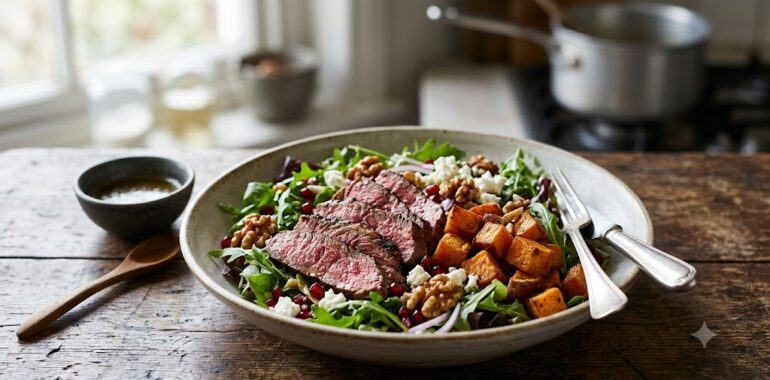
3. Steak and Sweet Potato Salad
Ingredients (serves 2):
- 4 cups mixed greens
- 6 oz cooked steak, sliced
- 1 roasted sweet potato, cubed
- 1/4 cup crumbled goat cheese
- 1/4 cup chopped pecans
- 2 tablespoons balsamic vinaigrette
Instructions: Arrange the greens as a base, then top with sliced steak, roasted sweet potato, goat cheese, and pecans. Drizzle with balsamic vinaigrette before serving.
4. Chickpea and Quinoa Power Salad (Vegetarian)
Ingredients (serves 2):
- 2 cups spinach or mixed greens
- 1 cup cooked quinoa
- 1 cup chickpeas, drained and rinsed
- 1/2 cup cherry tomatoes, halved
- 1/4 cup feta or crumbled goat cheese
- 2 tablespoons olive oil
- 1 tablespoon lemon juice
Instructions: Combine the greens, quinoa, chickpeas, and tomatoes. Top with feta, then drizzle with a mixture of olive oil and lemon juice.
5. Salmon and Avocado Salad
Ingredients (serves 2):
- 4 cups arugula or mixed greens
- 2 cooked salmon fillets, flaked
- 1 avocado, sliced
- 1/2 cup cucumber, diced
- 2 tablespoons olive oil
- 1 tablespoon lemon juice
- Salt and pepper to taste
Instructions: Arrange the greens as a base, then top with flaked salmon, avocado, and cucumber. Drizzle with olive oil and lemon juice, and season with salt and pepper.
Tips for Building Your Own Filling Salad
Never skip the protein. Chicken, steak, salmon, chickpeas, or beans should make up a substantial portion of any salad meant to serve as a full meal — aim for at least 20 grams of protein per serving.
Include a healthy fat. Avocado, olive oil, nuts, or cheese slow digestion and add satiety, which is part of why a salad with only lettuce and a light vinaigrette tends to leave people hungry quickly.
Add a starch or whole grain for staying power. Quinoa, sweet potato, or another whole grain gives a salad the kind of sustained energy that greens and protein alone don’t fully provide.
Don’t drown the salad in dressing, but don’t skip it either. A measured 2 tablespoons of a real dressing, rather than a token drizzle, adds both flavor and the fat needed for satiety, without necessarily tipping into excess calories.
Prep components separately for easy assembly. Cooking a batch of protein, grains, and chopped vegetables at the start of the week makes it easy to assemble a fresh, filling salad in minutes rather than starting from scratch each time.
The Bottom Line
A salad that leaves you hungry an hour later usually isn’t a failure of salads as a concept — it’s a sign that the protein, fat, or overall substance was missing from the bowl in the first place. Building each salad around a real protein source, a healthy fat, and enough volume from grains or vegetables turns it into a genuinely satisfying meal that can comfortably replace lunch or dinner, rather than functioning as a side dish that leaves you looking for a snack soon after.

I’m Brinley, and I believe in progress over perfection. My holistic journey started when I traded rigid fads for the 80/20 rule and nature-based remedies. I only share advice I’ve lived through—from botanical skincare that fixed my dry skin to easy kitchen hacks. I’m here to help you build a nourished life through small, intentional, and sustainable choices.