
Smoke and Spice: Healthy BBQ-Style Dinners Without the “Sugar Slump”
For a significant period, I viewed BBQ as the ultimate “cheat meal”—a parade of deep-fried sides and meats drenched in syrups that left me feeling sluggish and bloated. Previously, I assumed that the only way to get that authentic smoky flavor was through heavy, molasses-based sauces and fatty cuts of brisket. It was easy to believe that “healthy BBQ” was an oxymoron that usually involved a dry turkey burger and a side of sad, unseasoned kale. Everything changed when I discovered the “Dry Rub & Acid” technique. I discovered that the soul of BBQ isn’t in the sugar; it’s in the Maillard reaction (the sear) and the balance of smoke, heat, and vinegar. When you swap the high-fructose corn syrup for homemade spice blends and bright, citrusy mops, you transform BBQ into a high-protein, anti-inflammatory dinner that tastes like a backyard celebration.
The goal of “Clean BBQ” is to maximize the ritual of the grill while minimizing the inflammatory load. I love the “functional fire” aspect of this cooking style. It’s the realization that grilling at the right temperature can preserve the integrity of the proteins while charring vegetables to perfection. When you build your plate around lean proteins and “fire-roasted” produce, you’re getting a meal rich in antioxidants and clean energy. By using vinegar-based “mops” instead of thick glazes, you keep your blood sugar stable while still hitting those deep, savory notes we all crave.
The BBQ Chemistry: Smoke, Sear, and Stability
To get the most out of your healthy BBQ, you need to understand how heat interacts with your ingredients.
- The Maillard Reaction: This is the chemical reaction between amino acids and reducing sugars that gives browned food its distinctive flavor. By using a dry rub instead of a wet sauce, you allow this reaction to happen more efficiently.
- The Vinegar “Mop”: Vinegar-based sauces (common in North Carolina style) help break down tough fibers in lean meats and provide a sharp acidity that helps with the digestion of fats.
- The “Antioxidant Shield”: Marinating meats in herbs like rosemary and thyme before grilling can significantly reduce the formation of HCAs (heterocyclic amines) caused by high-heat charring.
Recipe 1: The “Carolina Lean” Pulled Chicken
A high-protein, low-sugar alternative to traditional pulled pork that uses apple cider vinegar to aid digestion.
- The Base: 1.5 lbs Boneless, Skinless Chicken Thighs.
- The “Fix”: Apple Cider Vinegar, Red Pepper Flakes, and a “Dry Rub” of Smoked Paprika, Garlic Powder, and Dry Mustard.
- The Stats: Chicken thighs provide the moisture needed for “pulling” without the high saturated fat content of pork shoulder.
The Instructions:
- Rub: Coat the chicken thighs generously in the dry rub. Let them sit for at least 20 minutes to “cure” the surface.
- Grill: Sear over medium-high heat for 6–8 minutes per side until charred and cooked through.
- Shred: Use two forks to shred the chicken while it’s still warm.
- Mop: Toss the shredded meat with a mixture of 1/2 cup ACV, 1 tsp honey, and red pepper flakes.
Personal Tip: I like to serve this over a bed of vinegar-based coleslaw (no mayo!). The crunch of the raw cabbage against the warm, tangy chicken creates that perfect BBQ texture profile without the heavy fats.
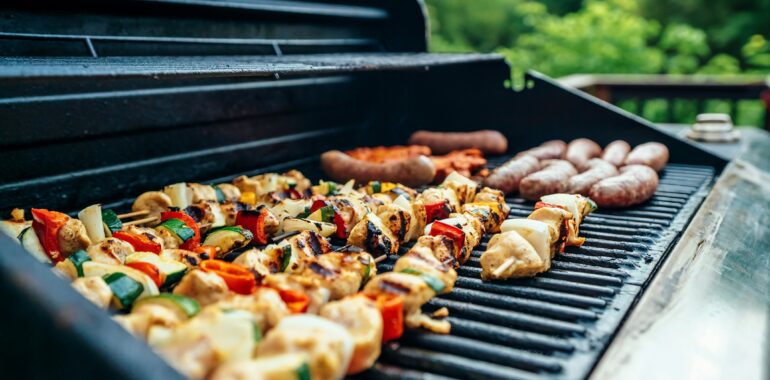
Recipe 2: Grilled “Steak & Pepper” Skewers
A nutrient-dense take on the classic BBQ plate that prioritizes colorful phytonutrients and lean heme-iron.
- The Base: 1 lb Top Sirloin (cubed).
- The “Fix”: Large chunks of Red Onion, Green Bell Pepper, and Zucchini.
- The Stats: Sirloin is one of the leanest cuts of beef, providing essential B-vitamins and zinc for immune support.
The Instructions:
- Skewer: Alternate beef and vegetables on metal or soaked wooden skewers.
- Season: Brush with a mix of olive oil, balsamic vinegar, and fresh rosemary.
- Char: Grill for 8–10 minutes, rotating frequently, until the beef is medium-rare and the vegetables have soft, charred edges.
Recipe 3: The “Fire-Roasted” Salmon with Peach Salsa
The Omega-3 powerhouse. The natural sugars in the peach provide a “BBQ” sweetness without the need for processed syrups.
- The Base: 4 Wild-Caught Salmon Fillets.
- The “Fix”: A salsa made of diced Grilled Peaches, Red Onion, Cilantro, and Lime Juice.
- The Stats: Salmon provides essential fatty acids that support heart health, while the peaches offer a hit of Vitamin C and potassium.
The Instructions:
- Grill Fruit: Briefly grill peach halves until grill marks appear, then dice them up for the salsa.
- The Salmon: Season the fish with salt and a little chili powder. Grill skin-side down over medium heat for 4–5 minutes, then flip and finish for 2 minutes.
- Top: Spoon the fresh peach salsa over the warm salmon immediately before serving.
Recipe 4: BBQ “Portobello Steaks” (Vegan Friendly)
An earthy, umami-heavy option that uses the mushroom’s porous texture to soak up smoky flavors.
- The Base: 4 Large Portobello Mushroom caps.
- The “Fix”: Liquid Smoke (just a drop!), Balsamic Vinegar, and Smoked Salt.
- The Stats: Portobellos are a great source of selenium and antioxidants, and they have a “meaty” bite that satisfies BBQ cravings.
The Instructions:
- Marinate: Whisk olive oil, balsamic, and liquid smoke. Brush over the mushrooms and let them sit for 15 minutes.
- Grill: Place caps on the grill for 5 minutes per side.
- Press: Use a spatula to press down on the caps during cooking to release excess moisture and concentrate the flavor.
Reclaiming the Backyard Grill
Healthy BBQ is about honoring the smoke while respecting your biology. When you trade the bottled sauces for fresh acids, dry rubs, and vibrant fruit salsas, you create a dinner that is as restorative as it is delicious. You don’t need the sugar to get the “hit” of a great BBQ meal; you just need the right technique and high-quality ingredients. This weekend, fire up the grill and try the Carolina Lean Chicken—it’s the easiest way to realize that the best BBQ is the kind that makes you feel great the next morning.
Final Tip: Always let your meat “rest” for 5 to 10 minutes before slicing or shredding. This allows the juices to redistribute, ensuring that your lean proteins stay succulent instead of drying out!

I’m Brinley, and I believe in progress over perfection. My holistic journey started when I traded rigid fads for the 80/20 rule and nature-based remedies. I only share advice I’ve lived through—from botanical skincare that fixed my dry skin to easy kitchen hacks. I’m here to help you build a nourished life through small, intentional, and sustainable choices.