
The Bloat-Free Blueprint: Meals for a Flat, Energetic Finish
For a significant period, I viewed the post-meal “food baby” as an unavoidable tax on eating—the uncomfortable tightness and distension that seemed to follow every dinner regardless of how “healthy” I thought I was being. Previously, I assumed that bloating was just a result of eating too much, never realizing that my “healthy” kale salads and high-fiber bean bowls were actually the primary culprits. It was easy to believe that “more fiber equals more health.” Everything changed when I learned about “FODMAPs” and the science of digestive enzymes. I discovered that bloating isn’t just about volume; it’s a chemical reaction. When certain fermentable carbohydrates reach the gut, they pull in water and produce gas, leading to that painful, balloon-like feeling.
The goal of “Bloat-Free” cooking is to prioritize foods that are easily broken down by the small intestine before they have a chance to ferment in the colon. I love the “digestive peace” this brings. It’s the realization that you can feel full and satisfied without feeling heavy. By swapping high-fermentability foods for “low-residue” alternatives and utilizing natural pro-kinetics like ginger and fennel, you can enjoy a meal and still comfortably button your jeans afterward. These recipes are designed to soothe the gut lining while providing high-quality fuel that moves through your system efficiently.
The Science of the “Soothe”: Why We Bloat
Bloating is often a sign that your digestive system is “working too hard” on specific compounds.
- The FODMAP Factor: High-FODMAP foods (like onions, garlic, and beans) contain short-chain carbs that the small intestine struggles to absorb.
- The Enzyme Gap: If you lack the enzymes to break down raw, fibrous cell walls (like those in raw kale or broccoli), the bacteria in your gut do the work for you, releasing gas as a byproduct.
- The Sodium Spike: High salt intake causes the body to hold onto water in the digestive tract, creating “water bloat.”
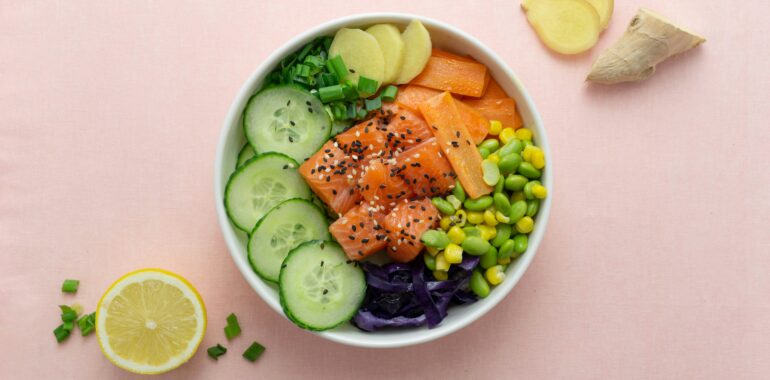
Recipe 1. The “Ginger-Lime” Wild Salmon
A high-protein, low-inflammation superstar. Ginger is a natural “pro-kinetic,” meaning it helps stimulate the muscles of the digestive tract to keep things moving.
The Base: 1 Wild-Caught Salmon Fillet + 1/2 cup Quinoa (well-rinsed).
The “Fix”: Fresh Grated Ginger, Lime Juice, and Steamed Bok Choy.
The Stats: Salmon provides Omega-3s that reduce gut inflammation, while bok choy is a low-FODMAP green that provides crunch without the gas.
The Instructions:
- Steam: Rinse your quinoa thoroughly (this removes the bitter saponins that can irritate the gut). Cook in a 2:1 ratio of water to grain.
- Sear: Season the salmon with salt and plenty of ginger. Pan-sear for 4 minutes per side.
- Wilt: Steam the bok choy for just 2 minutes until tender-crisp.
- Drizzle: Finish with lime juice—the acidity helps stimulate stomach acid for better protein breakdown.
Personal Tip: I always drink a small cup of warm ginger tea about 15 minutes before this meal. It “primes” the stomach to produce the necessary enzymes, making the entire digestion process feel seamless.
Recipe 2: Zucchini Noodle “Pesto” with Grilled Chicken
A light, low-carb alternative to traditional pasta. Zucchini is high in water and low in the fermentable sugars that cause distension.
The Base: 2 Large Zucchinis (spiralized) + 4 oz Grilled Chicken Breast.
The “Fix”: Homemade Pesto (Basil, Walnuts, Olive Oil) and Pine Nuts.
The Stats: By removing the heavy wheat gluten and starch of traditional pasta, you eliminate the primary source of “starchy bloat.”
The Instructions:
- Spiralize: Turn your zucchini into “zoodles.”
- Sauté: Flash-cook the zoodles in a pan for only 60 seconds.
- Toss: Stir in the pesto and sliced chicken. The healthy fats in the walnuts help your body absorb the fat-soluble vitamins in the greens.
Personal Tip: If you cook them too long, they release all their water and get mushy. Keep them “al dente” to avoid a watery bowl.
Recipe 3: The “Soothing” Turmeric Turkey Scramble
An anti-inflammatory breakfast or lunch that uses turmeric to calm the digestive tract and lean turkey for easy protein absorption.
The Base: 6 oz Lean Ground Turkey + 2 cups Spinach.
The “Fix”: Fresh Turmeric (or powder), Cumin, and a side of Sourdough (optional).
The Stats: Turmeric contains curcumin, which has been shown to reduce symptoms of IBS and bloating. Sourdough is fermented, making the gluten much easier for the gut to handle.
The Instructions:
- Brown: Cook the turkey in a pan with cumin and turmeric until browned.
- Wilt: Add the spinach at the very end. Cooked spinach is much easier on the gut than raw spinach because the heat breaks down the tough oxalic acid.
- Season: Use a light hand with salt and a heavy hand with herbs for flavor.
Recipe 4: Roasted Carrot & Cumin “Power Bowl”
A fiber-rich meal that doesn’t cause gas. Carrots are a “safe” root vegetable for almost every digestive type.
The Base: 3 large Carrots (roasted) + 1/2 Avocado.
The “Fix”: Toasted Pumpkin Seeds, Cumin, and a drizzle of Tahini.
The Stats: Roasting the carrots breaks down the cellulose, making the fiber “pre-digested” so your gut doesn’t have to struggle.
The Instructions:
- Roast: Slice carrots into fries, toss with cumin and olive oil, and roast at 400°F for 20 minutes.
- Layer: Place the warm carrots over a small bed of arugula.
- Top: Add the avocado for creaminess and the seeds for a “crunch” that satisfies without the bloat of croutons or crackers.
Feeling Light is a Choice
Eating for a flat stomach isn’t about eating less; it’s about eating “smarter” for your unique biology. When you prioritize cooked vegetables over raw ones, choose low-FODMAP greens like bok choy and spinach, and utilize natural digestive aids like ginger and turmeric, you stop the bloating before it starts. This week, try the Ginger-Lime Salmon—it’s the fastest way to realize that a satisfied stomach should feel energized, not heavy.
Final Tip: Chew your food until it’s a liquid consistency! Digestion starts in the mouth with an enzyme called amylase. The more work you do with your teeth, the less work your gut has to do later.

I’m Brinley, and I believe in progress over perfection. My holistic journey started when I traded rigid fads for the 80/20 rule and nature-based remedies. I only share advice I’ve lived through—from botanical skincare that fixed my dry skin to easy kitchen hacks. I’m here to help you build a nourished life through small, intentional, and sustainable choices.