
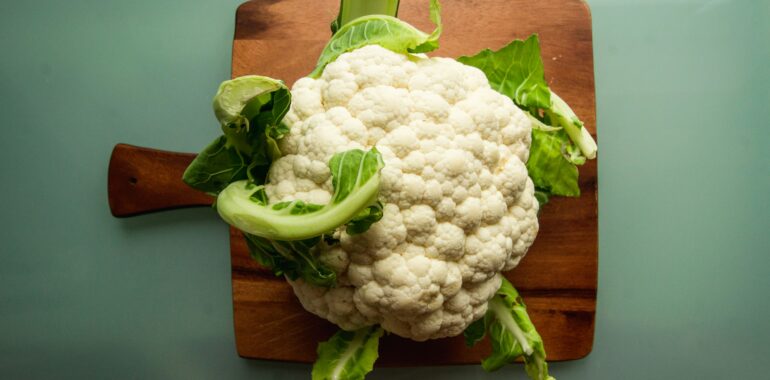
The Cruciferous Chameleon: Reimagining Comfort Food with Cauliflower
I viewed cauliflower as the most uninspired vegetable in the produce aisle—a bland, colorless bouquet of stems that I only tolerated when it was smothered in a heavy, processed cheese sauce. Previously, I assumed that the only way to make this vegetable “edible” was to mask its natural flavor with high-calorie fats. It was easy to believe that “white” vegetables lacked the nutrient density of their vibrant green cousins. Everything changed when I looked into the “Glucosinolate” profile and the structural versatility of the florets. I discovered that cauliflower isn’t just a side dish; it is a biological “blank slate” that can mimic the texture of rice, the “bite” of a pizza crust, and the creaminess of a potato mash. When you stop boiling it into mush and start utilizing its “chameleon-like” properties, you can slash the glycemic load of your favorite comfort foods while supporting your liver’s detoxification pathways.
The goal of the “Cruciferous Chameleon” protocol is to replace refined, “brain fog” inducing starches with high-fiber, mineral-rich alternatives. I love the “metabolic freedom” of this approach. It’s the realization that you can enjoy “Rice Bowls” and “Mashed Potatoes” without the insulin spike that leads to afternoon lethargy. When you swap the “empty” carbohydrates for cauliflower-based vessels, you’re supporting your “Stable Energy” and providing your gut microbiome with the prebiotic fiber it needs to thrive. These recipes are designed to be “stealthy” health upgrades—low in calories but high in the satisfying “mouthfeel” that makes a meal feel complete.
The Science of the “Cruciferous” Swap
Cauliflower belongs to the Brassica family, and its benefits go far beyond just being “low-carb.”
- Phase II Detoxification: Cauliflower is packed with Sulforaphane and Indole-3-carbinol. These compounds are essential for the liver’s ability to neutralize environmental toxins and excess hormones, making it a critical “Hormonal Balance” tool.
- The “Volume” Advantage: Because cauliflower is 92% water, you can eat a massive volume of food for a fraction of the caloric density of rice or pasta. This satisfies the “Vagus Nerve” stretch receptors in the stomach, telling your brain you are full much faster.
- Choline for the “Second Brain”: It is one of the best plant-based sources of Choline, a nutrient required for cell membrane integrity and the production of acetylcholine, a neurotransmitter involved in memory and mood.
The “Resistant Starch” Cauliflower Rice
A high-volume replacement for white rice that absorbs flavor like a sponge.
The Ingredients:
- 1 large head of Cauliflower (grated or pulsed in a food processor)
- 1 Tbsp Avocado Oil (High smoke point)
- A pinch of Sea Salt
The Method: The biggest mistake people make is boiling cauliflower rice. Don’t do it. Instead, sauté the “rice” in a large, dry pan over medium-high heat for 5–7 minutes. You want to cook off the moisture so it stays “al dente” rather than mushy.
Personal Tip: I call this “The Stealth Grain.” If you are transitioning a family away from white rice, try a “50/50” blend first. Mix half cauliflower rice with half real rice. The cauliflower takes on the flavor of whatever sauce you’re using, and most people won’t even notice the difference. It’s the easiest way to cut the “Chipotle Architect” bowl’s carb load in half.
The “Grain-Free” Buffalo Wings
A “Wild Cardio” recovery snack that mimics the crunch of fried chicken without the inflammatory oils.
The Ingredients:
- 1 head of Cauliflower, cut into large “wings”
- 1/2 cup Chickpea Flour (For a high-protein “breading”)
- 1/2 cup Water
- 1/2 cup Frank’s Red Hot or your favorite Buffalo sauce
The Method: Whisk the flour and water to create a batter. Dip the florets in the batter and bake at 200°C (400°F) for 20 minutes. Toss them in the buffalo sauce and bake for another 10 minutes until crispy.
Personal Tip: The “soggy wing” is the enemy. To avoid this, place a wire cooling rack on top of your baking sheet and put the cauliflower on the rack. This allows the hot air to circulate under the “wings,” ensuring a 360-degree crunch without needing a deep fryer.
The “Velvet” Cauliflower Mash
A “Brain Fog” safe replacement for mashed potatoes that feels incredibly indulgent.
The Ingredients:
- 1 head of Cauliflower, cut into florets
- 2 cloves of Garlic (Smashed)
- 1 Tbsp Ghee or Grass-fed butter (The “Lipid Bridge”)
- 1 Tbsp Nutritional Yeast (For a cheesy, B-vitamin boost)
The Method: Steam the cauliflower and garlic until very tender. Crucial Step: Drain the water and let the cauliflower sit in the colander for 5 minutes to “steam dry.” If it’s too wet, the mash will be watery. Blend in a food processor with the ghee and nutritional yeast until completely smooth.
Personal Tip: If you want that “restaurant-style” silkiness, use a high-powered blender instead of a potato masher. The blades break down the fiber so finely that the texture becomes indistinguishable from premium mashed potatoes. I serve this under the “Savory-Sweet” Apple & Sage Chicken for a perfect comfort meal.
The “Anti-Inflate” Cauliflower Tabbouleh
A hydrating, raw salad that uses cauliflower “pearls” instead of bulgur wheat.
The Ingredients:
- 2 cups Raw Cauliflower (pulsed into tiny pearls)
- 1 large bunch Flat-leaf Parsley (chopped)
- 1/2 cup Cherry Tomatoes (quartered)
- 2 Tbsp Lemon Juice + 1 Tbsp Olive Oil
The Method: Toss the raw cauliflower pearls with the parsley, tomatoes, and dressing. Let it sit in the fridge for 30 minutes. The lemon juice “cooks” the raw cauliflower slightly, softening the bite while keeping the enzymes intact.
The “Stable Energy” Cauliflower Steaks
A “Meatless” main dish that provides a satisfying, “umami” center-of-the-plate experience.
The Ingredients:
- 1 large head of Cauliflower (sliced into 1-inch thick “steaks”)
- 2 Tbsp Olive Oil
- 1 tsp Smoked Paprika + 1 tsp Cumin
- A squeeze of Lime
The Method: Rub the spices and oil onto both sides of the cauliflower slabs. Roast at 200°C (400°F) for 15 minutes per side. The edges will become “caramelized” and crispy, while the center stays tender.
The “Cruciferous” Prep Rules
To master cauliflower as a replacement, you must follow the “Dry-Prep” philosophy:
- Moisture is the Enemy: Cauliflower is a sponge. If you boil it, it holds water. If it holds water, your “crusts” will be soggy and your “rice” will be mushy. Always prefer roasting, sautéing, or steaming-and-drying.
- The “Acid” Balance: Cauliflower has a slightly sulfurous odor when cooked. You can neutralize this instantly by adding an acid like lemon juice or apple cider vinegar at the end of the cooking process.
- The “Rice” Hack: Don’t buy the pre-bagged cauliflower rice if you can avoid it. It’s often expensive and can develop a “funk” in the plastic bag. Buy a fresh head and use a box grater—it takes two minutes and the flavor is 100% fresher.
The Ultimate Culinary Shapeshifter
Cauliflower is the unsung hero of the “Stable Energy” kitchen. By utilizing its “Chameleon” properties, you can deconstruct the heavy, starch-laden meals of your past and rebuild them into nutrient-dense powerhouses. You’ll find that when you move away from the “Naked Carbs” and toward these cruciferous alternatives, your “Brain Fog” vanishes, your “Internal Inflate” subsides, and your energy remains consistent from the “Golden Hour” until sunset. This week, try the “Velvet” Cauliflower Mash—it’s the fastest way to realize that your favorite comfort foods don’t have to be a metabolic burden.
Final Tip: Freeze your leftover cauliflower stems! While they are too “woody” for a salad, they are perfect for thickening soups. Drop them into the “Internal Steam-Clean” Ginger Broth and blend them up for a creamy, fiber-rich base that costs zero extra dollars.

I’m Brinley, and I believe in progress over perfection. My holistic journey started when I traded rigid fads for the 80/20 rule and nature-based remedies. I only share advice I’ve lived through—from botanical skincare that fixed my dry skin to easy kitchen hacks. I’m here to help you build a nourished life through small, intentional, and sustainable choices.