
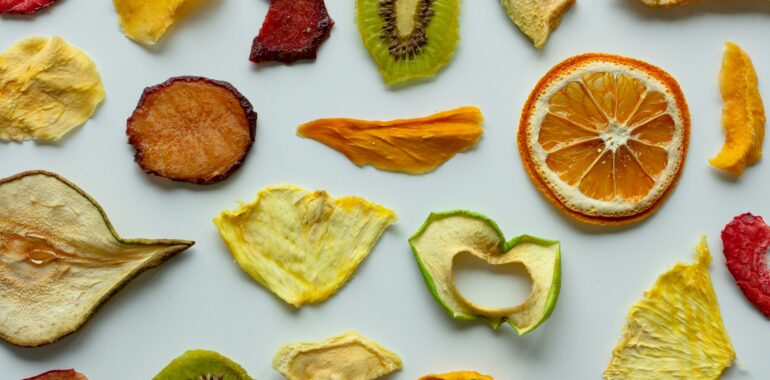
The Dehydrated Crunch: Engineering Nutrient-Dense Fruit Chips in Your Own Kitchen
I spent a lot of time wandering down the snack aisle, grabbing bags of “veggie” or “fruit” chips that were essentially just deep-fried starch disguised as health food. My snack game hit a total wall of frustration when I realized that most commercial options were loaded with seed oils and refined sugars that left me feeling sluggish and foggy by mid-afternoon. It wasn’t until I started experimenting with low-temperature drying that I realized I could capture the concentrated sweetness of a peak-season apple or pear without any of the inflammatory additives. Previously, I assumed you needed industrial-grade equipment to get that perfect “Mechanical-Snap.” Everything changed when I looked into “Cellular-Evaporation” and the role of “Ascorbic-Acid Buffering.” I discovered that at-home fruit chips aren’t just a snack; they are a high-fidelity delivery system for fiber and antioxidants that keep your energy stable.
The goal of the Dehydrated Crunch methodology is to move away from “Process-Heavy Snacks” and toward Whole-Food Integrity. By mastering the art of the at-home chip, I’ve managed to satisfy my “Crunch-Cravings” while providing my body with the micronutrients it needs to maintain focus. When I prioritize low-and-slow heat, I notice a direct improvement in my digestion and a total reduction in the “Sugar-Crashes” typical of store-bought dried fruit.
The Science of the “Crisp-Signal”
Why do homemade fruit chips feel so much more satisfying than raw fruit? It’s about “Concentrated-Sensory Data”:
- The Moisture-Reduction Pivot: By removing 80–90% of a fruit’s water content, you are concentrating the natural fructose and acids. This creates a “Flavor-Burst” that signals high-density nourishment to your brain, satisfying a sweet tooth with a fraction of the volume.
- The Pectin-Structural Bond: As fruit dries, the pectin (a natural fiber) becomes more rigid. This provides the “Crunch-Signal” our brains associate with high-reward foods, but without the need for deep-frying or trans-fats.
- The Antioxidant Shield: When you use an “Ascorbic-Acid Buffer” (like lemon juice), you prevent enzymatic browning. This keeps the polyphenols and Vitamin C intact, ensuring your snack is a “Protective-Asset” for your immune system.
4 High-Integrity Fruit Chip Architectures
1. The “Cinnamon-Apple” Anchor
Apples are the “Gold-Standard” for beginners because of their high pectin content. They provide a sturdy, reliable crunch.
- The Prep: Use a mandoline to get “Paper-Thin” slices of Honeycrisp or Granny Smith.
- The Signal: Dust with Ceylon cinnamon to provide a “Glucose-Stabilizer” that prevents the fruit’s natural sugars from spiking your insulin.
Personal Tip: I’ve found that leaving the skin on is non-negotiable. Not only does it add a “Color-Pop,” but that’s where the “Quercetin-Load” lives, which is a powerful anti-inflammatory for your gut.
2. The “Tropical-Bromelain” Pineapple
Pineapple chips are like nature’s candy. They become incredibly chewy-crisp and provide a massive hit of digestive enzymes.
- The Prep: Remove the core and slice into “Thin-Rings.”
- The Signal: A micro-pinch of sea salt creates a “Flavor-Contrast” that makes the sweetness feel even more decadent.
Personal Tip: Don’t throw away the juice that pools on the cutting board! I save it and add it to my “Mineral-Mocktail” later in the day to prevent any nutrient-waste.
3. The “Neural-Boost” Strawberry
Strawberries shrink significantly, but they concentrate into “Flavor-Diamonds” that are packed with anthocyanins.
- The Prep: Slice vertically to maintain the “Heart-Shape.”
- The Signal: Dip one half in high-percentage dark chocolate after drying for a “Dopamine-Reset.”
Personal Tip: Strawberry chips are the ultimate “Salad-Topper.” I use them instead of croutons to add a “Crunch-Layer” that actually adds nutritional value to my greens.
4. The “Potassium-Stable” Banana
Unlike the greasy, store-bought “Banana Chips,” these are air-dried and provide a slow-release energy source.
- The Prep: Slice on a slight diagonal (a “Bias-Cut”) to create more surface area for the crunch.
- The Signal: Brush with a tiny amount of melted coconut oil to add “Healthy-Fats” that aid in nutrient absorption.
Personal Tip: Use bananas that are “Yellow-with-Spots.” If they are too green, they lack the sweetness; if they are too brown, they become “Structural-Mush” during the drying process.
Performance-Optimization: 5 Personal Tips
Building a “High-Fidelity” chip requires attention to the “Mechanical-Process.” Here is how I ensure a perfect result every time.
- The “Mandoline-Integrity” Rule
Personal Tip: You cannot get a consistent crunch with a knife. I use a mandoline on the 1.5mm setting. Uniform thickness ensures that every chip in the batch reaches the “Crisp-Peak” at the same time, preventing the “Char-and-Chew” inconsistency.
- The “Ascorbic-Acid” Buffer
Personal Tip: For apples and pears, I soak the slices in a bowl of water with the juice of two lemons for 10 minutes before drying. This prevents oxidation, keeping the chips vibrant and preventing that “Dull-Brown” visual that makes healthy snacks look unappealing.
- The “Cool-Down” Structural Check
Personal Tip: Fruit chips often feel “Bendy” when they first come out of the oven or dehydrator. I always let them sit on a wire rack for 20 minutes before testing the crunch. The pectin needs to reach room temperature to fully “Set” into its final rigid state.
- The “Silpat” Advantage
Personal Tip: If you are using an oven instead of a dehydrator, skip the parchment paper and use a Silicone Baking Mat. It provides a “Non-Stick Surface” that allows for better airflow underneath the fruit, which is essential for “Total-Moisture Evaporation.”
- The “De-Gassing” Storage Protocol
Personal Tip: I store my chips in glass jars with an “Oxygen-Absorber” packet. If you put them in a plastic bag, they will pull moisture from the air and turn “Soggy” within 48 hours. Glass maintains the “Crisp-Barrier” for up to two weeks.
The “Crunch-Audit”: Tracking Your Progress
I run a quick “Sensory-Check” on every batch to ensure I’m not over-drying and losing the vital nutrients.
- Visual Signal: Success looks like vibrant colors with “Translucent-Edges.” If they look dark brown, the sugars have “Caramelized” too far, potentially creating acrylamides.
- Mechanical Signal: A “Clean-Snap” when bent. If it stretches like taffy, it still has too much “Internal-Moisture” and will spoil quickly in storage.
- Flavor Signal: A “Zingy-Sweetness” that lingers. If it tastes “Burnt-Bitter,” the temperature was too high, and the “Micro-Nutrient Integrity” has been compromised.
The Genesis of a Better Snack
Taking control of my snack “Architecture” has completely shifted my mid-afternoon energy levels. By choosing “Mechanical-Snap” over “Deep-Fried Processed-Starch,” I’ve moved away from the fatigue of the “Snack-Aisle Slump.” I’ve found that when my kitchen is stocked with these “Fiber-Dense” and “Antioxidant-Rich” chips, my Brain Fog clears and my cravings for refined sugar virtually disappear. This week, I’m leaning heavily into the “Cinnamon-Apple” Anchor—it’s the most effective way I’ve found to signal to my body that the “Energy-Phase” of the day is still going strong.
Final Tip: If you’re in a rush, you can use an Air Fryer on the “Dehydrate” setting (usually 120°F–150°F). It uses “High-Velocity Air” to speed up the process by 50%, making it the ultimate “Efficiency-Hack” for busy weekends!

I’m Brinley, and I believe in progress over perfection. My holistic journey started when I traded rigid fads for the 80/20 rule and nature-based remedies. I only share advice I’ve lived through—from botanical skincare that fixed my dry skin to easy kitchen hacks. I’m here to help you build a nourished life through small, intentional, and sustainable choices.