
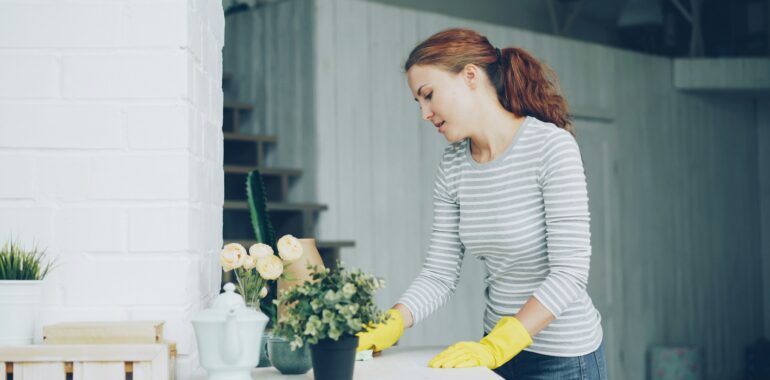
The Non-Toxic Reset: Why “Spring Cleaning” Should Start with Your Air Quality
I viewed “spring cleaning” as a battle of chemical warfare—I’d arm myself with aggressive, neon-colored sprays, bleach-heavy scrubs, and synthetic-scented wipes, believing that the stronger the “chemical sting” in the air, the cleaner my house actually was. Previously, I assumed that these heavy-duty products were a necessary evil for a hygienic home. It was easy to believe that as long as I wasn’t drinking the cleaner, it had no impact on my systemic health. Everything changed when I looked into the “Endocrine Disruption” of VOCs (Volatile Organic Compounds) and the impact of indoor air quality on my “Adrenal-Calm” baseline. I discovered that many conventional cleaning agents aren’t just cleaning surfaces; they are off-gassing into my lungs, disrupting my hormones, and creating an internal inflammatory load that makes me feel lethargic and “puffed up.” When you stop treating your home like a lab and start cleaning with natural, plant-derived agents, you aren’t just tidying—you are performing a “systemic reset” on the environment you inhabit for 90% of your day.
The goal of the “Non-Toxic Reset” is to remove the “Metabolic Friction” of harsh chemicals from your living space. I love the “simplicity” of this approach. It’s the realization that you can achieve a “hospital-level” clean using ingredients that are safe enough to eat. When you swap the “synthetic sting” for the natural power of acids, enzymes, and essential oils, you’re supporting your “Skin Recovery Cycles” and protecting your respiratory health. These habits are designed to be your “Invisible Health Upgrade”—keeping your home spotless while ensuring your body stays in a state of calm, stable energy.
The Science of the “Chemical Load”
We often focus on what we eat, but we ignore what we breathe. Your home is a closed ecosystem.
- The VOC “Fog”: VOCs are chemicals that evaporate at room temperature. Common culprits include phthalates (found in artificial fragrances) and formaldehyde (a common byproduct in standard cleaners). These compounds are “Endocrine Disruptors”—they can mimic or block your natural hormones, leading to issues with weight, skin clarity, and energy.
- The Microbiome Link: Your home has its own microbiome. When you use aggressive, antibacterial sprays, you’re wiping out the “good” bacteria that help manage mold and dust in your house, creating a “sterile but stressed” environment that can actually lead to more respiratory issues.
- Respiratory “Inflate”: Just like “Internal Inflate” in your gut, your lungs can suffer from chronic, low-level inflammation due to the chemical residue of standard cleaning products. This creates a state of systemic stress that your body has to work overtime to manage.
The “Non-Toxic” Toolkit
You don’t need a pantry full of specialized bottles. You need the “Big Three” of natural chemistry:
- Distilled White Vinegar (The Acid): The king of grime-cutting. It’s naturally antibacterial and breaks down mineral deposits and soap scum without a chemical residue.
- Baking Soda (The Abrasive): A gentle, alkaline powder that can scrub surfaces, deodorize fabric, and cut through grease.
- Castile Soap (The Surfactant): A plant-based, concentrated soap made from olive, coconut, or hemp oils. It’s the “engine” that lifts dirt away from surfaces.
The “Reset” Rituals
1. The “Surface-Safe” Multi-Purpose Mist
The Habit: Mix 1 part vinegar, 1 part water, and 10 drops of Lemon or Tea Tree essential oil in a glass spray bottle.
Why it Works: Vinegar dissolves the mineral buildup, while Tea Tree oil provides a natural, potent antimicrobial kick that doesn’t mess with your hormonal balance.
Personal Tip: I keep one of these in the kitchen and one in the bathroom. The smell of vinegar disappears in minutes, leaving behind only the crisp, clean scent of the essential oils. It feels like a fresh “mental reset” every time I wipe down a counter.
2. The “Deep-Clean” Sink & Tub Scrub
The Habit: Sprinkle baking soda over the surface, then scrub with a damp cloth dipped in castile soap.
Why it Works: The combination of the mild abrasive (baking soda) and the surfactant (soap) creates a deep clean that polishes porcelain without scratching or leaving behind a toxic film that you’d later inhale.
3. The “Textile-Refresh” Deodorizer
The Habit: Sprinkle baking soda over your area rugs or couches, let it sit for 30 minutes, then vacuum it up.
Why it Works: Odors are usually acidic. Baking soda neutralizes them, leaving your home smelling like “nothing”—which is exactly how a clean home should smell.
The “Breath-Easy” Strategy: Why It Matters
Using non-toxic products is a “Passive Health Habit.” You don’t have to do anything once the surface is clean, but your body reaps the rewards 24/7.
- Skin Clarity: If you suffer from “Jawline” breakouts or scalp folliculitis, look at your laundry detergent and cleaning supplies. Synthetic fragrances are a massive, hidden trigger for skin reactivity. Switching to “Fragrance-Free” is often the most effective “Skin Recovery” step you can take.
- Cognitive Clarity: Removing VOCs from your home environment effectively removes a source of “Brain Fog.” Your brain doesn’t have to work as hard to filter out airborne chemicals, leaving you with more “Mental Margin” for your work and creative projects.
- Adrenal Support: Reducing your chemical load reduces your body’s “Toxic Burden,” allowing your liver and kidneys to focus on your metabolic health instead of cleaning up after your household supplies.
The “Expectation” Guardrail
- Test Your Surfaces: Vinegar is acidic. Do not use it on natural stone like marble or granite—it can etch the surface over time. Use a simple mix of water and castile soap for stone.
- Glass is Best: Essential oils can react with certain types of cheap plastic over time. Always mix your cleaners in glass spray bottles to ensure the purity of the mixture stays intact.
- Patience for “Nature”: Natural cleaners don’t “kill” 99.9% of bacteria instantly like bleach. They work by lifting dirt and grime away. If you have a true biohazard, use the appropriate cleaner—but for 99% of your “spring cleaning,” the “Big Three” (Vinegar, Soda, Soap) are more than enough.
Cleaning as a Health Ritual
Spring cleaning isn’t just about making your house look good; it’s about making it feel good for your biology. By removing the “Chemical Load” of synthetic cleaners, you turn your home into a sanctuary that supports your “Stable Energy” rather than draining it. You’ll find that when your air is clean and your surfaces are residue-free, your “Brain Fog” clears and your respiratory system finally gets the break it deserves. This week, start with your kitchen counters—the “Surface-Safe Mist” is the fastest way to realize that a clean home can be a healthy home.
Final Tip: Stop using “Dryer Sheets”! They are essentially sheets of synthetic fragrance and wax that coat your clothes and then rub off on your skin all day. Use wool dryer balls instead—they naturally soften clothes and reduce drying time without dumping a “chemical load” onto your body. It’s an easy, one-time swap that lasts for years!

I’m Brinley, and I believe in progress over perfection. My holistic journey started when I traded rigid fads for the 80/20 rule and nature-based remedies. I only share advice I’ve lived through—from botanical skincare that fixed my dry skin to easy kitchen hacks. I’m here to help you build a nourished life through small, intentional, and sustainable choices.