
The Protein Protocol: 3 High-Density Dinners for Cellular Remodel
I viewed dinner as the “carbohydrate reward” for surviving the day—a mountain of pasta or a stack of tortillas that, while comforting, guaranteed a heavy, “puffed up” feeling and a sluggish start the next morning. Previously, I assumed that as long as there was some form of meat on the plate, I was meeting my requirements. It was easy to believe that “more” was better, without considering the bioavailability of the amino acids I was consuming. Everything changed when I looked into “Protein Leverage Theory” and the specific role of Leucine in triggering muscle protein synthesis. I discovered that your body is essentially a construction site that never closes; if you don’t provide the right “bricks” in the form of dense, clean protein at your final meal, you miss the most critical window for “Deep-Tissue Remodeling” while you sleep. When you stop “filling up” and start “loading up” on high-quality proteins, you aren’t just eating; you are providing the raw materials for a more resilient biology.
The goal of the “Protein Protocol” is to hit that 30–50g “Protein Anchor” per meal to maximize satiety and metabolic rate. I love the “alertness” of this approach. It’s the realization that you can wake up feeling lean and sharp simply by shifting your dinner architecture. When you swap the “filler” grains for high-density animal or plant proteins and “fibrous buffers,” you’re supporting your physical vitality and protecting your “Adrenal-Calm” balance. These recipes are designed to be “Anchor Meals”—dense, delicious, and biologically superior.
The Science of the “Amino-Anchor”
Why does a 50g protein dinner change your morning? It’s all about the “Thermic Effect of Food” (TEF).
- Metabolic Heat: Protein has the highest TEF of any macronutrient. Your body burns roughly 20–30% of the calories in protein just to digest it. This means high-protein dinners literally turn up your “Internal Furnace” while you sleep.
- The Leucine Threshold: To actually trigger “Repair Mode,” you need about 2.5g of the amino acid Leucine. This is roughly found in 5–6 oz of steak, chicken, or fish. If you hit this threshold, you flip the switch from “Storage” to “Remodel.”
- Glutamate & Gut Repair: Many high-protein sources are rich in L-glutamine, which is the primary fuel source for the cells lining your gut. A high-protein dinner is effectively a “Safety-Seal” for your intestinal barrier.
1. The “Iron-Anchor” Steak & Chimichurri
A dense, nutrient-packed meal for maximum iron and B12 replenishment.
Ingredients:
- 8 oz Grass-fed Ribeye or Sirloin
- 1 cup Parsley + 1/2 cup Cilantro (The “Heavy-Metal Detox” base)
- 2 cloves Garlic
- 2 Tbsp Extra Virgin Olive Oil + 1 Tbsp Red Wine Vinegar
- Side: Roasted Asparagus (High in prebiotic fiber)
Instructions:
- The Sear: Season the steak with sea salt and sear in a cast-iron skillet for 4 minutes per side.
- The Pulse: Blitz the parsley, cilantro, garlic, oil, and vinegar until chunky.
- The Assembly: Let the steak rest for 5 minutes (to keep the juices anchored!) before slicing and topping with the chimichurri.
Personal Tip: Grass-fed beef has a higher Omega-3 to Omega-6 ratio than grain-fed. If you feel “heavy” after eating red meat, it’s usually the quality of the fat, not the protein. Stick to grass-fed and you’ll notice the “Brain Fog” stays far away.
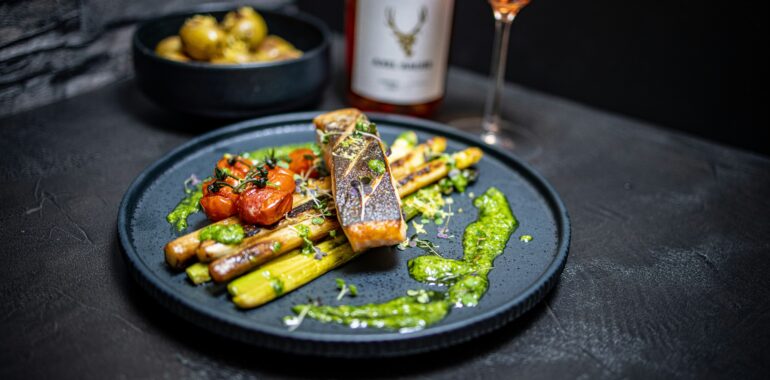
2. The “Omega-Remodel” Pesto Salmon
A high-fat, high-protein powerhouse for brain health and skin glow.
Ingredients:
- 2 Wild-caught Salmon Fillets
- 1/4 cup Basil Pesto (Check for “Clean-Oil” like olive or avocado)
- 1/2 cup Walnuts (Crushed)
- Side: Large Arugula Salad with Lemon
Instructions:
- The Coat: Slather the salmon with pesto and press the crushed walnuts into the top to create a “protein crust.”
- The Bake: Roast at 200°C (400°F) for 12–15 minutes.
- The Texture: Serve over a bed of arugula to add that “Bitter Compound” trigger for digestion.
Personal Tip: Salmon is the ultimate “Internal Steam-Clean” protein. The astaxanthin (the pigment that makes it pink) is a potent antioxidant that protects your skin from the inside out. I call this the “Beauty-Protocol” dinner.
3. The “Clean-Slate” Lemon-Herb Chicken Skillet
A lean, high-volume meal that focuses on easy digestion.
Ingredients:
- 1 lb Chicken Thighs (Skin-on for healthy fats)
- 2 Lemons (Sliced)
- 1 Tbsp Fresh Rosemary & Thyme
- 2 cups Brussels Sprouts (Halved)
Instructions:
- The Sizzle: Brown the chicken skin-side down in a skillet until crispy.
- The Roast: Add the Brussels sprouts and lemon slices to the pan.
- The Finish: Transfer the whole skillet to the oven at 200°C (400°F) for 20 minutes.
Personal Tip: Chicken thighs are far more nutrient-dense and “satiating” than breasts. The extra collagen in the dark meat and skin supports your “Skin Recovery Cycles.” Don’t fear the skin—it’s where the flavor and the “Fat-Anchor” live!
The “Protein Protocol” Guardrails
- The “30g Minimum”: If you are eating less than 30g of protein at dinner, you aren’t hitting the threshold for muscle repair. Aim for a portion roughly the size of your entire hand.
- The “Acid-Base” Balance: High-protein meals can be “acid-forming.” Always pair your protein anchor with a massive portion of green vegetables (Brussels sprouts, asparagus, or arugula) to maintain your internal pH.
- The “Salt-Signal”: Use high-quality sea salt. Protein requires minerals to be properly broken down by your stomach acid. If you don’t use enough salt, you might feel bloated or “heavy” after a big steak.
The Final Build
Prioritizing a high-protein dinner is the fastest way to master your “Metabolic Baseline.” By focusing on “Densed-Grained” proteins and fibrous buffers, you move from being a consumer of “Energy-Filler” to a master of your own “Cellular Architecture.” You’ll find that when your final meal of the day is built on a foundation of amino acids, your sleep quality improves, your “Brain Fog” disappears, and you wake up with a rock-solid energy baseline. This week, try the “Iron-Anchor” Steak & Chimichurri—it’s the fastest way to realize that your “Heaviest” meal can actually leave you feeling the most “Light” and focused the next morning.
Final Tip: Cook once, eat twice. Always throw an extra chicken thigh or steak on the pan. Having that “Pre-Cooked Protein” in the fridge is your best defense against a mid-day “Crave-Crash” tomorrow!

I’m Brinley, and I believe in progress over perfection. My holistic journey started when I traded rigid fads for the 80/20 rule and nature-based remedies. I only share advice I’ve lived through—from botanical skincare that fixed my dry skin to easy kitchen hacks. I’m here to help you build a nourished life through small, intentional, and sustainable choices.