
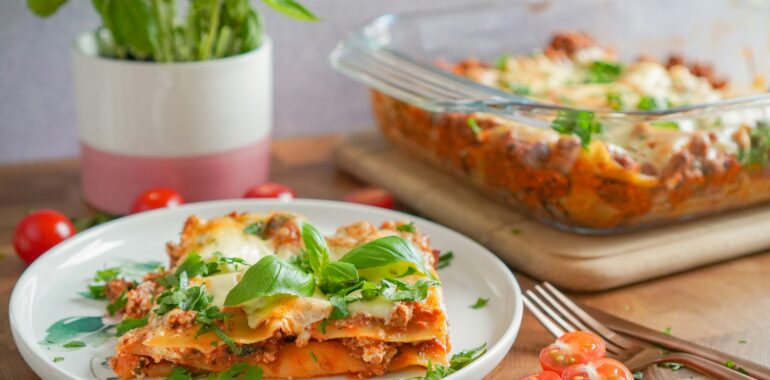
The Remodeling Roast: 3 High-Protein Lasagna Prototypes for Muscle Repair
For a long time, I viewed lasagna as the “ultimate inflammatory trap”—a heavy, gluten-dense dish that left me feeling “puffed up,” lethargic, and stuck in a digestive “slow lane” for hours after eating. Previously, I assumed that to get that satisfying, layered comfort of a traditional lasagna, I had to rely on refined wheat noodles and excessive amounts of low-quality dairy that stalled my “Internal Steam-Clean.” It was easy to believe that “healthy lasagna” would always be a watery, disappointing mess of zucchini slices that didn’t actually satisfy my hunger. Everything changed when I looked into the “Protein-Anchor” effect and the structural power of “Densed-Grained” vegetable layers. I discovered that you can recreate the architecture of a perfect lasagna using high-protein ricotta alternatives and nutrient-dense “noodles” that support your metabolic health rather than spiking your insulin. When you stop “stacking carbs” and start “layering amino acids,” you turn a comfort classic into a functional recovery tool.
The goal of the “Remodeling Roast” protocol is to provide a massive dose of bioavailable protein while keeping the glycemic load low. I love the “satiety” of this recipe. It’s the realization that you can eat a hearty, decadent-feeling meal that actually supports your “Skin Recovery Cycles” and keeps your focus sharp. When you swap the “refined” noodles for high-fiber alternatives and “anchored” proteins, you’re supporting your “Adrenal-Calm” balance and ensuring your body has the raw materials for “Deep-Tissue Remodeling.” This lasagna is designed to be “Performance-Focused”—keeping the flavor high while ensuring your “Internal Flow” stays unobstructed.
The Science of the “Protein-Layer”
Why does this version outperform the traditional stack? It’s all about the “Structural Amino Acids.”
- The Glycemic Buffer: Traditional noodles cause a rapid glucose spike. By using thin-sliced eggplant or “heart of palm” sheets, you provide a high-fiber buffer that slows the absorption of nutrients, protecting your “Cognitive Clarity” from the post-meal crash.
- The Casein & Collagen Bridge: By mixing high-quality ricotta (rich in slow-digesting casein) with grass-fed beef or turkey, you create a “Time-Release” protein delivery. Adding a scoop of unflavored collagen to the sauce further supports gut-lining repair and joint health.
- Lycopene Bioavailability: Cooking tomato sauce with a healthy fat (like olive oil or the fats in the meat) increases the absorption of lycopene, a potent antioxidant that protects your cells from oxidative stress.
The Eggplant & Grass-Fed Beef Bake
The gold standard for a dense, “meaty” texture that mimics traditional pasta.
Ingredients:
- 1.5 lbs Grass-fed Ground Beef
- 2 large Eggplants (thinly sliced)
- 15 oz Ricotta Cheese + 1 Egg
- 3 cups Marinara (No sugar added)
- 2 cups Mozzarella
Instructions:
- The Squeeze: Salt your eggplant slices for 15 minutes, then pat dry with a towel. This is non-negotiable for a firm texture.
- The Sear: Brown the beef and mix with marinara.
- The Layer: Sauce, eggplant, ricotta, mozzarella. Repeat.
- The Bake: 190°C (375°F) for 45 minutes.
Personal Tip: I like to lightly grill or pan-sear the eggplant slices for 1 minute per side before layering. It adds a smoky depth and ensures the “noodles” never get soggy.
The Turkey & Zucchini “Light-Lift”
A leaner version that prioritizes hydration and high-volume satiety.
Ingredients:
- 1.5 lbs Ground Turkey
- 3 large Zucchini (sliced into ribbons)
- 1 cup Low-fat Cottage Cheese (blended until smooth)
- 1 tsp Dried Oregano
- 1.5 cups Parmesan Cheese
Instructions:
- The Prep: Use a mandoline to get uniform zucchini ribbons. Squeeze out all moisture.
- The Blend: Blend the cottage cheese with oregano—this acts as a “high-protein” ricotta substitute.
- The Layer: Alternate turkey sauce, zucchini ribbons, and the cottage cheese cream.
- The Bake: 190°C (375°F) for 40 minutes.
Personal Tip: Zucchini is much wetter than eggplant. I actually let the assembled lasagna sit in the fridge for 30 minutes before baking; it helps the ribbons “tighten up” so the final result is perfectly sliceable.
The Pesto & Chicken “Green-Clean”
A dairy-heavy alternative for those focusing on “Neural-Fuel” and healthy fats.
Ingredients:
- 1.5 lbs Ground Chicken
- 1 jar Basil Pesto (Check for clean oils)
- 1 package Heart of Palm Lasagna Sheets
- 15 oz Ricotta + 1/4 cup Spinach (chopped)
- 2 cups Provolone Cheese
Instructions:
- The Noodle: Rinse the heart of palm sheets thoroughly to remove the “brine” flavor.
- The Mix: Sauté ground chicken with the pesto.
- The Layer: Pesto-chicken, heart of palm, spinach-ricotta, provolone.
- The Bake: 190°C (375°F) for 35 minutes.
Personal Tip: Heart of palm is the most “normal” feeling noodle substitute. If you’re cooking for someone skeptical of “veggie pasta,” this is the one to use. It holds its shape perfectly and absorbs the pesto oils for an incredible mouthfeel.
The “Remodeling” Guardrails
- The “Rest” Period: You must let the lasagna rest for 15 minutes. This allows the fibers in the vegetable noodles to “set.” If you cut it immediately, the structural integrity will fail.
- The “Sauce-Logic”: Check your marinara label. Most commercial sauces are “Sugar-Traps.” Look for a brand that uses only tomatoes, olive oil, and herbs.
- The “Binder” Rule: Always mix an egg into your ricotta. It’s the “Structural Binder” that ensures your lasagna has distinct layers rather than becoming a disorganized pile on the plate.
The Structural Recovery
Making a high-protein lasagna is an act of “Dermal Stewardship.” By ditching the refined flour and prioritizing “Anchored” proteins and fibers, you move from a state of “Digestive Heaviness” to a state of “Functional Repair.” You’ll find that when your comfort food is built on a foundation of whole plants and amino acids, your “Brain Fog” clears and your energy returns to a steady, sharp baseline. This week, try the Eggplant & Grass-Fed Beef Bake—it’s the fastest way to realize that your most “Indulgent” meal can be your most “Performance-Focused” one.
Final Tip: This lasagna freezes incredibly well. I like to slice it into individual “Power-Squares” and freeze them. It’s the ultimate “Emergency Fuel” for those late-night work sessions when you need high-quality nutrition but have zero time to cook!

I’m Brinley, and I believe in progress over perfection. My holistic journey started when I traded rigid fads for the 80/20 rule and nature-based remedies. I only share advice I’ve lived through—from botanical skincare that fixed my dry skin to easy kitchen hacks. I’m here to help you build a nourished life through small, intentional, and sustainable choices.