
The Satiety Secret: How High-Fiber, High-Protein Meals Transform Weight Loss and Energy
If you have ever embarked on a health or weight loss journey, you have likely received a mountain of conflicting advice. One wellness guru tells you to banish carbohydrates, another insists that a low-fat vegan lifestyle is the only path forward, and a third pushes a grueling calorie-counting routine that leaves you tracking every single almond.
It is exhausting. But if you look past the trend-driven marketing and focus on the hard science of human metabolism, lasting health changes boil down to a simple, powerful nutritional combination: maximizing your dietary fiber and protein intake.
When you structurally pair high-fiber foods with lean and fatty proteins at every meal, you unlock the ultimate physiological cheat code for weight management, stable blood sugar, and sustained all-day energy. You stop fighting your willpower and start working with your body’s natural hunger hormones.
Here is the exact science behind why this combination is so incredibly effective, followed by a complete, delicious daily meal plan designed to pack your plate with fiber and protein.
The Power Duo: Why Fiber and Protein Reign Supreme
To understand why this macro split is a game-changer, we have to look at what happens inside your stomach and brain after you eat. Most modern convenience foods are packed with refined carbohydrates and simple sugars. These foods digest incredibly quickly, triggering a sharp blood sugar spike followed by a rapid crash that leaves you feeling tired, irritable, and craving more carbs within an hour.
Fiber and protein work together to completely flatten that blood sugar curve through two distinct mechanisms:
1. The Mechanical Slow-Down of Fiber
Dietary fiber is the indigestible part of plant foods. It comes in two forms: soluble and insoluble.
- Soluble fiber absorbs water in your digestive tract, transforming into a thick, gelatinous matrix. This gel coats the lining of your stomach and intestines, slowing down the rate at which glucose is absorbed into your bloodstream.
- Insoluble fiber adds physical bulk to your meals. As it moves through your system, it mechanically stretches the walls of your stomach. This physical stretching triggers the immediate release of leptin, the hormone that travels to your brain to signal that you are physically full.
2. The Hormonal Power of Protein
While fiber manages the mechanical side of fullness, protein handles the chemical messaging. When you consume high-quality protein, your body actively suppresses the production of ghrelin, the hormone responsible for triggering intense hunger pangs. At the same time, it stimulates the production of satiety hormones like peptide YY (PYY) and GLP-1.
Furthermore, protein boasts the highest Thermic Effect of Food (TEF) of any macronutrient. Your body has to work incredibly hard to break down protein molecules, meaning you actually burn roughly 20% to 30% of the protein’s calories simply through the act of digestion.
The Combined Result: Fiber physically fills your stomach, while protein chemically satisfies your brain. Together, they keep you full for four to six hours, eliminating the need for constant snacking and making a caloric deficit completely effortless.
Daily Nutritional Blueprint at a Glance
To make your meal planning straightforward, aim for a baseline of at least 30 grams of protein and 10 grams of fiber per main meal. This structured approach easily gets you to the recommended daily targets for optimal health and metabolic success.
| Meal | Featured Whole-Food Recipe | Target Fiber | Target Protein |
| Breakfast | The Ultimate Berry & Hemp Power Oatmeal | 14g | 32g |
| Lunch | Southwest Crispy Black Bean & Turkey Taco Bowls | 13g | 38g |
| Dinner | Mediterranean Salmon & Lentil Harvest Skillet | 11g | 42g |
Breakfast: The Ultimate Berry & Hemp Power Oatmeal
Traditional morning oatmeal provides a decent baseline of fiber, but it is notoriously low in protein, which can lead to a mid-morning energy slump. This recipe upgrades classic oats by cooking them with liquid egg whites for a hidden, fluffy protein boost, then loading them with fiber-dense seeds and berries.
Ingredients:
- 1/2 cup old-fashioned rolled oats
- 1/2 cup liquid egg whites (whisked vigorously)
- 1 cup unsweetened almond milk or water
- 1 scoop vanilla whey or plant-based protein powder
- 1 tbsp chia seeds
- 2 tbsp hemp hearts (hemp seeds)
- 1/2 cup fresh or frozen raspberries (the highest-fiber berry)
- A dash of ground cinnamon
Instructions:
- Cook the Oats: In a small saucepan, combine the rolled oats, almond milk, and chia seeds over medium heat. Bring the mixture to a gentle simmer, stirring frequently for 3 to 4 minutes until the oats begin to absorb the liquid.
- The Fluffy Egg White Trick: Turn the heat down to low. While stirring the oats continuously with a silicone spatula, slowly pour in the liquid egg whites. Continue to stir rapidly for 2 minutes. The egg whites will cook invisibly into the oatmeal, creating an incredibly voluminous, fluffy texture without any egg flavor.
- Stir in Protein: Remove the saucepan from the heat entirely. Let it cool for 60 seconds, then stir in your vanilla protein powder and ground cinnamon until completely smooth.
- Top and Serve: Transfer the warm oatmeal to a serving bowl. Top generously with the fresh raspberries, hemp hearts, and an extra sprinkle of cinnamon.
Lunch: Southwest Crispy Black Bean & Turkey Taco Bowls
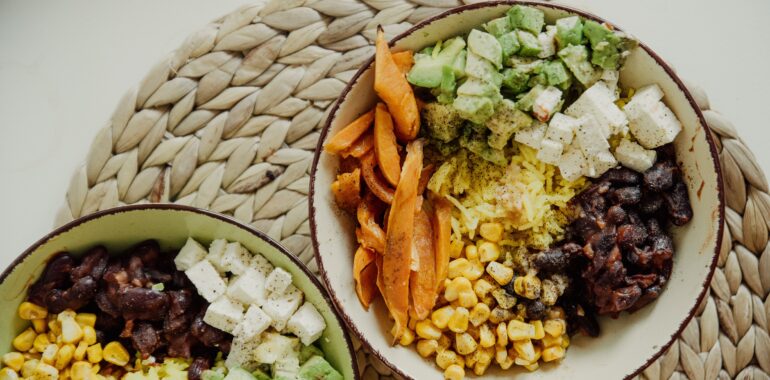
This vibrant meal-prep bowl replaces standard white rice with a nutrient-dense base of fiber-rich black beans and sweet corn, topped with lean ground turkey seasoned with aromatic Mexican spices.
Ingredients:
- 1 lb lean ground turkey breast (93% or 99% lean)
- 2 cans (15 oz each) organic black beans, rinsed and drained
- 1 cup sweet corn kernels (fresh or frozen)
- 1 packet low-sodium taco seasoning (or a mix of cumin, chili powder, and garlic powder)
- 1 cup cherry tomatoes, halved
- 2 cups chopped romaine lettuce
- 1/4 cup plain non-fat Greek yogurt (used as a high-protein substitute for sour cream)
- 1 tbsp olive oil
Instructions:
- Brown the Protein: Heat the olive oil in a large skillet over medium-high heat. Add the ground turkey, breaking it up with a wooden spoon. Cook for 6 to 7 minutes until it is fully browned and no pink remains. Stir in the taco seasoning and a splash of water, simmering for 2 minutes until a light glaze forms. Remove the meat from the skillet.
- Warm the Fiber Base: In the same skillet, toss in the rinsed black beans and corn kernels. Season with a tiny pinch of salt and cumin, cooking for 3 minutes until heated through.
- Assemble the Bowls: Divide the chopped romaine lettuce evenly among four meal-prep containers. Layer a generous portion of the black bean and corn mixture into each bowl, followed by the seasoned ground turkey.
- Garnish: Top each bowl with halved cherry tomatoes and a dollop of plain Greek yogurt for an extra hit of creaminess and clean protein.
Dinner: Mediterranean Salmon & Lentil Harvest Skillet
Lentils are an absolute powerhouse in the world of high-fiber, high-protein cooking. They require zero pre-soaking, cook quickly, and provide an incredible earthy base for rich, omega-3-packed salmon fillets.
Ingredients:
- 2 center-cut salmon fillets (approx. 6 oz each)
- 1 cup dry brown or green lentils, rinsed
- 2.5 cups low-sodium vegetable broth
- 2 cups fresh baby spinach
- 1 medium yellow onion, diced
- 2 cloves garlic, minced
- 1 tbsp extra virgin olive oil
- Lemon wedges for serving
- Salt, black pepper, and dried oregano to taste
Instructions:
- Simmer the Lentils: In a medium saucepan, combine the rinsed lentils and vegetable broth. Bring to a boil, then immediately lower the heat, cover with a tight-fitting lid, and let them simmer gently for 20 to 25 minutes until tender but not mushy. Drain any excess liquid.
- Sear the Salmon: While the lentils cook, season your salmon fillets with salt, pepper, and dried oregano. Heat the olive oil in a large skillet over medium-high heat. Place the salmon skin-side down and sear for 4 to 5 minutes until the skin is crisp. Flip the fillets carefully and cook for an additional 3 minutes, then transfer them to a plate.
- Sauté the Aromatics: In the same hot skillet, lower the heat to medium. Add the diced yellow onion and minced garlic, cooking for 3 minutes until translucent and fragrant. Toss in the cooked lentils and the fresh baby spinach, stirring continuously until the spinach wilts completely into the mixture.
- Bring It Together: Nestle the seared salmon fillets back into the bed of warm, garlicky lentils. Cover the skillet for 1 minute to let everything heat through uniformly. Serve with a fresh, heavy squeeze of lemon juice.
Cultivating a Sustainable Satiety Habit
Adopting a high-fiber, high-protein lifestyle isn’t about deprivation or skipping out on the joy of eating. It is about understanding how to properly balance your plate so that your body feels energized, satisfied, and biologically supported.
By prioritizing these whole-food recipes and building your grocery list around lean proteins and fibrous plant materials, you will naturally crowd out processed temptations, heal your relationship with hunger, and build a vibrant foundation of health that lasts a lifetime.

I’m Brinley, and I believe in progress over perfection. My holistic journey started when I traded rigid fads for the 80/20 rule and nature-based remedies. I only share advice I’ve lived through—from botanical skincare that fixed my dry skin to easy kitchen hacks. I’m here to help you build a nourished life through small, intentional, and sustainable choices.