
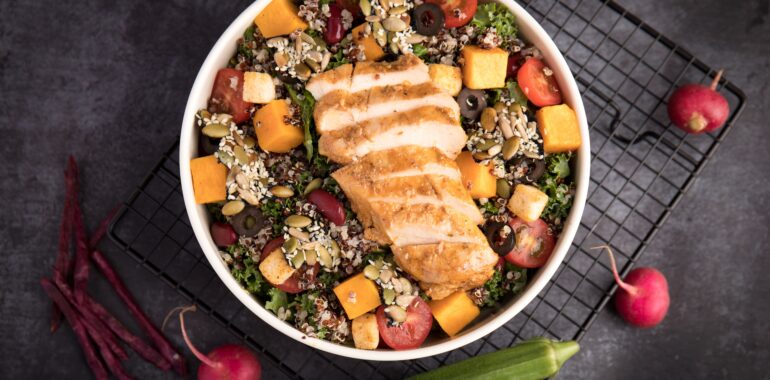
Main-Course Salads That Won’t Leave You Snacking an Hour Later
Salads get a bad reputation as a meal that leaves you rummaging through the pantry an hour later, and honestly, most of them deserve it. A pile of lettuce with a few token vegetables and a light drizzle of dressing was never going to hold anyone over until dinner. The fix isn’t avoiding salads — it’s building them the way you’d build any other meal, around real protein, healthy fat, and enough volume to actually register as food.
Below are five main-course salads designed to function as a genuine, satisfying meal rather than a side dish pretending to be one.
What Makes a Salad Actually Filling
The three components most responsible for satiety are protein, fat, and fiber, and a lot of standard salads are missing at least one of them. A salad built around a few ounces of grilled chicken, a source of healthy fat like avocado or nuts, and a generous base of fiber-rich vegetables and legumes checks all three boxes at once. Portion size matters too — a “salad” with a small handful of greens was never going to function as dinner, regardless of what’s on top of it.
1. Grilled Chicken and Avocado Salad
A reliable, protein-forward salad built around simple, well-seasoned components.
Ingredients (serves 2):
- 2 boneless, skinless chicken breasts
- 4 cups mixed greens
- 1 avocado, sliced
- 1 cup cherry tomatoes, halved
- 1/4 cup red onion, thinly sliced
- 3 tbsp olive oil, divided
- 1 tbsp red wine vinegar
- Salt and pepper to taste
Instructions:
- Season the chicken with salt and pepper. Heat 1 tbsp olive oil in a skillet over medium-high heat and cook the chicken for 6–7 minutes per side, until fully cooked. Let rest, then slice.
- Whisk together the remaining olive oil and red wine vinegar to make a simple dressing.
- Toss the mixed greens, cherry tomatoes, and red onion in a bowl.
- Top with sliced chicken and avocado, then drizzle with dressing before serving.
2. Mediterranean Chickpea Salad
A vegetarian option that leans on chickpeas and feta for both protein and satisfying richness.
Ingredients (serves 2):
- 1 can (15 oz) chickpeas, drained and rinsed
- 4 cups chopped romaine
- 1 cucumber, diced
- 1 cup cherry tomatoes, halved
- 1/4 cup crumbled feta
- 1/4 cup Kalamata olives
- 3 tbsp olive oil
- 1 tbsp lemon juice
- 1 tsp dried oregano
Instructions:
- Whisk together the olive oil, lemon juice, and oregano to make the dressing.
- In a large bowl, combine the romaine, cucumber, tomatoes, chickpeas, and olives.
- Toss with the dressing until evenly coated.
- Top with crumbled feta just before serving.
3. Steak and Blue Cheese Salad
A heartier, more indulgent option that still holds up nutritionally thanks to lean steak and a smart portion of cheese.
Ingredients (serves 2):
- 8 oz sirloin steak
- 4 cups arugula
- 1/2 cup cherry tomatoes, halved
- 1/4 cup crumbled blue cheese
- 1/4 cup pecans, toasted
- 2 tbsp olive oil
- 1 tbsp balsamic vinegar
- Salt and pepper to taste
Instructions:
- Season the steak with salt and pepper. Sear in a hot skillet for 3–4 minutes per side for medium-rare. Let rest for 5 minutes, then slice thinly against the grain.
- Whisk together the olive oil and balsamic vinegar.
- Toss the arugula, cherry tomatoes, and pecans in a bowl with the dressing.
- Top with sliced steak and blue cheese before serving.
4. Salmon and Quinoa Power Salad
A well-rounded salad that adds a whole grain to the mix for extra staying power alongside omega-3-rich salmon.
Ingredients (serves 2):
- 2 salmon fillets
- 1 cup cooked quinoa
- 4 cups baby spinach
- 1/2 cup shredded carrots
- 1/4 cup sliced almonds
- 2 tbsp olive oil
- 1 tbsp lemon juice
- Salt and pepper to taste
Instructions:
- Season the salmon with salt and pepper. Bake at 400°F (200°C) for 12–15 minutes, until it flakes easily, then flake into large pieces.
- Whisk together the olive oil and lemon juice.
- In a large bowl, combine the spinach, cooked quinoa, and shredded carrots.
- Top with flaked salmon and sliced almonds, then drizzle with dressing before serving.
5. Southwest Black Bean and Corn Salad with Chicken
A bolder, more filling option with beans, corn, and a lime-forward dressing.
Ingredients (serves 2):
- 2 boneless, skinless chicken breasts
- 1 tsp taco seasoning
- 4 cups chopped romaine
- 1 cup black beans, drained and rinsed
- 3/4 cup corn kernels
- 1 avocado, diced
- 3 tbsp olive oil
- 1 tbsp lime juice
- Fresh cilantro, chopped
Instructions:
- Season the chicken with taco seasoning. Cook in a skillet over medium-high heat for 6–7 minutes per side, until fully cooked. Let rest, then slice.
- Whisk together the olive oil and lime juice.
- Toss the romaine, black beans, and corn in a large bowl with the dressing.
- Top with sliced chicken, diced avocado, and fresh cilantro before serving.
Tips for Building a Salad That Actually Satisfies
Always include a real protein source. Aim for at least 4–6 ounces of chicken, steak, salmon, or a substantial plant-based protein like chickpeas or beans per serving.
Don’t fear the fat. Avocado, olive oil, nuts, and cheese all contribute to satiety and help the body absorb fat-soluble nutrients from the vegetables in the salad.
Build volume with more than just lettuce. Mixing in grains, legumes, or roasted vegetables adds bulk and nutrients that lettuce alone can’t provide.
The steak and blue cheese version has become the go-to when a salad needs to double as a genuinely special dinner rather than a lighter side, which says a lot about how far salads can go with the right ingredients.
Storing and Meal Prepping
Most of these salads store well if kept separately: protein and dressing in their own containers, hearty vegetables and grains together, and delicate greens added just before eating. Cooked chicken, steak, and salmon all keep for 3–4 days in the refrigerator, making it easy to build a fresh salad quickly without cooking protein from scratch each time.
Frequently Asked Questions
How much protein should a main-course salad have? A good target is roughly 20–30 grams of protein per serving, which typically translates to 4–6 ounces of meat, fish, or a generous portion of legumes.
Can I meal prep salads for the week? Yes, as long as dressing and any delicate ingredients like avocado are added right before eating. Hearty components like grains, beans, and cooked protein hold up well for several days when stored separately.
What’s the best way to keep salad greens from wilting? Storing greens with a paper towel in the container to absorb excess moisture, and keeping dressing separate until serving, both help extend freshness significantly.
Main-course salads prove that the format isn’t the problem — the proportions are. Build one around real protein, healthy fat, and enough volume, and it stops being something you’re hungry an hour after eating and starts being genuinely satisfying on its own.

I’m Brinley, and I believe in progress over perfection. My holistic journey started when I traded rigid fads for the 80/20 rule and nature-based remedies. I only share advice I’ve lived through—from botanical skincare that fixed my dry skin to easy kitchen hacks. I’m here to help you build a nourished life through small, intentional, and sustainable choices.