
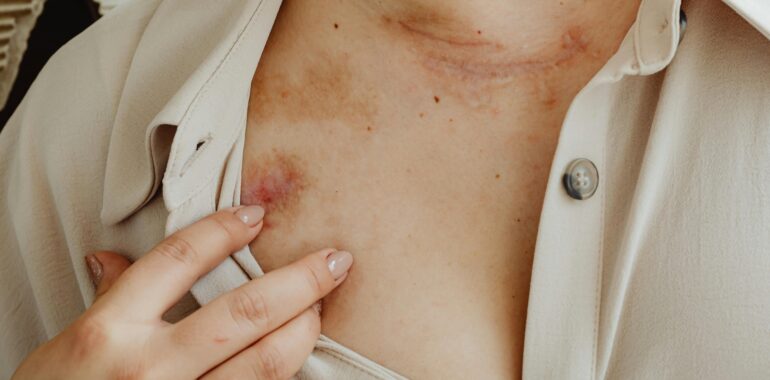
Skin Recovery Cycles: Why Healing Takes Longer Than You Think
I viewed my skin as a fast-acting, reactive surface—an organ that should “fix” itself within forty-eight hours of a breakout or a new product application. Previously, I assumed that if a dark spot didn’t fade or a scratch didn’t vanish in a few days, the treatment had failed or my body was sluggish. It was easy to believe the marketing promises of “overnight results” and “instant transformations.” Everything changed when I understood the “28-Day Biological Clock.” I discovered that skin healing isn’t a sprint; it’s a highly regulated, multi-phase construction project. When you realize that your skin cells are born in the deepest layers and take weeks to reach the surface, you stop “product hopping” and start giving your biology the time it actually needs to rebuild.
The goal of understanding Skin Recovery Cycles is to align your expectations with your cellular reality. I love the patience this knowledge provides. It’s the realization that you aren’t just “waiting”; you are supporting an intricate sequence of inflammation, tissue formation, and remodeling. When you respect the timeline of cellular turnover, you reduce the stress that actually hinders healing. By understanding why a blemish takes weeks to truly disappear or why a chemical peel requires a month of “down time,” you become a better steward of your own complexion.
The Science of the “Skin Clock”
Your skin is in a constant state of “Desquamation”—the process of shedding old cells and replacing them with new ones.
- The 28-Day Cycle: In a healthy adult, it takes roughly 28 to 30 days for a new cell to travel from the stratum basale (the basement) to the stratum corneum (the surface). As we age, this cycle can slow down to 45–60 days.
- The Three Phases of Healing: 1. Inflammatory Phase (Days 1–3): The “emergency response” where blood vessels constrict and white blood cells rush to the site. 2. Proliferative Phase (Days 4–21): The “building phase” where your body produces fresh collagen and new blood vessels. 3. Remodeling Phase (Day 21–1 Year): The “refining phase” where collagen is reorganized and the skin regains its strength.
Why Your Recovery Might Be “Stalling”
If you feel like your skin is stuck in a loop of redness or slow healing, it’s usually because one of these biological pillars is compromised:
1. The “Barrier” Breach
If you over-exfoliate with acids or retinols, you are stripping away the “bricks and mortar” of your skin before the new cells are ready to take over.
- The Result: Your skin stays in a permanent state of inflammation, which halts the “Remodeling” phase.
2. The Nighttime “Construction Shift”
Skin cell regeneration is at its peak between 11:00 PM and midnight. This is when the hormone Melatonin acts as an antioxidant to repair UV damage.
- The Result: Skipping sleep literally skips your skin’s most productive “repair shift.”
3. Nutrient Deficiencies
Healing requires specific raw materials. Without Vitamin C (for collagen synthesis) and Zinc (for cell division), the “Proliferative Phase” simply cannot complete.
How to Support the 28-Day Cycle
The Habit: Targeted Patience
- The Rule: Give any new skincare active (like Retinol or Vitamin C) at least two full skin cycles (8 weeks) before deciding if it works.
- Instructions: Track your progress with photos every 14 days rather than checking the mirror every morning. This helps you see the “remodeling” that is invisible to the naked eye on a daily basis.
The Habit: The “Moisture Seal”
- The Rule: During the first 7 days of any skin injury or breakout, focus exclusively on hydration over “treatment.”
- Instructions: Swap your “active” serums for a ceramide-rich cream. Ceramides mimic the natural lipids in your skin, providing the “scaffolding” needed for new cells to climb to the surface.
Personal Tip: I used to attack breakouts with drying spot treatments until they scabbed over, thinking I was “killing” the problem. Now, I do the opposite. I treat a healing blemish like a tiny wound—keeping it moist with a hydrocolloid bandage. This prevents a scab from forming, which actually speeds up the “Remodeling” phase and prevents that long-term red mark (PIE).
Respect the Blueprint
Healing is a biological negotiation, not a command. When you understand that your skin is working on a 28-day blueprint, you stop sabotaging the process with impatience. You realize that “glowing skin” is simply the result of a cell that was well-nourished and undisturbed for its entire month-long journey to the surface. This month, try the “8-Week Test” with your current routine. You’ll be amazed at how much better your skin looks when you finally stop interrupting its work.
Final Tip: Watch your sugar intake during a “recovery” phase! High blood sugar leads to “Glycation,” where sugar molecules attach to collagen fibers, making them stiff and brittle. If you want your skin to remodel quickly, keep your glucose stable!

I’m Brinley, and I believe in progress over perfection. My holistic journey started when I traded rigid fads for the 80/20 rule and nature-based remedies. I only share advice I’ve lived through—from botanical skincare that fixed my dry skin to easy kitchen hacks. I’m here to help you build a nourished life through small, intentional, and sustainable choices.