
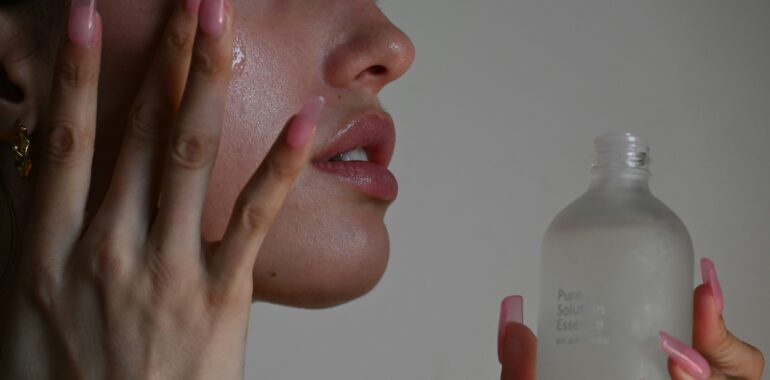
Smoothing the Surface: Gentle Solutions for Uneven Texture and Bumps
For a long time, I treated my face like a project that needed to be scrubbed into submission. Previously, whenever I noticed small bumps or a rough, sandpaper-like texture on my forehead and chin, my first instinct was to reach for the grainiest physical exfoliant I could find. It was easy to believe that “more is more”—that if I could just buff away the top layer of my skin, I would finally find that glassy, smooth complexion underneath. Everything changed when I realized that aggressive scrubbing was actually causing micro-tears and inflammation, leading to even more texture issues. I discovered that the secret to smooth skin isn’t force; it’s a strategic combination of gentle chemical exfoliation and deep hydration.
The goal of a texture-focused routine is to encourage cell turnover without compromising your skin’s protective barrier. I love the shift toward “slow beauty.” It’s the realization that skin is a living organ, not a piece of wood that needs sanding. When you swap the harsh scrubs for smart acids and soothing botanicals, you stop fighting your skin and start supporting its natural renewal process. By identifying whether your bumps are caused by trapped oil, dead skin, or simple dehydration, you can apply the right “fix” and wake up to a noticeably softer surface.
The Texture Audit: Identifying Your Bumps
Not all texture is created equal. Before you treat it, you have to know what you’re looking at:
- Congestion (Comedones): These are small, skin-colored bumps caused by pores that are partially blocked by oil and dead skin.
- Dehydration “Crinkles”: If your skin looks rough and has fine, crepey lines, your texture is likely a cry for water, not an exfoliation issue.
- Keratosis Pilaris (KP): Often found on the arms but can appear on the face, these “chicken skin” bumps are caused by a buildup of keratin.
Solution 1: The “Liquid Sandpaper” (Chemical Exfoliation)
This is the modern alternative to physical scrubs. Instead of tearing at the surface, these acids dissolve the “glue” holding dead skin cells together.
The Tool: Lactic Acid or Mandelic Acid.
The Fix: These are the gentlest members of the Alpha Hydroxy Acid (AHA) family.
The Stats: Unlike Glycolic acid, which has a tiny molecule that can dive too deep and cause stings, Lactic acid is a larger molecule that stays on the surface, exfoliating while simultaneously drawing moisture into the skin.
The Instructions:
- Apply: Once or twice a week, apply a few drops of a 5% or 10% Lactic Acid serum to clean, dry skin at night.
- Wait: Let it sink in for two minutes before applying your moisturizer.
- Protect: AHAs make your skin more sun-sensitive, so SPF the next morning is a non-negotiable.
Personal Tip: If you have sensitive skin, start with Mandelic acid. It’s even gentler than Lactic and is excellent for clearing up texture on deeper skin tones without the risk of post-inflammatory hyperpigmentation.
Solution 2: The “Pore Vacuum” (BHA Treatment)
Designed specifically for those tiny, stubborn bumps that feel like they are trapped under the skin.
The Tool: Salicylic Acid (BHA).
The Fix: Salicylic acid is oil-soluble, meaning it can actually get inside the pore to break up the “plug” causing the bump.
The Stats: BHAs also have anti-inflammatory properties, so they calm the redness around the bumps while they work.
The Instructions:
- Target: Use a 2% BHA liquid exfoliant. You can use it as an all-over toner or just “spot treat” the textured areas like your nose and chin.
- Dab: Use a cotton pad or your fingers to press the liquid into the skin.
- Consistency: Use this 3 times a week. Texture isn’t solved overnight; it usually takes about 2 to 4 weeks to see the “plug” disappear.
Solution 3: The “Barrier Buffer” (Moisture Sandwich)
Sometimes the texture is caused by a broken skin barrier. If your skin is flaking and bumpy at the same time, this is your solution.
The Tool: Hyaluronic Acid + Ceramide Cream.
The Fix: This combo repairs the “mortar” between your skin cells, smoothing out the surface from the inside out.
The Stats: Ceramides are essential fatty acids that make up 50% of your skin barrier. Without them, your skin texture becomes “leaky” and rough.
The Instructions:
- Dampen: Leave your face slightly damp after washing.
- Layer: Apply a Hyaluronic Acid serum to the damp skin.
- Seal: Immediately follow with a thick ceramide-rich moisturizer to lock that water in.
Personal Tip: I call this the “Plump Factor.” When your skin cells are fully hydrated, they sit tightly together, which naturally makes the surface of your skin look and feel smoother without using any acids at all.
Patience Over Power
Smooth skin is a marathon, not a sprint. When you treat your texture with gentle, consistent solutions, you build a complexion that is resilient and glowing. Ditch the idea that you need to feel a “sting” for a product to be working. Real progress looks like a gradual softening of those bumps and a surface that reflects light evenly. Listen to your skin—if it turns red, back off. If it feels soft, you’ve found your “sweet spot.”
Final Tip: Change your pillowcase! If you have texture mostly on your cheeks, it’s likely a buildup of bacteria and hair product residue on your bedding. A fresh silk or cotton pillowcase every 3 days can do more for texture than a $100 serum.

I’m Brinley, and I believe in progress over perfection. My holistic journey started when I traded rigid fads for the 80/20 rule and nature-based remedies. I only share advice I’ve lived through—from botanical skincare that fixed my dry skin to easy kitchen hacks. I’m here to help you build a nourished life through small, intentional, and sustainable choices.