
The Longevity Table: How to Master the Mediterranean Diet at Home
Open any major medical journal or talk to a leading cardiologist, and you will consistently hear praise for one specific way of eating: The Mediterranean Diet.
Unlike modern dietary trends that rely on severe food restriction, counting points, or eliminating entire food groups, the Mediterranean diet is not a “diet” in the traditional sense. It is a regional lifestyle, a celebratory way of cooking passed down through generations across the sun-drenched coasts of Italy, Greece, Spain, and southern France.
The beauty of this lifestyle lies in its abundance. It trades the stress of deprivation for a kitchen packed with vibrant colors, rich flavors, and nutrient-dense whole foods. Backed by decades of clinical research proving its ability to support heart health, lower systemic inflammation, and promote a sharp mind, eating the Mediterranean way is as delicious as it is protective. Here is the science behind this legendary dietary pattern, along with a complete daily menu to bring the coastal flavors into your kitchen.
The Nutritional Pyramid: The Pillars of Mediterranean Cooking
To successfully cook Mediterranean meals at home, you have to look past the generic labels and understand the specific ingredient matrix that drives its health benefits:
1. Extra Virgin Olive Oil (The Liquid Gold)
In the Mediterranean, extra virgin olive oil (EVOO) isn’t just something you lightly spray onto a pan; it is treated like a foundational ingredient. EVOO is packed with monounsaturated fatty acids—specifically oleic acid—and powerful antioxidants called polyphenols. These compounds actively lower LDL (bad) cholesterol, improve arterial elasticity, and act as an anti-inflammatory shield throughout your vascular system.
2. The Abundance of Plant Material
Mediterranean plates are always anchored by an array of non-starchy vegetables, legumes, and ancient grains. Chickpeas, lentils, artichoke hearts, tomatoes, cucumbers, and dark leafy greens provide a massive wave of dietary fiber. This fiber stabilizes blood glucose levels and acts as a premium prebiotic fuel source for your gut microbiome.
3. Smart, Clean Protein Swaps
Red meat is consumed sparingly in traditional Mediterranean coastal villages, saved primarily for special occasions. Instead, the daily protein slots are filled with omega-3-rich seafood (like salmon, sardines, and sea bass), lean poultry, eggs, and high-quality fermented dairy like Greek yogurt and feta cheese.
A Complete Day of Mediterranean Longevity Recipes
Breakfast: The Aegean Herbed Egg & Tomato Skillet
Starting your morning with a hit of clean protein and healthy fats keeps your energy levels completely stable until lunch, bypassing the mid-morning blood sugar crash associated with traditional sweet breakfasts.
| Macronutrient Profile | Value per Serving |
| Protein | 22g |
| Healthy Fats | 18g |
| Est. Calories | 310 |
Ingredients:
- 2 large farm-fresh eggs
- 1 cup cherry tomatoes, halved
- 1 cup baby spinach or wild arugula
- 1 tbsp extra virgin olive oil
- 2 tbsp authentic sheep’s milk feta cheese, crumbled
- 1/2 tsp dried oregano
- Salt and black pepper to taste
- 1 slice of thick artisanal sourdough bread (toasted)
Instructions:
- Sauté the Base: Heat the extra virgin olive oil in a small skillet over medium heat. Add the halved cherry tomatoes and a pinch of salt. Cook for 3 to 4 minutes until the tomatoes soften, blister, and begin to release their natural juices.
- Wilt the Greens: Toss the baby spinach or arugula directly into the pan, stirring gently for 60 seconds until just wilted.
- Poach or Scramble: Create two small wells in the vegetable mixture. Crack the eggs directly into the wells. Turn the heat down to low, cover the skillet with a lid, and let the eggs steam for 4 to 5 minutes until the whites are opaque but the yolks remain soft.
- Garnish and Serve: Remove from the heat. Top generously with the crumbled feta cheese, dried oregano, and a crack of fresh black pepper. Serve directly out of the skillet alongside your toasted sourdough slice to mop up the rich tomato juices and egg yolk.
Lunch: The Crispy Chickpea & Cucumber Chopped Salad
This high-fiber lunch bowl is perfect for meal prep. Because it relies on sturdy vegetables, it won’t get soggy in your refrigerator, making it an excellent option for busy workdays.
| Macronutrient Profile | Value per Serving (Makes 2) |
| Protein | 16g |
| Dietary Fiber | 12g |
| Est. Calories | 420 |
Ingredients:
- 1 can (15 oz) organic chickpeas (garbanzo beans), rinsed and patted dry
- 1 large English cucumber, diced thin
- 2 cups ripe Roma tomatoes, seeded and chopped
- 1/2 cup Kalamata olives, pitted and halved
- 1/4 cup red onion, finely minced
- For the Red Wine Vinaigrette:
- 3 tbsp extra virgin olive oil
- 1.5 tbsp red wine vinegar
- 1 clove garlic, finely grated
- 1 tsp Dijon mustard
- 1/2 tsp dried thyme
Instructions:
- Crisp the Chickpeas: If you prefer a warm, textured element, toss your dried chickpeas in a touch of olive oil and air fry or roast them at 400°F (200°C) for 12 minutes until slightly crispy. Alternatively, use them straight from the can for a faster raw assembly.
- Chop the Matrix: In a large mixing bowl, combine the diced cucumber, chopped tomatoes, halved Kalamata olives, and minced red onion.
- Whisk the Dressing: In a small glass jar, vigorously whisk together the olive oil, red wine vinegar, grated garlic, Dijon mustard, and dried thyme until completely emulsified.
- Toss and Marinate: Add the chickpeas to the vegetable bowl. Pour the vinaigrette over the top, tossing thoroughly until every ingredient is coated. Let it sit on the counter for 5 minutes before eating to allow the red onions to macerate and the flavors to bloom.
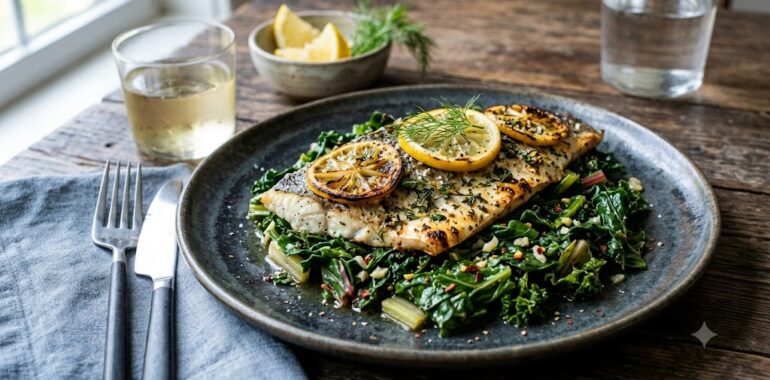
Dinner: Lemon Herb Baked Sea Bass over Garlicky Greens
This elegant, restaurant-quality dinner showcases the simplicity of Mediterranean seafood. Baking the fish at a moderate temperature ensures it stays incredibly moist and flaky.
| Macronutrient Profile | Value per Serving (Makes 2) |
| Protein | 36g |
| Dietary Fiber | 6g |
| Est. Calories | 490 |
Ingredients:
- 2 sea bass or cod fillets (approx. 6 oz each)
- 2 tbsp extra virgin olive oil
- 4 cloves garlic, sliced thin
- 1 large bunch of Lacinato kale or Swiss chard, stems removed and chopped
- 1 fresh lemon, sliced into rounds
- 1/2 cup low-sodium vegetable or chicken broth
- Fresh dill and parsley for serving
Instructions:
- Prep the Fish: Preheat your oven to 400°F (200°C). Pat your fish fillets completely dry with a paper towel. Season both sides generously with salt, pepper, and a light brush of olive oil. Top each fillet with 2 to 3 thin lemon slices.
- Bake: Place the fish in a baking dish and cook for 12 to 15 minutes, depending on thickness, until the flesh is completely opaque and flakes effortlessly with a fork.
- Sauté the Greens: While the fish bakes, heat the remaining olive oil in a large skillet over medium heat. Add the sliced garlic and cook for 1 minute until fragrant but not browned. Toss in the chopped kale or Swiss chard.
- Deglaze: Pour in the vegetable broth to create steam, covering the pan immediately with a lid. Let the greens braise for 4 to 5 minutes until tender.
- Plate: Create a generous bed of the garlicky braised greens on each plate. Nestle the baked fish fillet over the top, spooning any leftover pan juices over the fish. Finish with a heavy shower of fresh dill and flat-leaf parsley.
The True Mediterranean Secret: Slow Living
While filling your shopping cart with extra virgin olive oil, wild seafood, and fresh herbs will work wonders for your physical health markers, the true secret to Mediterranean longevity goes beyond the plate.
In these coastal regions, meals are rarely rushed or consumed on the run. Food is treated as an experience to be shared with family, friends, and neighbors. This practice of slowing down, enjoying long conversations at the dinner table, and laughing over a glass of local wine naturally lowers your central nervous system’s stress response, lowers cortisol production, and improves overall digestive efficiency. Take your time, enjoy the process of home cooking, and welcome the true spirit of health.

I’m Brinley, and I believe in progress over perfection. My holistic journey started when I traded rigid fads for the 80/20 rule and nature-based remedies. I only share advice I’ve lived through—from botanical skincare that fixed my dry skin to easy kitchen hacks. I’m here to help you build a nourished life through small, intentional, and sustainable choices.