
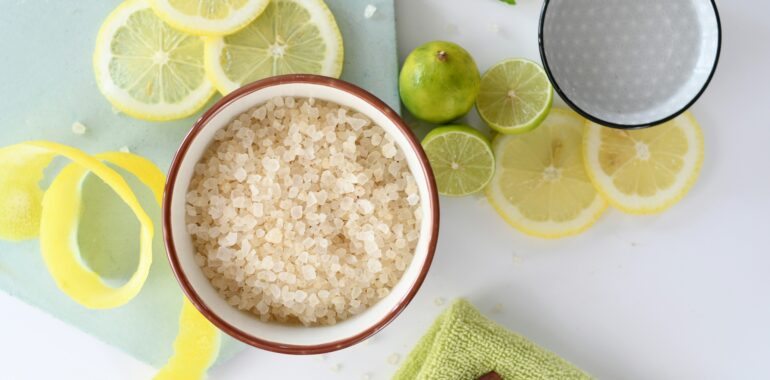
The Texture Revolution: Navigating the Risks and Rewards of DIY Face Scrubs
There is a visceral satisfaction that comes from mixing a fresh batch of skincare in your own kitchen—the tactile clumping of grains, the scent of cold-pressed oils, and that immediate, silky Texture that appears after a good exfoliation. For several years, I treated my bathroom counter like a laboratory, convinced that if an ingredient was safe enough to eat, it was surely the ultimate solution for my dull complexion. I was caught in a cycle of “Over-Exfoliation,” thinking that a harder scrub equaled a deeper clean. Previously, I assumed that redness after a scrub was just “blood flow” and a sign of health. Everything changed when I looked into “Micro-Tearing” and the role of the “Acid-Mantle.” I discovered that the skin on our face is exponentially more delicate than the skin on our bodies, and many of the “classic” DIY ingredients were actually acting like sandpaper on a silk sheet.
The goal of this Texture Revolution is to move away from “Abrasive-Stripping” and toward Biomimetic Exfoliation. By understanding the “Particle-Geometry” of your ingredients, you can achieve a polished glow without compromising your skin’s defensive barrier. When I prioritize rounded, soft exfoliants over jagged ones, I notice a direct improvement in my skin’s moisture retention and a total reduction in chronic sensitivity.
The Science of “Mechanical-Friction”
Why do some DIY scrubs cause “Systemic-Distress” while others provide a “Radiant-Signal”? It’s about the “Edge-Profile”:
- The Jagged-Particle Problem: Ingredients like crushed walnut shells or large-grain sea salt have microscopic “Sharp-Edges.” When massaged into the skin, these create “Micro-Tears” that act as entry points for bacteria, often leading to the very breakouts you’re trying to scrub away.
- The Lipid-Buffer Requirement: Mechanical exfoliation should never happen on dry skin. You need a “Carrier-Oil” or “Humectant-Base” to act as a lubricant, ensuring the particles roll across the surface rather than digging into the “Stratum Corneum.”
- The pH-Balance Factor: Many DIY recipes call for lemon juice or baking soda. These represent extreme ends of the pH scale (highly acidic vs. highly alkaline). Your skin’s natural pH is roughly 4.7–5.7. Disrupting this “Acid-Mantle” leads to “Trans-Epidermal Water Loss” (TEWL) and a weakened immune response.
3 High-Integrity DIY Scrub Architectures
1. The “Colloidal-Oat” Soother
This is my “Gold-Standard” for sensitive skin. Oats contain Avenanthramides, which are powerful anti-inflammatory compounds.
- The Blueprint: 2 Tbsp finely ground oats (blitzed into a powder), 1 Tbsp Manuka honey, and a splash of rose water.
- The Utility: This creates a “Buffing-Paste” that gently removes “Dermal-Debris” while depositing a “Soothing-Film” on the skin.
Personal Tip: I’ve found that the “Hydration-Phase” is key here. Let the ground oats sit in the honey and rose water for at least 5 minutes before applying. This softens the edges of the oat particles, turning them from “Scratchy-Grains” into “Hydrated-Buffers” that won’t irritate active redness.
2. The “Adzuki-Bean” Polish
Inspired by traditional Japanese beauty, ground adzuki beans contain a natural foaming agent called Saponin, which helps cleanse as you exfoliate.
- The Blueprint: 1 Tbsp adzuki bean powder (ground very fine), 1 Tbsp Jojoba oil.
- The Utility: The beans have a “Rounded-Geometry” compared to sugar or salt, providing a “High-Definition” polish without the risk of micro-tearing.
Personal Tip: I always use Jojoba oil as the base for this because it is technically a “Liquid-Wax” that mimics our skin’s natural sebum. It ensures the bean powder slides across the skin’s “Topographical-Peaks” without catching on dry patches.
3. The “Rice-Enzyme” Brightener
Rice bran and rice flour provide a “Mechanical-Signal” while also containing Ferulic Acid and Allantoin, which support “Cellular-Turnover.”
- The Blueprint: 1 Tbsp fine rice flour, 2 Tbsp plain Greek yogurt (for a “Lactic-Acid” boost).
- The Utility: This is a “Hybrid-Exfoliant.” The rice provides the mechanical scrub, while the yogurt provides a gentle chemical peel.
Personal Tip: If you have oily skin, try using the rice flour with a little green tea instead of yogurt. The “EGCG-Antioxidants” in the tea help regulate sebum production while you’re clearing out the “Follicular-Plugs.”
The “Avoidance-List”: Dermal Distress Signals
To maintain your “Barrier-Architecture,” you must strike these common DIY myths from your repertoire:
- Don’t use Baking Soda: It is far too alkaline (pH 8-9). It will “Liquefy” your skin’s protective oils, leaving you “Squeaky-Clean” but biologically vulnerable.
- Don’t use Lemon Juice: While it contains Vitamin C, the concentration is unstable and highly photosensitizing. It can lead to “Chemical-Burns” or “Phyto-Photodermatitis” when exposed to sunlight.
- Don’t use Large Sugar Grains: Sugar is a “Humectant,” but the sharp corners of the crystals are too aggressive for facial tissue. If you must use sugar, stick to “Ultrafine-Caster” sugar and only on the body.
The “Texture-Audit”: Tracking Your Progress
I run a quick “Dermal-Check” the morning after a DIY scrub to ensure my “Barrier-Integrity” is still intact.
- The Visual Signal: Success looks like a “Soft-Matte” glow with even tone. If I see “Patchy-Redness” or “Tight-Shine,” it’s a signal that I’ve removed too much of the “Protective-Lipid” layer.
- The Tactical Signal: Your skin should feel “Velvet-Soft” to the touch. If it feels “Sandpapery” or “Reactive” to your usual moisturizer, the “Mechanical-Load” was too heavy.
- The Absorption Signal: After a proper scrub, your serums should “Sink-In” almost immediately. If they “Sit-on-Top” of the skin, you may have “Dead-Cell-Buildup” that requires a more effective (but still gentle) exfoliation.
The Luminous Baseline
Moving away from “Aggressive-Stripping” toward a Texture routine anchored in “Bio-Compatibility” has completely transformed my skin’s health. By choosing “Rounded-Buffers” over “Jagged-Grains,” I’ve managed to escape the exhaustion of the “Breakout-and-Scrub” cycle. I’ve found that when my skin is treated with “Mechanical-Respect,” its Immune-Defense remains strong and its energy remains at a “Sustained-Peak.” This week, I’m leaning into the “Colloidal-Oat” Soother—it’s the most effective way I’ve found to signal to my face that the “Renewal-Phase” is a gentle, supportive process.
Final Tip: Always follow your DIY scrub with a “Barrier-Repair” cream containing ceramides or fatty acids. Think of the scrub as “Opening-the-Door” and the cream as “Securing-the-House”—you need both to maintain a truly resilient and glowing architecture!

I’m Brinley, and I believe in progress over perfection. My holistic journey started when I traded rigid fads for the 80/20 rule and nature-based remedies. I only share advice I’ve lived through—from botanical skincare that fixed my dry skin to easy kitchen hacks. I’m here to help you build a nourished life through small, intentional, and sustainable choices.