
How to Make Your Makeup Actually Last All Day (Even in Heat)
Makeup that looks flawless at 8 a.m. and has completely broken down by 2 p.m. is one of the more universally frustrating beauty experiences, especially in heat or humidity. The good news is that makeup longevity isn’t primarily about buying more expensive products — it’s about technique, product choice at each layer, and a few specific steps most routines skip entirely. Getting long-lasting makeup right comes down to understanding why makeup fails in the first place, then addressing each cause directly.
Why Makeup Actually Breaks Down During the Day
Makeup typically fails for one of a few specific reasons: oil production breaking through foundation, sweat and humidity causing products to shift or slide, and simply not being set properly to begin with. Understanding which of these is your main culprit makes it much easier to target the right fix rather than layering on more product, which often makes things worse rather than better.
Step 1: Start With Proper Skin Prep
Why it matters: Makeup applied over unprepared skin, especially oily or dehydrated skin, has nothing stable to grip onto and tends to break down faster.
What to do: Cleanse, then apply a lightweight, oil-free moisturizer if your skin tends toward oiliness, or a slightly richer one for dry skin. Follow with a primer suited to your skin type — a mattifying primer for oily skin, a hydrating one for dry skin — which creates a smoother, more stable base for everything that follows.
Step 2: Use a Long-Wear Foundation Formula
Why it matters: Not all foundations are built for longevity. Dewy, lightweight formulas tend to break down faster in heat, while matte, long-wear formulas are specifically engineered to resist oil and humidity.
What to do: For hot or humid conditions, choosing a foundation labeled long-wear, matte, or transfer-resistant provides a meaningful head start compared to a standard dewy formula, regardless of how well the rest of the routine is executed.
Step 3: Set with Powder in Strategic Areas
Why it matters: Powder absorbs oil and creates a barrier that helps foundation and concealer stay in place, but applying it all over can look heavy and cakey, especially on drier areas of the face.
What to do: Focus setting powder on the T-zone (forehead, nose, and chin) and under the eyes, where oil production and creasing are most likely to occur, rather than applying it uniformly across the entire face.
Step 4: Use a Setting Spray as a Final Seal
Why it matters: A setting spray helps meld all the layers of makeup together and creates a final protective barrier against sweat and humidity.
What to do: Apply from about 8–10 inches away in a light, even mist after all makeup is complete, holding still for a few seconds afterward to let it set before touching your face.
Step 5: Choose Waterproof or Long-Wear Formulas for Key Products
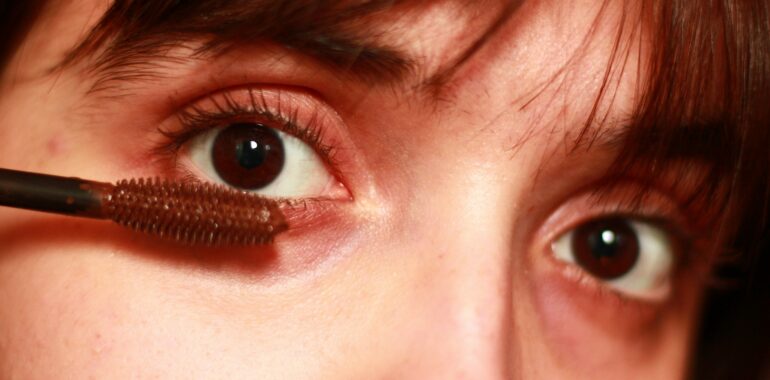
Why it matters: Mascara, eyeliner, and brow products are often the first things to smudge or fade in heat, since the eye area tends to sweat and produce oil throughout the day.
What to do: Waterproof mascara and long-wear eyeliner formulas resist smudging significantly better than standard formulas, particularly in hot or humid climates where standard formulas can start sliding within just a few hours.
Step 6: Blot Instead of Reapplying Throughout the Day
Why it matters: Reapplying foundation or powder on top of oily skin throughout the day often creates a heavier, more cakey look rather than solving the underlying oil issue.
What to do: Blotting papers absorb excess oil without disturbing the makeup underneath, making them a better midday fix than adding more product on top of what’s already there.
Common Mistakes That Shorten Makeup Wear Time
Skipping primer. Primer creates a smoother surface and, in the case of mattifying formulas, actively helps control oil throughout the day — skipping it removes one of the more effective longevity tools available.
Using too much moisturizer before foundation. While hydration matters, excess moisturizer that hasn’t fully absorbed before foundation application can cause the foundation to slide rather than set properly.
Choosing the wrong foundation formula for the climate. A dewy formula that looks beautiful in cool, dry conditions may not hold up the same way in heat or humidity, regardless of technique.
Applying too much product at once. Thinner, buildable layers tend to wear better and look more natural than one heavy application, which is more prone to cracking, creasing, or sliding as the day goes on.
Building a Long-Wear Routine for Specific Conditions
For hot, humid climates: Prioritize a mattifying primer, a long-wear or matte foundation, strategic powder in the T-zone, and a setting spray specifically formulated for humidity resistance.
For active days or exercise: Waterproof formulas for mascara and eyeliner are particularly important, along with a setting spray, since sweat is the primary challenge rather than ambient humidity alone.
For long workdays or events: A setting spray reapplication midday, along with blotting papers rather than more foundation, tends to refresh makeup more effectively than a full reapplication.
A trip to a notoriously hot, humid destination years ago turned into a genuine makeup meltdown by early afternoon — switching to a mattifying primer and long-wear foundation on a return trip made a dramatic difference, holding up through hours of heat that had completely undone the previous routine.
Frequently Asked Questions
Does setting spray really make a difference, or is it just marketing? Setting spray has a real function — it helps meld makeup layers together and, depending on the formula, can add water or oil resistance, which genuinely extends wear time compared to skipping it entirely.
Why does my makeup crease under my eyes by midday? Under-eye creasing usually happens when too much product is applied to a naturally drier, more mobile area of the face. Using a lighter layer of concealer and setting it with a small amount of powder helps prevent this.
Is it bad to reapply foundation throughout the day? Reapplying foundation directly on top of oily, unclean skin can trap oil and bacteria underneath, contributing to breakouts. Blotting oil first and reapplying only where needed is generally a better approach than a full fresh layer.
Do I need different products for different seasons? Many people benefit from switching between a slightly richer, more hydrating formula in colder, drier months and a mattifying, long-wear formula in hot, humid months, since skin’s oil production and environmental conditions both shift with the seasons.
Long-lasting makeup isn’t about finding one miracle product — it’s about addressing skin prep, formula choice, and setting technique together, since each step supports the ones that follow. Get those layers right, and the makeup applied at 7 a.m. can genuinely still look intact well into the evening.

I’m Brinley, and I believe in progress over perfection. My holistic journey started when I traded rigid fads for the 80/20 rule and nature-based remedies. I only share advice I’ve lived through—from botanical skincare that fixed my dry skin to easy kitchen hacks. I’m here to help you build a nourished life through small, intentional, and sustainable choices.