
The Non-Invasive Laboratory: The Deep Biosensing Science Driving Modern Wearable Tech
For decades, evaluating your internal physiological metrics required a deliberate, friction-heavy appointment within a clinical laboratory. Tracking changes in your metabolic efficiency, cardiac electrical activity, or autonomic stress responses meant undergoing invasive blood draws, wearing cumbersome, wire-laden monitors for short windows, and waiting days for static, retrospective data sheets.
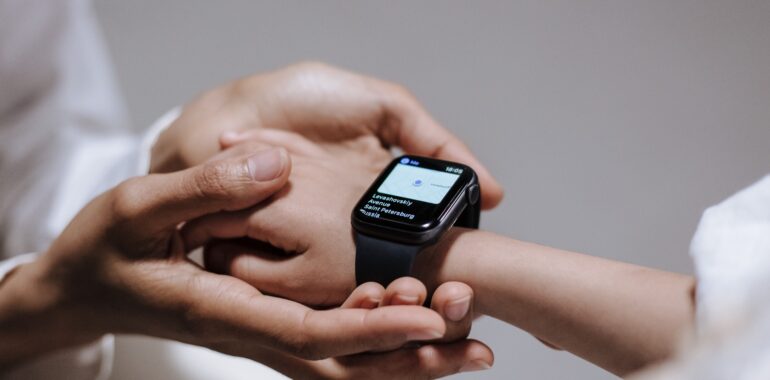
Today, a profound technological paradigm shift has occurred right on the surface of our skin. Advanced consumer wearables—ranging from sleek rings and smartwatches to low-profile chest patches—now perform continuous, high-fidelity health monitoring from your wrist or finger.
However, a significant educational gap persists. Mainstream tech culture frequently treats these consumer wearables as mere digital novelties or basic step counters, viewing the data through a superficial lens while completely ignoring the complex physics and biometrics occurring just micrometers beneath the device sensors.
Your wearable is not a glorified stopwatch; it is an advanced, non-invasive optical and electrical laboratory. Understanding the raw physics and physiology driving these biosensors transforms consumer data into a powerful tool for everyday health defense. By peering past the glass screen and evaluating the exact science behind photoplethysmography, bioimpedance analysis, and multi-wavelength tracking, you can strip the mystery away from your devices and harness continuous biometrics to achieve long-term physical consistency, sleep optimization, and metabolic resilience.
The Optical Gateway: The Physics of Photoplethysmography (PPG)
The foundational engineering asset powering nearly every wrist and finger-worn health device is an optical technique known as photoplethysmography (PPG).
The Hydrodynamic Light Matrix:
At its core, PPG relies on a simple optical principle: blood absorbs light differently than the surrounding muscle, fat, and bone tissue. A standard smartwatch or ring features an array of light-emitting diodes (LEDs) paired with a highly sensitive photodiode receptor. The LED shoots specific wavelengths of light—typically green or infrared—directly down through your stratum corneum and into the dense capillary beds of the dermis.
As your heart beats, it launches a high-pressure pressure wave through your arterial tree. This volumetric surge temporarily swells the local blood vessels, increasing the total volume of red blood cells in the path of the light beam. Because hemoglobin has a high affinity for absorbing green light, more light is absorbed during this peak surge (systole). Conversely, when the heart relaxes (diastole), blood volume drops, allowing more light to reflect back cleanly to the device’s photodiode.
Isolating the AC/DC Waveform:
The raw signal captured by the photodiode is a complex, undulating wave split into two distinct components: the DC component, which represents the constant light reflection from static tissues like bone and skin, and the AC component, which captures the rhythmic, pulsatile changes of arterial blood flow. Advanced microprocessors apply complex digital filters to strip away the static DC noise, isolating the pristine AC waveform. By calculating the exact millisecond-to-millisecond intervals between these volumetric peaks, your wearable computes your pulse rate and maps out the subtle structural differences in your cardiorespiratory framework.
Beyond the Pulse: The Science of Heart Rate Variability and Autonomic Balance
Once a wearable isolates clean PPG peaks, it moves past basic heart rate calculations to evaluate a far more critical biomarker of systemic recovery: Heart Rate Variability (HRV).
Contrary to popular belief, a healthy heart does not beat with the rigid, robotic cadence of a metronome. If your resting heart rate is 60 beats per minute, the interval between those beats is not a perfectly flat 1.0 second. Instead, it might vary naturally from 0.85 seconds to 1.15 seconds. This micro-variance is governed by a continuous tug-of-war between the two competing branches of your autonomic nervous system (ANS): the sympathetic branch (your fight-or-flight acceleration engine) and the parasympathetic branch (your rest-and-digest recovery brake).
When your body is fully recovered, your parasympathetic nervous system dominates via the vagus nerve, releasing acetylcholine to slow down your heart rate while introducing highly adaptive variations into each interval. This creates a high HRV score, signaling a resilient, flexible nervous system primed for performance and deep cellular repair.
However, if you subject your body to chronic psychological stress, intense physical overtraining, or late-night alcohol consumption, your sympathetic nervous system takes control, flooding your heart with norepinephrine. This forces the heart into a rigid, highly uniform, metronomic rhythm, causing your HRV score to crash. Modern biosensors use specific mathematical algorithms—typically tracking the Root Mean Square of Successive Differences (RMSSD)—during deep slow-wave sleep windows to deliver a crystal-clear, un-skewed diagnostic reading of your internal recovery baseline.
Multi-Wavelength Optics: Pulse Oximetry and Peripheral Saturation (SpO2)
During high-altitude ascents or deep sleep phases, modern wearables frequently deploy a secondary, highly advanced optical program: peripheral oxygen saturation (SpO2) monitoring.
To achieve this without drawing blood, your wearable transitions away from green light and utilizes a dual-wavelength array consisting of red light (660 nanometers) and infrared light (940 nanometers). This choice is rooted in the unique quantum behavior of the hemoglobin molecule. Hemoglobin changes its physical shape and light-absorption characteristics based on whether or not it is carrying oxygen.
- Deoxygenated Hemoglobin: Lacks bound oxygen and features a higher molecular density that preferentially absorbs red light while allowing infrared light to pass through.
- Oxygenated Hemoglobin: Is fully saturated with oxygen molecules and shifts its structural alignment to preferentially absorb infrared light while reflecting red light.
By firing these two distinct wavelengths in rapid, nanosecond successions, the device’s photodiode captures the exact ratio of red to infrared light absorption. The wearable’s internal software applies the mathematical Beer-Lambert law to compute the exact percentage of fully oxygenated blood circulating through your peripheral tissue. If your SpO2 levels drop suddenly during the night, it provides an immediate biological warning signal of potential sleep disruptions, airway resistance, or altered altitude adaptation.
The Bioelectrical Grid: Electrocardiograms (ECG) and Electrical Impedance
The latest generation of premium smartwatches has integrated a massive clinical asset directly into the metal backing of the watch case: user-initiated Electrocardiogram (ECG) monitoring.
While optical PPG sensors can only measure mechanical blood volume surges, an ECG sensor measures the actual primary electrical impulses that command the heart muscle to contract. When you place your finger on the device’s crown or top button, you complete a closed electrical loop across your upper extremities, transforming your body into a live circuit.
The metal electrodes on the watch casing detect the minute, microvolt changes generated by the depolarization and repolarization of your cardiac tissue. The resulting graph maps out the iconic electrical cycle of the human heart: the P-wave (atrial depolarization), the QRS complex (ventricular contraction), and the T-wave (ventricular relaxation). Advanced machine-learning algorithms screen this live electrical wave for any irregular spacing or chaotic micro-oscillations, providing consumer-level screening for conditions like Atrial Fibrillation (AFib) long before traditional symptoms manifest.
A Personal Shift to Data-Driven Conditioning
A look back at a previous fitness approach illustrates the intense physical and mental cost of training blindly without objective bio-feedback. The early routine relied entirely on an aggressive, subjective model: waking up every morning with a rigid plan to execute a high-intensity run or lifting session, regardless of internal fatigue, poor sleep quality, or high corporate stress levels.
The physical outcome was highly disruptive to long-term performance. Without any biological data to guide training intensity, the body was routinely forced into high-stress workouts when the underlying nervous system was already deeply depleted. This blind approach eventually resulted in a persistent state of physical overtraining, unexpected soft-tissue injuries, and sudden waves of midday brain fog. A strategy chosen under the false premise of “more intensity is always better” was actively driving chronic autonomic fatigue because there was zero communication between daily training choices and actual internal biology.
The decision to implement a multi-sensor wearable and allow objective HRV and sleep data to govern daily exertion marked a permanent biological upgrade.
Now, when the morning hours arrive, checking your device’s baseline metrics eliminates all guesswork from your day. If your sleeping HRV tracking registers a sharp dip below your historical baseline, you intentionally scale back your training volume to a low-heart-rate recovery walk, shielding your cells from unnecessary stress. Conversely, when your autonomic metrics signal a high recovery score, you can safely push your physical boundaries with absolute confidence. Your fitness execution becomes perfectly synchronized with your actual physiological capacity, entirely eliminating the cycle of injury and overtraining. Developing a resilient, highly vital body does not require you to guess your way through fatigue; it simply requires you to leverage clean, non-invasive biosensing science to turn internal biometric data into external lifestyle choices.
Guarding Your Physical Baseline
Mastering the science driving your daily health tech is the ultimate way to bring long-term physical sustainability, data clarity, and true efficiency to your wellness journey. Subjective guesswork and erratic training schedules are often illusions that keep the human body locked in an exhausting cycle of overtraining, chronic fatigue, and unexpected injuries. Filtering out the noise of basic step tracking, and trusting the raw science of photoplethysmography waveforms, autonomous autonomic balance tracking, and multi-wavelength oxygen metrics, completely shields your internal engine room from behavioral burnout.
Your wearable tech and your daily biometric tracking should function as an objective, non-invasive laboratory that enhances your baseline physical capacity regardless of your immediate surroundings. Eliminate the fragile, un-audited tracking traps, embrace the clean power of biosensing whole-body engineering, and enjoy the radiant results of an intentional, data-driven schedule. Long-term cardiac health protection, an automated reduction in overtraining markers, and an unshakeable sense of daily energy will prove the lasting value of a clean, technologically synchronized shield.

I’m Brinley, and I believe in progress over perfection. My holistic journey started when I traded rigid fads for the 80/20 rule and nature-based remedies. I only share advice I’ve lived through—from botanical skincare that fixed my dry skin to easy kitchen hacks. I’m here to help you build a nourished life through small, intentional, and sustainable choices.