
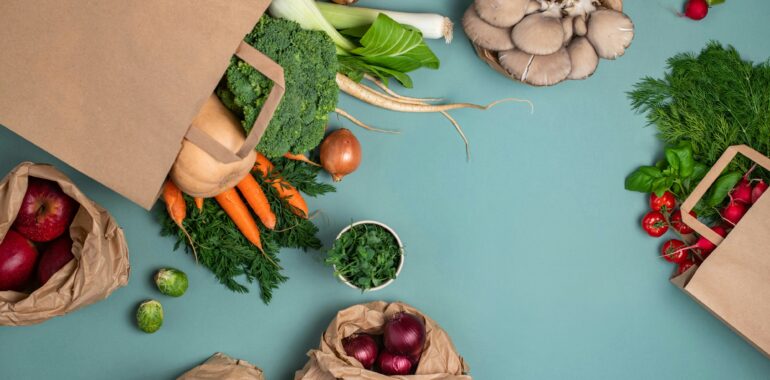
The Power of the Purity: Navigating Your Health via The “One Ingredient” Shopping List
Finding a way to shed unwanted pounds often feels like you are being asked to become a part-time mathematician and a full-time chemist. I have spent countless hours hunched over my phone, aggressively typing in gram weights of almond butter and scanning barcodes on the back of “healthy” granola bars, only to end up more stressed than when I started. There is a specific kind of mental fatigue that comes with calorie counting—a constant, low-grade anxiety that every bite needs to be logged, measured, and judged. I eventually reached a breaking point where I realized that the complexity of the “diet” was exactly what was making me fail.
The breakthrough came when I stripped away the numbers and looked at my grocery cart through a different lens. Instead of looking for low-calorie labels, I started looking for a lack of labels entirely. This is where the “One Ingredient” rule changed my life. The concept is refreshingly simple: aim to fill your cart with foods that are the ingredient. An apple is just an apple. An egg is an egg. Broccoli is broccoli. Salmon is salmon. When you shop this way, you aren’t just losing weight; you are opting out of the hidden sugars, industrial seed oils, and chemical preservatives that keep your body in a state of metabolic confusion. My experience has shown me that “clean eating” becomes effortless when you stop trying to decipher a chemistry set and start eating from the earth.
Why the Single-Ingredient Strategy Destroys Plateaus
The reason most people struggle with weight loss isn’t a lack of willpower; it’s the “hidden” factors in ultra-processed foods. Boxed and bagged items are engineered to be hyper-palatable, meaning they bypass your brain’s natural “full” signals. When you switch to a one-ingredient list, you are essentially hitting the reset button on your satiety hormones.
The Biological Advantage: Processed foods often contain emulsifiers and stabilizers that disrupt your gut microbiome, which can lead to inflammation and weight gain. By sticking to whole, singular items, you provide your body with the fiber and micronutrients it needs to function. You will find that you can eat a much larger volume of food for significantly fewer calories. For example, you could eat a massive pile of steamed green beans for the same caloric cost as a single handful of processed crackers.
Personal Tip: When you first start this, the perimeter of the grocery store will become your best friend. This is where the “one ingredient” items live—the produce, the butcher counter, and the eggs. I’ve found that if I stay out of the middle aisles entirely for the first three weeks of a weight-loss phase, I don’t even have to think about my portions. Your body is remarkably good at telling you it’s full when it’s digesting real fiber and high-quality protein.
Master the “One Ingredient” Staples
To make this shopping list work, you need to know which items are the heavy lifters for weight loss. These are the foods that are nutrient-dense, satisfying, and require very little “magic” to taste incredible.
Ingredients to Prioritize:
- Proteins: Chicken, beef, eggs, shrimp, cod, lentils.
- Carbohydrates: Sweet potatoes, quinoa, brown rice, oats, bananas.
- Fats: Avocado, walnuts, extra virgin olive oil (technically pressed from one thing!).
- Fibrous Veggies: Spinach, cauliflower, peppers, asparagus, cucumbers.
Instructions for the Cart: As you walk through the aisles, ask yourself: “Does this have a label with more than one word?” If the answer is yes, put it back. If you are looking at a bag of frozen spinach and the only ingredient is “spinach,” it stays. If you are looking at a “spinach-flavored wrap” with thirty ingredients, it goes.
Personal Tip: Don’t let the “health food” aisle trick you. Many “organic” and “gluten-free” snacks are actually more processed than their standard counterparts. I used to fall for the “cauliflower crust” trap, until I realized the crust had twenty ingredients, including starches and sugars. Now, I just buy a head of cauliflower and roast it. It’s cheaper, tastier, and much more effective for leaning out.
The “Assembly” Method vs. Traditional Cooking
One of the biggest hurdles to healthy eating is the idea that you have to be a gourmet chef. When you shop for single ingredients, you aren’t “cooking” in the traditional, stressful sense—you are “assembling.”
Instructions for Simple Assembly: Pick one protein, one starch, and two veggies. Season them with salt, pepper, and a single-ingredient fat like olive oil or avocado. Roast them all on a single sheet pan at 400°F. Because the ingredients are high quality, you don’t need complex sauces filled with corn syrup to make them taste good. A squeeze of lemon or a sprinkle of fresh herbs (also single ingredients!) is all you need.
Personal Tip: I keep a “flavor station” in my pantry that follows the rule. Dried oregano, cumin, garlic powder, and smoked paprika. These are all single ingredients that can transform a plain chicken breast into five different cuisines. I’ve found that as long as I have high-quality sea salt and a pepper grinder, I never miss the bottled dressings or heavy marinades.
Overcoming the “Convenience” Craving
We often reach for multi-ingredient foods because they are fast. However, the weight-loss cost of that convenience is high. To succeed with the one-ingredient list, you have to build a small bridge of preparation.
Instructions for a Successful Week: Spend thirty minutes when you get home from the store washing and chopping your one-ingredient items. Peel the carrots, wash the berries, and portion the meat. If the food is ready to be cooked or eaten, you are 90% less likely to reach for a box of processed crackers when hunger hits.
Personal Tip: Buy the “convenience” version of single ingredients if you have to. Pre-washed bags of kale or pre-cut butternut squash are still one-ingredient foods. Yes, they cost a little more, but it’s a lot cheaper than the medical costs of poor health or the cost of a takeout meal because you were too tired to peel a potato. My experience is that spending the extra three dollars on pre-cut veggies is the best “weight loss insurance” you can buy.
My Journey from Boxed to Beautiful
I remember looking at my pantry about two years ago and realizing that almost everything I owned came in a cardboard box. I was constantly bloated, my energy was erratic, and I couldn’t understand why the scale wouldn’t budge despite me “counting” my points. I decided to try the one-ingredient challenge for just thirty days. No bars, no shakes, no “diet” frozen meals—just things that grew, swam, or walked.
The first week was a bit of a shock to my palate because I was so used to the hit of artificial flavor enhancers like MSG and excessive sodium. But by the second week, something miraculous happened: a plain strawberry tasted like candy. An oven-roasted sweet potato felt like a luxury. I stopped having “food noise” in my head because my blood sugar had finally leveled out. My experience taught me that weight loss isn’t about eating less food; it’s about eating more of the right food. I lost more weight in those thirty days of “unrestricted” single-ingredient eating than I did in three months of meticulous calorie counting.
Conclusion: The Ultimate Simplicity for Your Weight Loss Success
Adopting the “One Ingredient” shopping list is the ultimate act of self-care in a world that tries to overcomplicate our nutrition. We have seen that by returning to the basics—apples, eggs, salmon, and broccoli—we naturally eliminate the biological “roadblocks” that keep us from our goals. You don’t need a degree in nutrition to know that an orange is better for you than an orange-flavored snack cake.
As you head to the store this week, challenge yourself to see how many “pure” items you can find. Focus on the colors in the produce section and the quality of the proteins at the butcher. Remember that every single-ingredient food you put in your cart is a vote for your future health and a step toward a leaner, more energetic version of yourself. Weight loss doesn’t have to be a battle of numbers; it can be a celebration of real, nourishing food. Keep it simple, keep it pure, and enjoy the effortless transformation that follows. Happy shopping!

I’m Brinley, and I believe in progress over perfection. My holistic journey started when I traded rigid fads for the 80/20 rule and nature-based remedies. I only share advice I’ve lived through—from botanical skincare that fixed my dry skin to easy kitchen hacks. I’m here to help you build a nourished life through small, intentional, and sustainable choices.