
Nutrient-Packed Salads: Healthy Recipes for a Complete Meal
For a long time, I thought salads were just side dishes—pretty, but never nearly enough to keep me satisfied. Maybe you’ve felt the same way! But once I started experimenting with different ingredients, I realized a salad can be one of the most nourishing, vibrant, and filling meals around. You just have to treat it like a full meal, not a pile of lettuce. My secret is to include something from each of the essential groups: protein, healthy fats, and complex carbohydrates. This way, I know I’m feeding my body what it truly needs, not just chasing low calories.
Once I started building my salads with intention, something shifted. It wasn’t just a routine lunch anymore—it became something I actually craved. I love that a good salad gives me energy that lasts, helps with muscle recovery after a walk or workout, and just feels so nourishing. My favorite part is that it’s all about abundance, not restriction; I focus on adding more wholesome, colorful ingredients instead of taking things away. If you approach your salads this way, you’ll find you’re truly supporting your body with every bite. Trust me, you’ll notice the difference in your mood and energy.
In this guide, I want to walk you through how I create salads that truly feel like a full, satisfying meal. I’ll share my favorite way to layer ingredients for balanced nutrition, and I’m including some tried-and-true recipes that have become staples in my own kitchen. These aren’t just salads—they’re bowls of energy and comfort that I actually look forward to. Plus, I’ve sprinkled in a few of my best personal tips for each recipe, so you’ll have everything you need to build your own perfect meal.
The Formula for a Perfectly Balanced Salad
Whenever I want my salad to do more than just fill a plate, I make sure I’m getting a mix from each of these five categories. This simple approach means you’re covering the spectrum—plenty of protein, satisfying healthy fats, energizing carbs, and loads of vitamins and minerals.
1. The Base: Leafy Greens
For me, the heart of any great salad starts with a base of fresh greens—I love mixing things up to keep every bite interesting and nourishing.
- For a nutrient-dense crunch: Choose kale or spinach, which are packed with vitamins K, A, and C.
- For a peppery bite: Arugula is a great choice, offering a spicy flavor profile.
- For a classic, crisp texture: Romaine lettuce is hydrating and provides a satisfying crunch.
Personal Tip: When you’re chopping your base greens, make the pieces smaller than bite-sized. I found that smaller pieces are easier to chew, absorb the dressing better, and prevent you from having to use a knife, making the meal feel faster.
2. The Color: A Rainbow of Vegetables
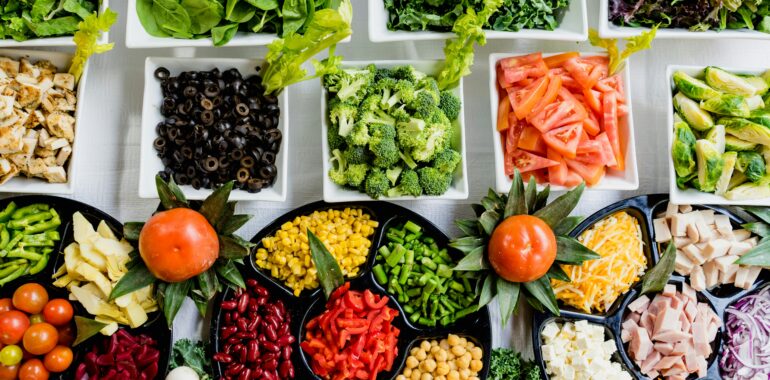
I always try to fill my salad bowl with as many vibrant colors as I can—it’s such a simple trick, but it makes a huge difference in both nutrition and flavor.
- Reds and Oranges: Bell peppers, tomatoes, and shredded carrots provide beta-carotene and vitamin C.
- Greens: Broccoli florets, cucumbers, and edamame add fiber, vitamins, and a fresh texture.
- Purples and Blues: Red cabbage, red onion, or even blueberries contribute powerful antioxidants called anthocyanins.
3. The Power: Lean Protein
For me, protein is what turns a salad from a quick snack into a real meal that keeps you full and satisfied for hours.
- Plant-Based Options: Chickpeas, black beans, lentils, tofu, and tempeh are excellent sources of fiber and protein.
- Lean Animal Protein: Grilled chicken breast, salmon, tuna, or hard-boiled eggs are fantastic choices.
4. The Sustenance: Complex Carbs & Whole Grains
I like to think of complex carbs as the ingredient that keeps my salads feeling hearty and satisfying, not just a quick bite before you’re hungry again.
- Whole Grains: Quinoa is a standout choice as it’s a complete protein. Other great options include farro, brown rice, or barley.
- Starchy Vegetables: Roasted sweet potatoes or corn add natural sweetness and filling fiber.
Personal Tip: To maximize flavor, cook extra whole grains at the start of the week and store them. Adding a small portion of warm grains right on top of your salad provides a comforting contrast in temperature and makes the meal feel heartier.
5. The Richness: Healthy Fats
For me, healthy fats are a non-negotiable—they make my salads taste amazing and help you stay full much longer.
- Creamy Textures: Avocado is a top-tier choice, offering heart-healthy monounsaturated fats and fiber.
- Nuts and Seeds: A sprinkle of walnuts, almonds, chia seeds, or sunflower seeds adds crunch and a dose of omega-3s.
- Dressings: Olive oil-based dressings are a perfect way to incorporate healthy fats.
Complete Meal Salad Recipes
Let me share a few of my favorite ways to turn all these nourishing components into truly delicious, satisfying salads that I make on repeat at home.
Mediterranean Power Bowl
This is one of my go-to salads when I want something filling yet so fresh—it’s light, zesty, and always leaves me feeling energized.
- Base: 2 cups of chopped romaine lettuce.
- Color: 1/2 cup cherry tomatoes (halved), 1/2 cup cucumber (diced), 1/4 cup red onion (thinly sliced).
- Power: 1 cup chickpeas (rinsed and drained).
- Sustenance: 1 cup cooked quinoa.
- Richness: 1/4 avocado (diced) and a sprinkle of feta cheese.
- Dressing: Whisk together 2 tablespoons of extra virgin olive oil, 1 tablespoon of lemon juice, 1 teaspoon of dried oregano, and a pinch of salt and pepper.
Personal Tip: Always add a handful of fresh herbs—like parsley or mint—right before serving. It brightens everything up and takes the salad to the next level.
Protein-Packed Kale & Avocado Salad
This salad has become one of my favorite ways to nourish myself after a busy day. It’s incredibly satisfying, thanks to the creamy avocado and that punch of protein.
- Base: 2 cups of kale, massaged with a drizzle of olive oil to soften it.
- Color: 1/2 cup shredded carrots.
- Power: 4 oz grilled chicken breast, sliced.
- Sustenance: 1/2 cup roasted sweet potato cubes.
- Richness: 1/2 avocado (sliced) and 1 tablespoon of pumpkin seeds.
- Dressing: Blend 1/4 avocado with 2 tablespoons of Greek yogurt, 1 tablespoon of water, a squeeze of lime juice, and salt to taste for a creamy dressing.
Personal Tip: When you buy kale, wash and dry the whole bunch, then chop it and store it in an airtight container with a paper towel. This keeps it fresh all week and makes it fast to grab for your morning smoothie or salad base.
Zesty Salmon & Farro Salad
This salad is honestly a favorite in my house, especially when I’m looking for something that feels a bit special but is still effortless and good for my brain.
- Base: 2 cups of arugula.
- Color: 1/2 cup steamed asparagus tips and 1/4 cup shaved fennel.
- Power: 4 oz baked or grilled salmon, flaked.
- Sustenance: 1 cup cooked farro.
- Richness: 1 tablespoon of toasted walnuts.
- Dressing: A simple vinaigrette of 2 tablespoons olive oil, 1 tablespoon white wine vinegar, and 1 teaspoon of Dijon mustard.
Tips for Making Salads More Satisfying
If you’re like me and occasionally find salads a bit underwhelming, let me share some of my favorite little tricks to make every bowl a crave-worthy meal.
- Make Your Own Dressing: A homemade vinaigrette is simple: follow a 3:1 ratio of oil to acid (e.g., olive oil and lemon juice or vinegar) and add your favorite herbs.
- Add a Crunch Factor: Texture is key to satisfaction. Beyond nuts and seeds, consider adding crispy roasted chickpeas or a sprinkle of toasted quinoa.
- Introduce Warmth: A salad doesn’t have to be entirely cold. Adding a warm element like grilled chicken, roasted vegetables, or freshly cooked grains can make it feel more comforting and hearty.
- Don’t Forget Herbs: Fresh herbs like cilantro, parsley, basil, or mint can elevate a salad from good to great.
Personal Tip: I always remember to place my greens and vegetables at the bottom of the bowl and layer my warm proteins and grains on top. I found that the warmth slightly wilts the greens just enough to release their flavor and makes the salad feel more substantial.
Your All-in-One Meal in a Bowl
I find it helpful to think of salads as a flexible formula—not just a pile of lettuce, but a way to build a meal that truly makes me feel good. I encourage you to use these recipes as inspiration and don’t hesitate to play around with your own favorite combos. For me, keeping a little jar of homemade dressing in the fridge or prepping a big batch of roasted veggies on Sunday always makes it easier to whip up a nourishing salad, even on busy days. A balanced salad is my go-to for fueling my body with everything it needs to feel its best. Here’s to building your own vibrant, satisfying bowls—one delicious bite at a time.
Final Tip: To prevent your salad from getting soggy when packing lunch, always store the dressing in a small container and keep it on the side. When you’re ready to eat, toss the dressing in, and enjoy the perfect crunch.

I’m Brinley, and I believe in progress over perfection. My holistic journey started when I traded rigid fads for the 80/20 rule and nature-based remedies. I only share advice I’ve lived through—from botanical skincare that fixed my dry skin to easy kitchen hacks. I’m here to help you build a nourished life through small, intentional, and sustainable choices.