

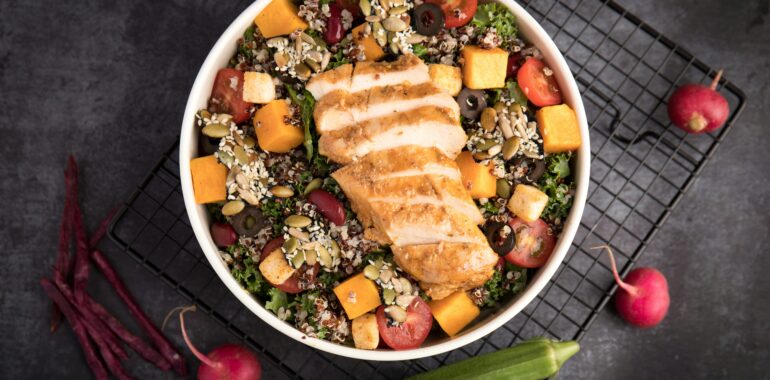
The Art of the Nourish Bowl: How to Build a Balanced Meal
Initially, I struggled with meal prepping. I would cook individual dishes that didn’t seem to go together, or I’d find myself staring at a half-empty fridge on a Tuesday night, reaching for takeout because I was too tired to “cook.” My approach changed when I discovered the concept of the Nourish Bowl. Instead of worrying about complex recipes, I began focusing on a simple, modular formula.
I’ve found that a Nourish Bowl—sometimes called a “Buddha Bowl”—is the ultimate solution for simple, healthy living. It’s a “mix and match” strategy that ensures you get every macronutrient your body needs in one beautiful, satisfying dish. Once you master the basic architecture, you can create endless variations using whatever you have on hand. It’s about building a foundation of health, one bowl at a time.
This guide will teach you the exact blueprint I use to assemble the perfect Nourish Bowl. We’ll walk through the four essential components—the base, the protein, the healthy fats, and the veggie rainbow—so you can stop “dieting” and start nourishing your body with intention and joy.
The Nourish Bowl Blueprint: 4 Steps to Balance
To create a meal that truly satisfies your hunger and stabilizes your energy, you need to hit specific nutritional markers. Here is how to stack your bowl for success.
1. The Foundation: Complex Carbohydrates
Your base provides the steady energy your brain and muscles need. Move away from refined “white” grains and choose fiber-rich options that won’t cause a blood sugar spike.
- Best Choices: Quinoa, brown rice, farro, roasted sweet potatoes, or even cauliflower rice if you want a lighter base.
Personal Tip: Cook your grains in vegetable or bone broth instead of plain water. I’ve found that this simple swap infuses the entire bowl with deep flavor and extra minerals without any added effort.
2. The Power: High-Quality Protein
Protein is non-negotiable for satiety. It’s the component that tells your brain you are actually full.
- Plant-Based: Chickpeas, black beans, lentils, or firm tofu.
- Animal-Based: Soft-boiled eggs, grilled chicken, flaked salmon, or even tinned sardines.
Personal Tip: If you’re using beans or chickpeas, take two minutes to pan-fry them with a little smoked paprika and sea salt. I’ve found that giving them a “crispy” edge completely changes the texture of the bowl and makes it feel much more like a restaurant-quality meal.
3. The Color: The Veggie Rainbow
This is where you load up on micronutrients. The goal is to fill at least half of your bowl with a variety of textures and colors.
- Raw: Shredded carrots, sliced cucumbers, or massaged kale.
- Roasted: Broccoli, bell peppers, or red onion.
4. The Richness: Healthy Fats & Dressings
Fats are the “glue” that makes a bowl delicious and ensures you absorb fat-soluble vitamins (A, D, E, and K).
- Best Choices: Sliced avocado, a handful of pumpkin seeds, or a drizzle of tahini.
Personal Tip: Create a “template” dressing by combining tahini, lemon juice, and a splash of maple syrup. I’ve found that this creamy, zesty dressing goes with almost any flavor profile—from Mediterranean to Mexican—and stays fresh in the fridge for up to five days.
Three Mix-and-Match Combinations to Try
Not sure where to start? Try one of these combinations that I personally make on a weekly basis.
The “Garden Glow” Bowl
- Base: Quinoa
- Protein: Chickpeas
- Veggie: Massaged kale, shredded carrots, and sliced radishes.
- Fat/Dressing: Lemon-tahini dressing and a sprinkle of sunflower seeds.
The “Roasted Harvest” Bowl
- Base: Roasted sweet potato cubes
- Protein: Hard-boiled eggs or grilled chicken
- Veggie: Roasted broccoli and steamed green beans.
- Fat/Dressing: A dollop of hummus and a drizzle of olive oil.
Personal Tip: When roasting your sweet potatoes and broccoli, use the same sheet pan but add the broccoli halfway through. I’ve found that this “one-pan” method saves time on cleanup and ensures everything is warm at the same time.
The “Zesty Omega” Bowl
- Base: Brown rice
- Protein: Flaked salmon or edamame
- Veggie: Sliced cucumbers, red cabbage, and pickled ginger.
- Fat/Dressing: Sliced avocado and a splash of tamari or coconut aminos.
Personal Tip: Keep a bag of frozen edamame in your freezer. I’ve found that you can pour boiling water over a handful of them for 60 seconds for an instant, high-fiber protein boost that requires zero actual cooking.
Tips for Nourish Bowl Success
- Texture is Key: Aim for one “crunchy” element (seeds/nuts), one “creamy” element (avocado/hummus), and one “chewy” element (grains).
- Prep in Batches: Don’t build one bowl at a time. Roast a big tray of veggies and cook a large pot of grains on Sunday.
- The “Handful” Rule: If you’re unsure of portions, use your hand. A fist-sized portion of grains, a palm-sized portion of protein, and two handfuls of veggies.
Personal Tip: Store your “base” and “protein” together in the fridge, but keep your “color” and “fat” separate. I’ve found that reheating just the grains and protein before adding the fresh, cold veggies makes the bowl much more appetizing.
Fueling Your Best Life
The Nourish Bowl is more than just a meal; it’s a philosophy of balance and simplicity. By focusing on these four pillars, you remove the stress of “what’s for dinner” and replace it with a vibrant, nutrient-dense ritual that supports your energy and your health. Whether you’re at home or packing a lunch for work, remember that a well-built bowl is the simplest way to show your body a little extra love.
Final Tip: Sprinkle a teaspoon of “Everything Bagel” seasoning or nutritional yeast over your completed bowl. I’ve found that this tiny final addition adds a savory, salty “umami” flavor that makes even the simplest veggie bowl feel incredibly satisfying.